 PH
PH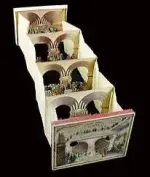
Historical printmakers sometimes created images intended to be viewed through optical devices such as peepshow boxes.
The image could contain carefully arranged perspective and layers that produced an exaggerated sense of depth when viewed through the device.
A flat print could therefore appear like a miniature three-dimensional scene.
These works were designed around the relationship between the image and the viewer's eye.
The device wasn't simply a way to display the artwork—it was part of how the artwork functioned.
The device wasn't simply a way to display the artwork—it was part of how the artwork functioned.
This makes early optical prints an unusual combination of printmaking, theater, perspective, and visual illusion.
A sheet of paper could effectively become a tiny stage.
© The Metropolitan Museum of Art