 PH
LUCK OR SUPERSTITION? The Controversial Chinese Wedding Belief Accused of ‘s†éáling’ a Bride’s Good Fortune
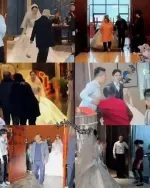
A wedding is supposed to be a celebration of love, happiness, and new beginnings, but a controversial Chinese folk belief has raised questions about the darker side of wedding superstitions. Videos circulating online have sparked discussions about people, including elderly individuals, allegedly walking ahead of or crossing the path of a bride to obtain the good fortune associated with her wedding. The belief is sometimes linked to the Chinese concept of qiang xi (抢喜), which can be translated as “seizing happiness” or taking joy from an auspicious occasion. Under this interpretation, the newlyweds' happiness and good fortune are treated as something that others could symbolically claim. However, it is important to establish that this interpretation is based on folk beliefs and should not automatically be attributed to every elderly person seen crossing a wedding procession. There is no scientific evidence that walking in front of a bride can transfer or s†éál her luck.
Chinese wedding traditions are diverse, with different practices observed across regions and families, making it misleading to portray one controversial belief as a nationwide custom. According to the Chinese Historical and Cultural Project, traditional weddings included a good luck woman, also known as a dajin, who assisted and accompanied the bride during important wedding rituals. This woman was traditionally selected for her perceived good fortune, often because she had a stable marriage and children, and her role was to pass on blessings to the bride. In some traditional ceremonies, she even carried the bride on her back to the bridal sedan chair. These practices demonstrate how deeply symbolic luck, prosperity, and fertility are embedded in certain Chinese wedding customs. They also show why context matters before labeling a particular action as an attempt to s†éál someone's fortune.
However, not every tradition deserves to be protected from criticism simply because it is considered cultural heritage. A 2023 report by the South China Morning Post documented public outrage over a wedding ritual in Jiangxi province, where a bride was reportedly required to sit barefoot in a basket for five hours to supposedly cultivate her patience and good temper. The practice was criticized online as outdated and sexist, particularly because the groom was not subjected to the same ritual. The incident illustrates how certain wedding superstitions can impose unequal expectations and physical restrictions on women under the justification of tradition. While it is unfair to condemn an entire culture based on isolated practices, traditions that humiliate, restrict, or disadvantage women deserve public scrutiny. Cultural preservation should never become an excuse for normalizing practices that undermine a person's dignity
Ultimately, the claim that an elderly person can s†éál a bride's luck by walking ahead of her must be treated with caution because reliable evidence establishing this as a widespread Chinese tradition remains limited. What can be documented is that traditional Chinese weddings have long incorporated symbolic rituals involving prosperity, protection, fertility, and the transfer of good fortune. What cannot be established is that another person can literally take away a bride's happiness or determine the success of her marriage by crossing her path. Superstitions may hold cultural significance, but they should never be used to justify harassment, intimidation, or discrimination against elderly people or women. Respecting culture also means questioning practices that cause harm rather than blindly defending them in the name of tradition. After all, a bride's happiness should never be treated as someone else's fortune to take.