 PH
PH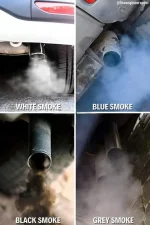
1. White Smoke
- Causes: Broken or blown head gasket, allowing engine coolant/water to seep into the pistons.
- Indication: Water in the combustion chamber.
- Solution: Inspect and replace the head gasket if necessary.
2. Blue Smoke
- Causes: Worn or damaged piston rings, allowing engine oil to enter the combustion chamber.
- Indication: Engine oil is being burned off.
- Solution: Inspect and replace the piston rings if necessary.
3. Black Smoke
- Causes: Incomplete combustion of the fuel/air mixture, potentially due to problems with fuel quality, engine airflow, spark plugs, or ignition coils.
- Indication: Inefficient combustion process.
- Solution: Check and replace spark plugs, ignition coils, or fuel injectors if necessary.
4. Grey Smoke
- Causes: Excessive oil consumption, cracked PCV valve, transmission fluid leak, or defective turbocharger.
- Indication: Potential engine or transmission issue.
- Solution: Inspect and repair or replace the PCV valve, transmission fluid lines, or turbocharger if necessary.
What to Do If You Notice Unusual Smoke
1. Pull over safely: If you notice unusual smoke, pull over to a safe location as soon as possible.
2. Turn off the engine: Switch off the engine to prevent further damage.
3. Check the owner's manual: Consult your owner's manual for guidance on what to do next.
4. Seek professional help: If you're unsure about what to do or if the problem persists, seek the help of a professional mechanic.