 PH
PHPa tulong po unlock nito. Thank you po You do not have permission to view the full content of this post.
Log in or register now.
-
Welcome to PHCorner Forums! Sign up for free to unlock full access and exclusive privileges, including:
- Asking questions about computer and mobile issues
- Discovering internet tips for your mobile network and computer
You are using an out of date browser. It may not display this or other websites correctly.
You should upgrade or use an alternative browser.
You should upgrade or use an alternative browser.
🎓 Academic Çℎḙḡḡ course hero unlock
- Thread starter Arcanee0
- Start date
- Status
- Not open for further replies.

P2,370,000
PAS 16 paragraph 23 states that the cost of an item of property, plant and equipment is the cash price equivalent at the recognition date. The difference shall be charged as finance cost except if it could be considered as borrowing cost under PAS 23. Since it appears that the equipment is already ready for use as of acquisition date, such is not a qualifying asset and the difference between the cash price and deferred payment price be recognized as finance cost.
Hirai Momo
🅢🅞🅨
Pwede pa unlock din ito madriid
You do not have permission to view the full content of this post. Log in or register now.
You do not have permission to view the full content of this post. Log in or register now.
Eto poPwede pa unlock din ito madriid
You do not have permission to view the full content of this post. Log in or register now.
Attachments
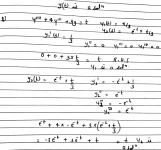
pa help po
https://www.Çℎḙḡḡ.com/homework-help...al-equation-5-3d-0-2-y-t-e-y2-t-cos-q39847213
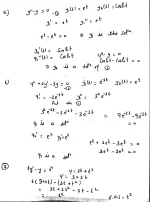
https://www.Çℎḙḡḡ.com/homework-help...on-also-state-whether-equation-linea-q6484609
pa help po
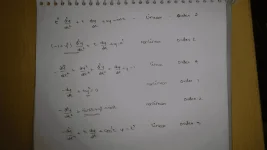
Pa help rin po You do not have permission to view the full content of this post.
Log in or register now.
You do not have permission to view the full content of this post.
Log in or register now.Question 1:Pa help rin po
A species is a plant or animal organism that can reproduce and create offspring that can then produce offspring themselves. Through a mechanism called natural selection, new organisms evolve from different species. The organism nature is determined by its genes. Genes are chemical compounds in the body's cells. By the genes, the essence of the organism is decided. The genes are inherited by the organism from its ancestors. Occasionally, a gene unintentionally alters. A mutation is called such. The gene that is altered is passed on to the next generation. Most mutations are evil, but some of them make the organism in its life more efficient. It is possible that animals that inherit this beneficial new gene will become more common than other animals whereas communities do not evolve per se; instead, over time, they vary in composition, diversity, and structure. Both geographic influences and environmental mechanisms affect the assembly of local populations, each of which may influence evolutionary dynamics and processes within those communities.
Question 1 b:
In all of the environments of human control, evolution may affect the population structure of organisms, with certain consequences being highly apparent. For instance, the adverse effects of contamination (e.g. hazardous chemicals) also contribute to complicated selection and can impact population size. also, in agriculture and medicine, efforts to minimize or remove enemies are deliberately intended to reduce the absolute health of the target and may thus entail challenging selection as well.
Question 2:
Adaptation is an organism's physical or behavioral trait that makes an organism survive in the surrounding environment better.
Question 2 b:
In different ways, species can respond to a climate. Biologically, they can change, suggesting they modify body functions. The evolution of species has been attributed in some way to the adaptation of organisms to evolving environmental conditions. The principle of natural selection is that characteristics that can be passed on allow individuals to respond faster than other organisms of the same species to the environment. Compared with other members of the genus, this ensures greater longevity and replication, leading to evolution. Additionally, organisms may demonstrate behavioral adaptation as well. One example of behavioral adaptation is how, in the middle of winter, emperor penguins in Antarctica crowd together to share their warmth.
Question 3:
Yeah, environmental resources influence the composition, structure and role of organisms. Salt is a renewable resource from the sea and is harnessed. In the sea, animals such as the Coral Reef need an average volume of salt to live. If the salt in the water reaches the cap or decreases, the form of the coral leaves can change.
Goitre, which affects the form of the human spine, results in less salt in the human body, Water is a natural resource which is needed by any living organism. Changes in water intake contribute to a shortening of the development of living organisms, reducing the size of living organisms.
Solar Radiation is also a solar energy shortage in natural resources that can lead to a change in the makeup of the body as a human being will be deficient in Vitamin D. Photosynthesis process will cease. The color of living beings is affected by intense solar radiation.
Question 4
Speciation is how a new type of species of plant or animal is formed. Speciation happens as a population splits from other members of its genus within a species and creates its own distinctive features.
Question 4 b:
Speciation happens as a population splits from other members of its group within a species and creates its own distinctive features. The new species can be separated from their ancestors by the demands of a different climate or the attributes of the members of the new group.
Question 5a
The mechanism by which a biological community's structure changes over time
Question 5b
Glaciated and volcanic sites, rather than urban sites, are associated with primary succession. Main succession in the urban landscape is synonymous with stone and brick barriers, demolition sites, hazardous waste spoil heaps, and abandoned
Sidewalks and highways. Both primary and secondary successional cycles are important ecological processes in urban ecosystems, compared to vegetation patterns in neighboring rural areas where secondary succession dominates.
Question 6a
In order to live, species fight for the resources they need: air, water, food and space. Organisms thrive in comfortable co-existence in areas where they are sufficient, and the biodiversity has high species diversity in areas where resources are abundant (diversity).
Question 6b
If one species is a better competitor than another, the population of the weaker competitor species will decrease. Sometimes, it is possible to eradicate whole populations of a plant from the ecosystem where it was initially found. This is called getting extirpated. The species becomes threatened, declining, or extinct as species extinction happens globally or regionally. A endangered species of box turtle is one whose population is dwindling, and if the population size declines any further, it may become extinct. Because of habitat destruction and resulting population losses, ornate box turtles are now endangered in Illinois.
Question 7a:
When fresh soil is produced or bare rock is exposed, primary succession occurs, creating an environment that can be colonized for the first time whereas, a formerly inhabited territory is re-colonized in secondary succession after a disorder that destroys most or more of its population.
Question 7b:
After both human and natural events, primary and secondary successions occur that create dramatic changes in the composition of a region .In areas where there is no vegetation, primary succession occurs and secondary succession occurs in areas where there is soil. When pioneer species have contributed to the production of soil during primary succession, secondary succession may accompany primary succession. However, secondary succession will also occur without primary succession where an occurrence has caused significant loss of plant and animal life without losing the soil.
Question 8a:
A biome is a broad plant and biodiversity population suited to a particular climate. Acquatic, grassland, woodland, desert, and tundra are the five primary types of biomes.
Question 8b:
Acquatic: Both freshwater and marine biomes contain underwater biomes. Freshwater biomes are bodies of water that are surrounded by land with a salt level of less than one percent, such as wetlands, rivers, and reservoirs. Marine biomes occupy about three-quarters of the atmosphere of the Earth. The seas, coral reefs, and estuaries contain aquatic biomes.
Grassland: Grasslands are open regions which have a mild, dry climate and are populated by grass. There are two types of grassland: tropical grasslands and temperate grasslands (sometimes called savannas). Closer to the equator, Savannas are located and may include a few dispersed trees. They cover about half of Africa's continent, as well as regions in Australia, India and South America. Further away from the equator, in South Africa, Hungary, Argentina, Uruguay, North America, and Russia, temperate grasslands are found. They have no trees or shrubs, and they get less rainfall than savannas. Two types of temperate grasslands are prairies and steppes; prairies are described as having taller grasses, while steppes have shorter grasses.
Deserts: Deserts are desert places where there is less than 50 centimeters (20 inches) of rainfall a year. They occupy about 20 percent of the surface of the Earth. While most of them are found in subtropical countries, deserts can be either cold or humid. There is not as much biodiversity present in deserts as in other biomes, because of their harsh environments. For survival in a dry climate, any plants and wildlife living in a desert must have unique adaptations. Wildlife in the desert consists mostly of snakes and small mammals. Owing to their geographical location or climatic conditions, deserts can fall into four categories: hot and dry, semiarid, marine, and cool.
Question 9:
They sustain more living ecosystems than comparable terrestrial ecosystems because marine environments are so rich in nutrients. The ocean's tiny drifting photosynthetic species, collectively referred to as phytoplankton, are thought to be the largest photo synthesizers or primary producers of the planet. Also, with smaller variations in temperature and other factors, marine ecosystems are much more stable than terrestrial environments. Oxygen is also a restricting factor for marine ecosystems (because there is much less present, although this is rarely the case in terrestrial habitats. Moreover, In certain marine ecosystems, light can be a limiting factor, but there is almost ever a lack of light in most terrestrial settings. Land species are much more impacted by gravity, while water helps marine creatures.
Question 10 a:
In coral bleaching, warmer water temperatures will result. Corals will expel the algae called zooxanthellae living in their tissues if the water is too warm, allowing the coral to become fully white.
Question 10 b:
Coral reefs host some of the planet's most bio-diverse ecosystems. Thousands of marine animals, including several species of sea turtles, whales, crabs, shrimps, jellyfish, sea birds, starfish, and more, rely on coral reefs for survival. Coral reefs provide refuge, grounds for spawning, and protection against predators Organisms at the base of ocean food chains are also protected by them. With the destruction of coral reefs, already at-risk species could face extinction.. A catastrophic reduction in reef cover has contributed to a simultaneous decrease in the biodiversity of species, both in marine parks and in areas open to fishing. Reef fish species have been declining in number,
Question 1:
A species is a plant or animal organism that can reproduce and create offspring that can then produce offspring themselves. Through a mechanism called natural selection, new organisms evolve from different species. The organism nature is determined by its genes. Genes are chemical compounds in the body's cells. By the genes, the essence of the organism is decided. The genes are inherited by the organism from its ancestors. Occasionally, a gene unintentionally alters. A mutation is called such. The gene that is altered is passed on to the next generation. Most mutations are evil, but some of them make the organism in its life more efficient. It is possible that animals that inherit this beneficial new gene will become more common than other animals whereas communities do not evolve per se; instead, over time, they vary in composition, diversity, and structure. Both geographic influences and environmental mechanisms affect the assembly of local populations, each of which may influence evolutionary dynamics and processes within those communities.
Question 1 b:
In all of the environments of human control, evolution may affect the population structure of organisms, with certain consequences being highly apparent. For instance, the adverse effects of contamination (e.g. hazardous chemicals) also contribute to complicated selection and can impact population size. also, in agriculture and medicine, efforts to minimize or remove enemies are deliberately intended to reduce the absolute health of the target and may thus entail challenging selection as well.
Question 2:
Adaptation is an organism's physical or behavioral trait that makes an organism survive in the surrounding environment better.
Question 2 b:
In different ways, species can respond to a climate. Biologically, they can change, suggesting they modify body functions. The evolution of species has been attributed in some way to the adaptation of organisms to evolving environmental conditions. The principle of natural selection is that characteristics that can be passed on allow individuals to respond faster than other organisms of the same species to the environment. Compared with other members of the genus, this ensures greater longevity and replication, leading to evolution. Additionally, organisms may demonstrate behavioral adaptation as well. One example of behavioral adaptation is how, in the middle of winter, emperor penguins in Antarctica crowd together to share their warmth.
Question 3:
Yeah, environmental resources influence the composition, structure and role of organisms. Salt is a renewable resource from the sea and is harnessed. In the sea, animals such as the Coral Reef need an average volume of salt to live. If the salt in the water reaches the cap or decreases, the form of the coral leaves can change.
Goitre, which affects the form of the human spine, results in less salt in the human body, Water is a natural resource which is needed by any living organism. Changes in water intake contribute to a shortening of the development of living organisms, reducing the size of living organisms.
Solar Radiation is also a solar energy shortage in natural resources that can lead to a change in the makeup of the body as a human being will be deficient in Vitamin D. Photosynthesis process will cease. The color of living beings is affected by intense solar radiation.
Question 4
Speciation is how a new type of species of plant or animal is formed. Speciation happens as a population splits from other members of its genus within a species and creates its own distinctive features.
Question 4 b:
Speciation happens as a population splits from other members of its group within a species and creates its own distinctive features. The new species can be separated from their ancestors by the demands of a different climate or the attributes of the members of the new group.
Question 5a
The mechanism by which a biological community's structure changes over time
Question 5b
Glaciated and volcanic sites, rather than urban sites, are associated with primary succession. Main succession in the urban landscape is synonymous with stone and brick barriers, demolition sites, hazardous waste spoil heaps, and abandoned
Sidewalks and highways. Both primary and secondary successional cycles are important ecological processes in urban ecosystems, compared to vegetation patterns in neighboring rural areas where secondary succession dominates.
Question 6a
In order to live, species fight for the resources they need: air, water, food and space. Organisms thrive in comfortable co-existence in areas where they are sufficient, and the biodiversity has high species diversity in areas where resources are abundant (diversity).
Question 6b
If one species is a better competitor than another, the population of the weaker competitor species will decrease. Sometimes, it is possible to eradicate whole populations of a plant from the ecosystem where it was initially found. This is called getting extirpated. The species becomes threatened, declining, or extinct as species extinction happens globally or regionally. A endangered species of box turtle is one whose population is dwindling, and if the population size declines any further, it may become extinct. Because of habitat destruction and resulting population losses, ornate box turtles are now endangered in Illinois.
Question 7a:
When fresh soil is produced or bare rock is exposed, primary succession occurs, creating an environment that can be colonized for the first time whereas, a formerly inhabited territory is re-colonized in secondary succession after a disorder that destroys most or more of its population.
Question 7b:
After both human and natural events, primary and secondary successions occur that create dramatic changes in the composition of a region .In areas where there is no vegetation, primary succession occurs and secondary succession occurs in areas where there is soil. When pioneer species have contributed to the production of soil during primary succession, secondary succession may accompany primary succession. However, secondary succession will also occur without primary succession where an occurrence has caused significant loss of plant and animal life without losing the soil.
Question 8a:
A biome is a broad plant and biodiversity population suited to a particular climate. Acquatic, grassland, woodland, desert, and tundra are the five primary types of biomes.
Question 8b:
Acquatic: Both freshwater and marine biomes contain underwater biomes. Freshwater biomes are bodies of water that are surrounded by land with a salt level of less than one percent, such as wetlands, rivers, and reservoirs. Marine biomes occupy about three-quarters of the atmosphere of the Earth. The seas, coral reefs, and estuaries contain aquatic biomes.
Grassland: Grasslands are open regions which have a mild, dry climate and are populated by grass. There are two types of grassland: tropical grasslands and temperate grasslands (sometimes called savannas). Closer to the equator, Savannas are located and may include a few dispersed trees. They cover about half of Africa's continent, as well as regions in Australia, India and South America. Further away from the equator, in South Africa, Hungary, Argentina, Uruguay, North America, and Russia, temperate grasslands are found. They have no trees or shrubs, and they get less rainfall than savannas. Two types of temperate grasslands are prairies and steppes; prairies are described as having taller grasses, while steppes have shorter grasses.
Deserts: Deserts are desert places where there is less than 50 centimeters (20 inches) of rainfall a year. They occupy about 20 percent of the surface of the Earth. While most of them are found in subtropical countries, deserts can be either cold or humid. There is not as much biodiversity present in deserts as in other biomes, because of their harsh environments. For survival in a dry climate, any plants and wildlife living in a desert must have unique adaptations. Wildlife in the desert consists mostly of snakes and small mammals. Owing to their geographical location or climatic conditions, deserts can fall into four categories: hot and dry, semiarid, marine, and cool.
Question 9:
They sustain more living ecosystems than comparable terrestrial ecosystems because marine environments are so rich in nutrients. The ocean's tiny drifting photosynthetic species, collectively referred to as phytoplankton, are thought to be the largest photo synthesizers or primary producers of the planet. Also, with smaller variations in temperature and other factors, marine ecosystems are much more stable than terrestrial environments. Oxygen is also a restricting factor for marine ecosystems (because there is much less present, although this is rarely the case in terrestrial habitats. Moreover, In certain marine ecosystems, light can be a limiting factor, but there is almost ever a lack of light in most terrestrial settings. Land species are much more impacted by gravity, while water helps marine creatures.
Question 10 a:
In coral bleaching, warmer water temperatures will result. Corals will expel the algae called zooxanthellae living in their tissues if the water is too warm, allowing the coral to become fully white.
Question 10 b:
Coral reefs host some of the planet's most bio-diverse ecosystems. Thousands of marine animals, including several species of sea turtles, whales, crabs, shrimps, jellyfish, sea birds, starfish, and more, rely on coral reefs for survival. Coral reefs provide refuge, grounds for spawning, and protection against predators Organisms at the base of ocean food chains are also protected by them. With the destruction of coral reefs, already at-risk species could face extinction.. A catastrophic reduction in reef cover has contributed to a simultaneous decrease in the biodiversity of species, both in marine parks and in areas open to fishing. Reef fish species have been declining in number,
Thank you po ❤Question 1:
A species is a plant or animal organism that can reproduce and create offspring that can then produce offspring themselves. Through a mechanism called natural selection, new organisms evolve from different species. The organism nature is determined by its genes. Genes are chemical compounds in the body's cells. By the genes, the essence of the organism is decided. The genes are inherited by the organism from its ancestors. Occasionally, a gene unintentionally alters. A mutation is called such. The gene that is altered is passed on to the next generation. Most mutations are evil, but some of them make the organism in its life more efficient. It is possible that animals that inherit this beneficial new gene will become more common than other animals whereas communities do not evolve per se; instead, over time, they vary in composition, diversity, and structure. Both geographic influences and environmental mechanisms affect the assembly of local populations, each of which may influence evolutionary dynamics and processes within those communities.
Question 1 b:
In all of the environments of human control, evolution may affect the population structure of organisms, with certain consequences being highly apparent. For instance, the adverse effects of contamination (e.g. hazardous chemicals) also contribute to complicated selection and can impact population size. also, in agriculture and medicine, efforts to minimize or remove enemies are deliberately intended to reduce the absolute health of the target and may thus entail challenging selection as well.
Question 2:
Adaptation is an organism's physical or behavioral trait that makes an organism survive in the surrounding environment better.
Question 2 b:
In different ways, species can respond to a climate. Biologically, they can change, suggesting they modify body functions. The evolution of species has been attributed in some way to the adaptation of organisms to evolving environmental conditions. The principle of natural selection is that characteristics that can be passed on allow individuals to respond faster than other organisms of the same species to the environment. Compared with other members of the genus, this ensures greater longevity and replication, leading to evolution. Additionally, organisms may demonstrate behavioral adaptation as well. One example of behavioral adaptation is how, in the middle of winter, emperor penguins in Antarctica crowd together to share their warmth.
Question 3:
Yeah, environmental resources influence the composition, structure and role of organisms. Salt is a renewable resource from the sea and is harnessed. In the sea, animals such as the Coral Reef need an average volume of salt to live. If the salt in the water reaches the cap or decreases, the form of the coral leaves can change.
Goitre, which affects the form of the human spine, results in less salt in the human body, Water is a natural resource which is needed by any living organism. Changes in water intake contribute to a shortening of the development of living organisms, reducing the size of living organisms.
Solar Radiation is also a solar energy shortage in natural resources that can lead to a change in the makeup of the body as a human being will be deficient in Vitamin D. Photosynthesis process will cease. The color of living beings is affected by intense solar radiation.
Question 4
Speciation is how a new type of species of plant or animal is formed. Speciation happens as a population splits from other members of its genus within a species and creates its own distinctive features.
Question 4 b:
Speciation happens as a population splits from other members of its group within a species and creates its own distinctive features. The new species can be separated from their ancestors by the demands of a different climate or the attributes of the members of the new group.
Question 5a
The mechanism by which a biological community's structure changes over time
Question 5b
Glaciated and volcanic sites, rather than urban sites, are associated with primary succession. Main succession in the urban landscape is synonymous with stone and brick barriers, demolition sites, hazardous waste spoil heaps, and abandoned
Sidewalks and highways. Both primary and secondary successional cycles are important ecological processes in urban ecosystems, compared to vegetation patterns in neighboring rural areas where secondary succession dominates.
Question 6a
In order to live, species fight for the resources they need: air, water, food and space. Organisms thrive in comfortable co-existence in areas where they are sufficient, and the biodiversity has high species diversity in areas where resources are abundant (diversity).
Question 6b
If one species is a better competitor than another, the population of the weaker competitor species will decrease. Sometimes, it is possible to eradicate whole populations of a plant from the ecosystem where it was initially found. This is called getting extirpated. The species becomes threatened, declining, or extinct as species extinction happens globally or regionally. A endangered species of box turtle is one whose population is dwindling, and if the population size declines any further, it may become extinct. Because of habitat destruction and resulting population losses, ornate box turtles are now endangered in Illinois.
Question 7a:
When fresh soil is produced or bare rock is exposed, primary succession occurs, creating an environment that can be colonized for the first time whereas, a formerly inhabited territory is re-colonized in secondary succession after a disorder that destroys most or more of its population.
Question 7b:
After both human and natural events, primary and secondary successions occur that create dramatic changes in the composition of a region .In areas where there is no vegetation, primary succession occurs and secondary succession occurs in areas where there is soil. When pioneer species have contributed to the production of soil during primary succession, secondary succession may accompany primary succession. However, secondary succession will also occur without primary succession where an occurrence has caused significant loss of plant and animal life without losing the soil.
Question 8a:
A biome is a broad plant and biodiversity population suited to a particular climate. Acquatic, grassland, woodland, desert, and tundra are the five primary types of biomes.
Question 8b:
Acquatic: Both freshwater and marine biomes contain underwater biomes. Freshwater biomes are bodies of water that are surrounded by land with a salt level of less than one percent, such as wetlands, rivers, and reservoirs. Marine biomes occupy about three-quarters of the atmosphere of the Earth. The seas, coral reefs, and estuaries contain aquatic biomes.
Grassland: Grasslands are open regions which have a mild, dry climate and are populated by grass. There are two types of grassland: tropical grasslands and temperate grasslands (sometimes called savannas). Closer to the equator, Savannas are located and may include a few dispersed trees. They cover about half of Africa's continent, as well as regions in Australia, India and South America. Further away from the equator, in South Africa, Hungary, Argentina, Uruguay, North America, and Russia, temperate grasslands are found. They have no trees or shrubs, and they get less rainfall than savannas. Two types of temperate grasslands are prairies and steppes; prairies are described as having taller grasses, while steppes have shorter grasses.
Deserts: Deserts are desert places where there is less than 50 centimeters (20 inches) of rainfall a year. They occupy about 20 percent of the surface of the Earth. While most of them are found in subtropical countries, deserts can be either cold or humid. There is not as much biodiversity present in deserts as in other biomes, because of their harsh environments. For survival in a dry climate, any plants and wildlife living in a desert must have unique adaptations. Wildlife in the desert consists mostly of snakes and small mammals. Owing to their geographical location or climatic conditions, deserts can fall into four categories: hot and dry, semiarid, marine, and cool.
Question 9:
They sustain more living ecosystems than comparable terrestrial ecosystems because marine environments are so rich in nutrients. The ocean's tiny drifting photosynthetic species, collectively referred to as phytoplankton, are thought to be the largest photo synthesizers or primary producers of the planet. Also, with smaller variations in temperature and other factors, marine ecosystems are much more stable than terrestrial environments. Oxygen is also a restricting factor for marine ecosystems (because there is much less present, although this is rarely the case in terrestrial habitats. Moreover, In certain marine ecosystems, light can be a limiting factor, but there is almost ever a lack of light in most terrestrial settings. Land species are much more impacted by gravity, while water helps marine creatures.
Question 10 a:
In coral bleaching, warmer water temperatures will result. Corals will expel the algae called zooxanthellae living in their tissues if the water is too warm, allowing the coral to become fully white.
Question 10 b:
Coral reefs host some of the planet's most bio-diverse ecosystems. Thousands of marine animals, including several species of sea turtles, whales, crabs, shrimps, jellyfish, sea birds, starfish, and more, rely on coral reefs for survival. Coral reefs provide refuge, grounds for spawning, and protection against predators Organisms at the base of ocean food chains are also protected by them. With the destruction of coral reefs, already at-risk species could face extinction.. A catastrophic reduction in reef cover has contributed to a simultaneous decrease in the biodiversity of species, both in marine parks and in areas open to fishing. Reef fish species have been declining in number,
master ken
Forum Veteran
https://www.Çℎḙḡḡ.com/homework-help...etermine-pressure-specific-internal-q61293176
pa unlock din po ako
pa unlock din po ako
Tamagochiako
Honorary Poster
https://www.Çℎḙḡḡ.com/homework-help...eb-beam-700-mm-web-thickness-10-mm--q55557388 patulong din po salamat
- Status
- Not open for further replies.
Similar threads
About this Thread
-
13Replies
-
547Views
-
8Participants
Last reply from:
Tamagochiako
Tamagochiako
New Topics
-
Just Wait For The Sun
- Started by kristonecold
- Replies: 0
- 🤝 Social & Personal
-
A Portrait of a Dog as an Older Guy
- Started by kristonecold
- Replies: 0
- 🤝 Social & Personal
-
Spinoza's God vs the God of the Bible
- Started by jamesiswizard_1
- Replies: 0
- 🤝 Social & Personal
-
OLD BUT GOLD: Nasaan na ang mga Legends ng Forum?
- Started by jamesiswizard_1
- Replies: 7
- 🤝 Social & Personal
-
Daily Mass Readings: October 24, 2026
- Started by jdoomtwenty14
- Replies: 0
- 🤝 Social & Personal
-
Daily Mass Readings: October 23, 2026
- Started by jdoomtwenty14
- Replies: 1
- 🤝 Social & Personal
-
Happy Birthday to Me!
- Started by Rastafries420
- Replies: 2
- 🤝 Social & Personal
-
Happy Birthday to me !!
- Started by PHC-FREENET EHI
- Replies: 23
- 🤝 Social & Personal
Trending Topics
-
-
-
The World Is Not Perfect. You Have to Choose Based on Consequence. Naintindihan Ko Na Ang Pilipinas.
- Asherah Goddess
Replies: 5 -
-
-
-
-
Online now
- Members online
- 907
- Guests online
- 8,024
- Total visitors
- 8,931