 PH
PH-
Welcome to PHCorner Forums! Sign up for free to unlock full access and exclusive privileges, including:
- Asking questions about computer and mobile issues
- Discovering internet tips for your mobile network and computer
You are using an out of date browser. It may not display this or other websites correctly.
You should upgrade or use an alternative browser.
You should upgrade or use an alternative browser.
🔒 Closed FREE UNLIMITED Çℎḙḡḡ UNLOCKS | COMMENT LINK
- Thread starter fallenrised
- Start date
- Status
- Not open for further replies.
Ragnarok_Invention
Leecher
Thank you!
Pa unlock po pls salamat po.
You do not have permission to view the full content of this post. Log in or register now.
You do not have permission to view the full content of this post. Log in or register now.
fallenrised
Eternal Poster
yung given equation above ung step 1
fallenrised
Eternal Poster
u need to understand that the weight of the meter stick acts at its center of mass i.e., at the 50 meter mark .. which will be on the other side of the fulcrum
and the external mass is placed on the 20 meter mark
taking the moments of the weight of external mass and weight of the meter scale about the fulcrum as the system is in equilibrium
the weight is placed at a distance of (40-20) m from the fulcrum and the center of mass of the scale is at (50-40)m from the fulcrum
so (40-20)*W=(50-40)(weight of the scale)
weight of the scale=2w
and the external mass is placed on the 20 meter mark
taking the moments of the weight of external mass and weight of the meter scale about the fulcrum as the system is in equilibrium
the weight is placed at a distance of (40-20) m from the fulcrum and the center of mass of the scale is at (50-40)m from the fulcrum
so (40-20)*W=(50-40)(weight of the scale)
weight of the scale=2w
fallenrised
Eternal Poster

fallenrised
Eternal Poster


fallenrised
Eternal Poster
fallenrised
Eternal Poster

fallenrised
Eternal Poster
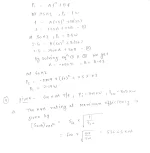
1.Advertisement has a huge impact on the image of any business because it is usually the first perception of the consumer of the respective product or service.The negative impact of such TV ads coupled with the BBC's watchdog programme inflicted a huge blow on the image and credibility of the company (as seen in para 2).The effect of this sustained due to the poor response of the company to such negative publicity (launch of only premium underwear and no other improvements in quality).
Moreover,as their collection failed to keep pace with the fashion trends and being in a perfectly competitive market, faced many competitors(GAP or Hennes and Mauritz) in the vicinity,it fell to a low retail turnover;not only due to obsolete clothing trends but also because of how the M&S stores looked. The company failed to see that there was a change in the tastes and preference of it's target consumers;the older age groups had developed a taste for more youthful clothing.Ignorance of this change,led to the company's products being out of fashion and trend to the consumers;which contributed heavily to fall in demand.
2.Weaknesses of M&S:
(i) Bad publicity:The negative impact of the TV ads and BBC'S watchdog programme revealing the quality provided by the company was a major setback.
(ii) Obsolete business practices:The out-of-trend outlets and clothing ; given a contemporary shift of the tastes of the consumers affected the company adversely.
(iii) Hiring unskilled labour:M&S mostly hired fresh college graduates and fewer experienced senior employees on the basis of their (M&S) past glory in the industry.
(iv) Failure to modify it's supply chain:The company missed out on the retail revolution and therefore failed to reap the benefits it created.
(v) Overpricing bad quality products:This was a major reason for the fall in demand due to loss of credibility .
(vi) Low promotion:The company has not responded to the competitive challenge in this arena.
(vii) Prices of substitutes: With the close competition in the industry with Topshop etc. , the prices set by the competitors are well moderated as compared to those of M&S due to the advancements in supply chain not availed by the company in study.
(viii) Failure to adapt to changing tastes:The company failed to recognize the shift in consumer tastes and preferences from sober to teenager clothing.
Threats to M&S:
(i) Nature of the industry:The industry requires an ever changing process due to change in trends and fashion.
(ii) Competitiveness:The clothing market is an example of a nearly- perfectly competitive market in real world.Thus,due to the presence to many competitors offering either similar or better products,there is a constant threat if the company if slow to adapt.
Out of the above mentioned weaknesses, (ii),(iv),(v),(vi) and (vii) are from the demand side out of which:
-price, promotion and product-(ii),(iv),(v),(vi)- are controllable factors
-bad publicity by an external news programme,price of substitutes,changing tastes-(i),(vii),(vii)-are uncontrollable factors.
Out of the Threats mentioned,both are uncontrollable factors affecting demand.
Moreover,as their collection failed to keep pace with the fashion trends and being in a perfectly competitive market, faced many competitors(GAP or Hennes and Mauritz) in the vicinity,it fell to a low retail turnover;not only due to obsolete clothing trends but also because of how the M&S stores looked. The company failed to see that there was a change in the tastes and preference of it's target consumers;the older age groups had developed a taste for more youthful clothing.Ignorance of this change,led to the company's products being out of fashion and trend to the consumers;which contributed heavily to fall in demand.
2.Weaknesses of M&S:
(i) Bad publicity:The negative impact of the TV ads and BBC'S watchdog programme revealing the quality provided by the company was a major setback.
(ii) Obsolete business practices:The out-of-trend outlets and clothing ; given a contemporary shift of the tastes of the consumers affected the company adversely.
(iii) Hiring unskilled labour:M&S mostly hired fresh college graduates and fewer experienced senior employees on the basis of their (M&S) past glory in the industry.
(iv) Failure to modify it's supply chain:The company missed out on the retail revolution and therefore failed to reap the benefits it created.
(v) Overpricing bad quality products:This was a major reason for the fall in demand due to loss of credibility .
(vi) Low promotion:The company has not responded to the competitive challenge in this arena.
(vii) Prices of substitutes: With the close competition in the industry with Topshop etc. , the prices set by the competitors are well moderated as compared to those of M&S due to the advancements in supply chain not availed by the company in study.
(viii) Failure to adapt to changing tastes:The company failed to recognize the shift in consumer tastes and preferences from sober to teenager clothing.
Threats to M&S:
(i) Nature of the industry:The industry requires an ever changing process due to change in trends and fashion.
(ii) Competitiveness:The clothing market is an example of a nearly- perfectly competitive market in real world.Thus,due to the presence to many competitors offering either similar or better products,there is a constant threat if the company if slow to adapt.
Out of the above mentioned weaknesses, (ii),(iv),(v),(vi) and (vii) are from the demand side out of which:
-price, promotion and product-(ii),(iv),(v),(vi)- are controllable factors
-bad publicity by an external news programme,price of substitutes,changing tastes-(i),(vii),(vii)-are uncontrollable factors.
Out of the Threats mentioned,both are uncontrollable factors affecting demand.
fallenrised
Eternal Poster


fallenrised
Eternal Poster
answered ty
fallenrised
Eternal Poster
Answered by Expert Tutors
I
1. 8 rectangles
2. 4 both, 18 chem only, 14 english only
3. 341 games
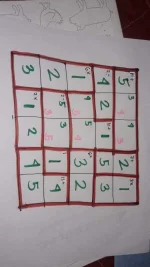
II see figure
Step-by-step explanation
I
1. We need to find factors of 120 with whole number. 1x120, 2x60, 3x40, 4x30, 5x24, 6x20, 8x15, 10x12
2. 4 both, 18 chem only, 14 english only
3. We will group all players by 4. The result of the division is the number of remaining players so we will continue the process until we will have only 1 winner. The total number of games is the sum of all quotient.
1st rnd=1024÷4=256
2nd rnd=256÷4=64
3rd rnd=64÷4=16
4th rnd=16÷4=4
5th rnd=4÷4=1
Total games=256+64+16+4+1=341
II.
There are two possible answer it is either by green numbers or with pink numbers. This will add to the challenge.

I
1. 8 rectangles
2. 4 both, 18 chem only, 14 english only
3. 341 games
II see figure
Step-by-step explanation
I
1. We need to find factors of 120 with whole number. 1x120, 2x60, 3x40, 4x30, 5x24, 6x20, 8x15, 10x12
2. 4 both, 18 chem only, 14 english only
3. We will group all players by 4. The result of the division is the number of remaining players so we will continue the process until we will have only 1 winner. The total number of games is the sum of all quotient.
1st rnd=1024÷4=256
2nd rnd=256÷4=64
3rd rnd=64÷4=16
4th rnd=16÷4=4
5th rnd=4÷4=1
Total games=256+64+16+4+1=341
II.
There are two possible answer it is either by green numbers or with pink numbers. This will add to the challenge.
fallenrised
Eternal Poster
nasagot napo tnx
fallenrised
Eternal Poster
fallenrised
Eternal Poster
1. a. When the light source is off, the phototransistor will be off and behaves like an open circuit. This results in the output voltage

1.b. When the light source is on, the phototransistor will be on and behaves likes a short circuit. This results in the output voltage
 . Vsat is the saturation voltage of phototransistor and it is close to zero.
2. Current required to deliver = 10mA
Current transfer ratio = 60
Current transfer ratio =


3. If the angle of incidence is greater than the critical angle, the total internal reflection will occur.
Here, Critical angle = 15 deg.
Angle of incidence= 30 deg.
So, the ray will be reflected.
4. Consider the circuit 1

Here when the light is incident on the base of phototransistor Q1, the Q1 will get on and resulting in the current flow to the Q2, When a base current enters into Q2, resulting in the Q2 to be in a conducting state. When Q2 conducts, the current will flow through the relay and the contacts of the relay will switch from Normally Close terminal to Normally open terminal.
When light is not incident on Q1, Q2 wiil be off and no switching takes place at the relay.
Conside the circuit 2

When the light incidents on the Q1. Q1 will on, the collector of the Q1 will be pulled down by resistor R2 resulting in the 0V at the gate of SCR, this makes the SCR off.
When the light does not incidents on the Q1. Q1 will be off, the collector of the Q1 will be at high potential resulting in the positve voltage at the gate of SCR, this makes the SCR ON.
Another way to make the SCR off is by pusing the switvh connected across SCR.
1.b. When the light source is on, the phototransistor will be on and behaves likes a short circuit. This results in the output voltage
2. Current required to deliver = 10mA
Current transfer ratio = 60
Current transfer ratio =
3. If the angle of incidence is greater than the critical angle, the total internal reflection will occur.
Here, Critical angle = 15 deg.
Angle of incidence= 30 deg.
So, the ray will be reflected.
4. Consider the circuit 1
Here when the light is incident on the base of phototransistor Q1, the Q1 will get on and resulting in the current flow to the Q2, When a base current enters into Q2, resulting in the Q2 to be in a conducting state. When Q2 conducts, the current will flow through the relay and the contacts of the relay will switch from Normally Close terminal to Normally open terminal.
When light is not incident on Q1, Q2 wiil be off and no switching takes place at the relay.
Conside the circuit 2
When the light incidents on the Q1. Q1 will on, the collector of the Q1 will be pulled down by resistor R2 resulting in the 0V at the gate of SCR, this makes the SCR off.
When the light does not incidents on the Q1. Q1 will be off, the collector of the Q1 will be at high potential resulting in the positve voltage at the gate of SCR, this makes the SCR ON.
Another way to make the SCR off is by pusing the switvh connected across SCR.
fallenrised
Eternal Poster
image<
fallenrised
Eternal Poster
Hakkdog_15
Fanatic
Salamat lodss
- Status
- Not open for further replies.
Similar threads
-
🛠️ Tools USE LOVABLE.DEV FOR FREE | UNLIMITED USAGE
- Started by tubol1241414
- Replies: 4
-
👨🏫 Tutorial HOW TO GET FREE UNLIMITED PREMIUM PROXY FOR 1 MONTH WITH FULL API ACCESS! | FULL TUTORIAL | OPEN FOR EVERYONE
- Started by PHC-DeepMods
- Replies: 70
-
👨🏫 Tutorial FREE UNLIMITED AI Image & Video Generator - 1 DAY ONLY
- Started by Jeong
- Replies: 9
-
🎁 Giveaways FREE Unlimited AI Video Generation!
- Started by PHC - Tenma
- Replies: 35
-
📦 Android App ImageGuru: AI Image Prompt v3.0.1 | AD Free | Unlimited Prompt
- Started by AIMERSHIN
- Replies: 0
About this Thread
-
313Replies
-
2KViews
-
84Participants
Last reply from:
E J I E L
E J I E L
New Topics
-
Get a Premium .tech Domain FREE for One Year
- Started by c h r z z h p
- Replies: 0
- 🆓 Freemium Access
-
Premium X5 Accounts FRESH for ALL | 25-OCT-26
- Started by zaxcal
- Replies: 0
- 🆓 Freemium Access
-
Déézér PREMIUM | 1 MONTH
- Started by Beatriz9
- Replies: 0
- 🆓 Freemium Access
-
Grammarly Pro | 1 WEEK #143
- Started by Beatriz9
- Replies: 0
- 🆓 Freemium Access
-
TIDAL INDIVIDUAL w/ DJ EXTENSION | 1 MONTH #143
- Started by Beatriz9
- Replies: 0
- 🆓 Freemium Access
-
Steam Premium Account 20x 10-25-26
- Started by BossHabibi
- Replies: 2
- 🆓 Freemium Access
-
DUOLINGO SUPER | 1 WEEK #136
- Started by Beatriz9
- Replies: 0
- 🆓 Freemium Access
-
Netflix Premium Cookies 180x 10-25-26
- Started by BossHabibi
- Replies: 1
- 🆓 Freemium Access
-
𝙲𝚛𝚞𝚗𝚌𝚑𝚢𝚛𝚘𝚕𝚕 Premium Cookies 55x 10-25-26
- Started by BossHabibi
- Replies: 2
- 🆓 Freemium Access
-
Primevideo Premium Cookies 240x 10-25-26
- Started by BossHabibi
- Replies: 0
- 🆓 Freemium Access
Trending Topics
Online now
- Members online
- 480
- Guests online
- 13,501
- Total visitors
- 13,981