 PH
PHEighty three percent of all civilian fire deaths occurred in residences.
Many of these fires could have been prevented.
Cooking is the third leading cause offire deaths and the leading causeof injury among people ages 65 and older. Direct loss due to fires is estimated at nearly $8.6 billion annually. Intentionally set structure fires resultedin an estimated $664 millionin property damage.
In order to protect yourself, it isimportant to understand the basic characteristics of fire.
•Fire is FAST. In just two minutes, a fire can become life-threatening. In five minutes, a residence can be engulfed in flames.
•Fire is DARK. Fire produces gases that make you disoriented and drowsy. Instead of being awakened by a fire, you may fall into a deeper sleep. Asphyxiation is the leading cause of fire deaths, exceeding burns by a three- to- one ratio.
•Fire is HOT.Heat and smoke from fire can be more dangerous than the flames. Inhaling the super- hot air can sear your lungs.
Elements of Combustion:
Remember to keep storage of fuel and oxidizers to a minimum and away from the other elements. Always monitor operations to avoid excessive heat.
Flash Point – The lowest temperature at which a material can vaporize to form an ignitable mixture in air.
Boiling Point –The temperature at which a given material changes from liquid to gas.
Types & Applications
Class A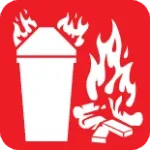
Class A fires are fires in ordinary combustibles such as wood, paper, cloth, trash, and plastics.
Class B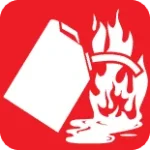
Class B fires are fires in flammable liquids such as gasoline, petroleum oil and paint. Class B fires also include flammable gases such as propane and butane. Class B fires do not include fires involving cooking oils and grease.
Class C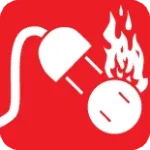
Class C fires are fires involving energized electrical equipment such as motors, transformers, and appliances. Remove the power and the Class C fire becomes one of the other classes of fire.
Class D
Class D fires are fires in combustible metals such as potassium, sodium, aluminum, and magnesium.
Class K
Class K fires are fires in cooking oils and greases such as animals fats and vegetable fats.
Some types of fire extinguishing agents can be used on more than one class of fire. Others have warnings where it would be dangerous for the operator to use a particular fire extinguishing agent.
Types of Fire Extinguishers
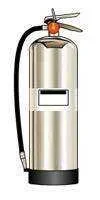
Water and Foam
Water and Foam fire extinguishers extinguish the fire by taking away the heatelement of the fire triangle. Foam agents also separate the oxygen element from the other elements.
Water extinguishers are for Class A fires only - they should not be used on Class B or C fires. The discharge stream could spread the flammable liquid in a Class B fire or could create a shock hazard on a Class C fire.
Carbon Dioxide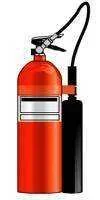
Carbon Dioxide fire extinguishers extinguish fire by taking away the oxygen element of the fire triangle and also be removing the heat with a very cold discharge.
Carbon dioxide can be used on Class B & C fires. They are usually ineffective on Class A fires.
Dry Chemical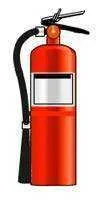
Dry Chemical fire extinguishers extinguish the fire primarily by interrupting the chemical reaction of the fire triangle.Today's most widely used type of fire extinguisher is the multipurpose dry chemical that is effective on Class A, B, and C fires. This agent also works by creating a barrier between the oxygen element and the fuel element on Class A fires.
Ordinary dry chemical is for Class B & C fires only. It is important to use the correct extinguisher for the type of fuel! Using the incorrect agent can allow the fire to re-ignite after apparently being extinguished successfully.
Wet Chemical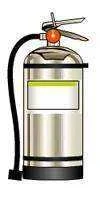
Wet Chemical is a new agent that extinguishes the fire by removing the heat of the fire triangle and prevents re-ignition by creating a barrier between the oxygen and fuel elements.
Wet chemical of Class K extinguishers were developed for modern, high efficiency deep fat fryers in commercial cooking operations. Some may also be used on Class A fires in commercial kitchens.
Dry Powder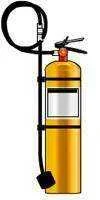
Dry Powder extinguishers are similar to dry chemical except that they extinguish the fire by separating the fuel from the oxygen element or by removing the heat element of the fire triangle.
However, dry powder extinguishers are for Class D or combustible metal fires, only. They are ineffective on all other classes of fires.
Cartridge Operated Dry Chemical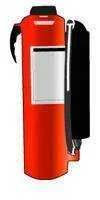
Cartridge Operated Dry Chemical fire extinguishers extinguish the fire primarily by interrupting the chemical reaction of the fire triangle.
Like the stored pressure dry chemical extinguishers, the multipurpose dry chemical is effective on Class A, B, and C fires. This agent also works by creating a barrier between the oxygen element and the fuel element on Class A fires.
Ordinary dry chemical is for Class B & C fires only. It is important to use the correct extinguisher for the type of fuel! Using the incorrect agent can allow the fire to re-ignite after apparently being extinguished successfully.
The Rules for Fighting Fires
Just remember the three A's
ACTIVATE the building alarm system or notify the fire department by calling emergency. Or, have someone else do this for you.
ASSIST any persons in immediate danger, or those incapable on their own, to exit the building, without risk to yourself.
Only after these two are completed should you ATTEMPT to extinguish the fire.
Fire Extinguisher Use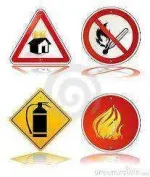
It is important to know the locations and the types of extinguishers in your workplace prior to actually using one.
Fire extinguishers can be heavy, so it's a good idea to practice picking up and holding an extinguisher to get an idea of the weight and feel.
Take time to read the operating instructions and warnings found on the fire extinguisher label. Not all fire extinguishers look alike.
Practice releasing the discharge hose or horn and aiming it at the base of an imagined fire. Do not pull the pin or squeeze the lever. This will break the extinguisher seal and cause it to lose pressure.
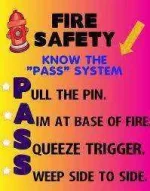
When it is time to use the extinguisher on a fire, just remember PASS!
Pull the pin.
Aim the nozzle or hose at the base of the fire from the recommended safe distance.
Squeeze the operating lever to discharge the fire extinguishing agent.
Starting at the recommended distance, Sweep the nozzle or hose from side to side until the fire is out. Move forward or around the fire area as the fire diminishes. Watch the area in case of re-ignition.
Flammable and Combustible Materials
Ignitable liquids generate vapors that burn. Vapors may travel significant distances before reaching a heat source or build up in an enclosed space and cause an explosion. Minimizing the amount of fuel in your areas and properly storing materials you have, are two important ways of preventing fires.
Ignitable liquids are designated as flammable or combustible, depending on flash point and boiling point. Flammable and combustible materials are further designated as Class I or Class II. This is important, as different storage rules apply to each class.
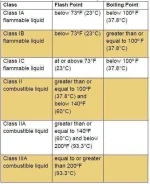
All flammable and combustible liquids must be stored in approved, sealed containers. Approved containers include the original (factory) container or designated safety can.
A maximum of 10 gallons (40 liters) of Class I flammable liquid may be stored in a room outside of a flammable storage cabinet. Additional flammable liquids must be kept in an approved cabinet.
Electrical Safety
Electrical sources are common causes of fires, shocks, and burns. Improperly maintained or operated electrical equipment may short, arc, or overheat, creating an ignition point.
Extension Cords, Outlets, and Surge Protectors
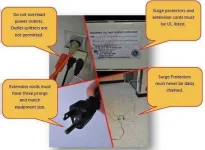
Fire Doors and Wedges
Most buildings at Iowa State University have a number of fire doors to resist the spread of flames and smoke. If used properly, fire doors contain fires and protect exit passages. Fire doors can be identified by a rating plate or the presence of a closing device.
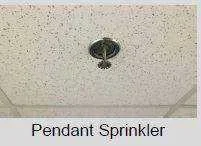
Sprinkler systems are an effective method for extinguishing fires before they grow out of control. It takes as little as 155° to activate a sprinkler and release pressurized water. Only the sprinklers that are directly contacted by high heat from a fire will activate, open, and ****** the fire with cooling water. To be effective, the heads must remain undamaged and unobstructed. You can help ensure system operation in the following ways:
Learn to identify sprinkler heads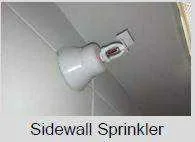
Location
A. Conspicuous & clearly visible
B. Readily accessible for immediate use
C. Located along normal paths of travel & exit
D. Not blocked
E. Kept in designated locations when not being used
F. Installed on hangers, brackets, in cabinets, or on shelves
G. 40 lbs or less extinguishers - top of the extinguisher not more than 3-1/2 feet above the floor.
H. Class A & D Extinguishers travel distance 75 feet or less
I. Class B Extinguishers travel distance 50 feet or less
J. Class C Extinguishers - no minimum travel distance - locate in areas with electrical distribution equipment
IV. Markings
A. Classification markings located on the front of the shellB. Markings must be legible from a distance of 3 feet.
V. Inspection and Maintenance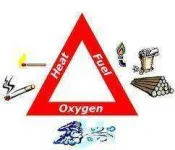
A. Monthly checks for
1. Inspection Tag
2. Anti-tamper seal
3. Weight or pressure check
4. Damage or missing parts
5. Rust or corrosion
B. Maintenance
1. Remove from service & place a spare in location
2. Only trained & certified people may repair or fill extinguishers
VI. Extinguisher Use
A. Only when use does not present personal hazard from fire
B. PASS System
1. P - Pull Pin
2. A - Aim at base of fire
3. S - Squeeze the actuating handle
4. S - Sweep from side to side
C. Class C fires - turn off power - Never touch electrical equipment or boxes with any part of the extinguisher - shock hazard
D. Never allow a full or empty extinguisher to stand upright - falling cylinder could break off valve and cause a missile hazard
E. Never place an empty or partially discharged extinguisher back in it's location - replace with a fully charged extinguisher
F. Report any damaged or missing extinguishers
Fire extinguishers must be:
1. Approved by a recognized testing laboratory
2. Proper type for the class of fire expected
3. Easily accessible for immediate use
4. Proper quantity & size to deal with the expected fire
5. Inspected and maintained on a regular basis
6. Used only by trained employees
Fire Prevention Plan
Many of these fires could have been prevented.
Cooking is the third leading cause offire deaths and the leading causeof injury among people ages 65 and older. Direct loss due to fires is estimated at nearly $8.6 billion annually. Intentionally set structure fires resultedin an estimated $664 millionin property damage.
In order to protect yourself, it isimportant to understand the basic characteristics of fire.
•Fire is FAST. In just two minutes, a fire can become life-threatening. In five minutes, a residence can be engulfed in flames.
•Fire is DARK. Fire produces gases that make you disoriented and drowsy. Instead of being awakened by a fire, you may fall into a deeper sleep. Asphyxiation is the leading cause of fire deaths, exceeding burns by a three- to- one ratio.
•Fire is HOT.Heat and smoke from fire can be more dangerous than the flames. Inhaling the super- hot air can sear your lungs.
Elements of Combustion:
- Oxygen
- Fuel
- Heat
- Chemical reaction
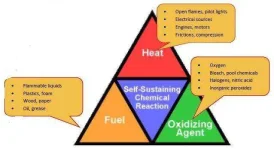
Remember to keep storage of fuel and oxidizers to a minimum and away from the other elements. Always monitor operations to avoid excessive heat.
Flash Point – The lowest temperature at which a material can vaporize to form an ignitable mixture in air.
Boiling Point –The temperature at which a given material changes from liquid to gas.
Types & Applications
Class A
Class A fires are fires in ordinary combustibles such as wood, paper, cloth, trash, and plastics.
Class B
Class B fires are fires in flammable liquids such as gasoline, petroleum oil and paint. Class B fires also include flammable gases such as propane and butane. Class B fires do not include fires involving cooking oils and grease.
Class C
Class C fires are fires involving energized electrical equipment such as motors, transformers, and appliances. Remove the power and the Class C fire becomes one of the other classes of fire.
Class D
Class D fires are fires in combustible metals such as potassium, sodium, aluminum, and magnesium.
Class K
Class K fires are fires in cooking oils and greases such as animals fats and vegetable fats.
Some types of fire extinguishing agents can be used on more than one class of fire. Others have warnings where it would be dangerous for the operator to use a particular fire extinguishing agent.
Types of Fire Extinguishers
Water and Foam
Water and Foam fire extinguishers extinguish the fire by taking away the heatelement of the fire triangle. Foam agents also separate the oxygen element from the other elements.
Water extinguishers are for Class A fires only - they should not be used on Class B or C fires. The discharge stream could spread the flammable liquid in a Class B fire or could create a shock hazard on a Class C fire.
Carbon Dioxide
Carbon Dioxide fire extinguishers extinguish fire by taking away the oxygen element of the fire triangle and also be removing the heat with a very cold discharge.
Carbon dioxide can be used on Class B & C fires. They are usually ineffective on Class A fires.
Dry Chemical
Dry Chemical fire extinguishers extinguish the fire primarily by interrupting the chemical reaction of the fire triangle.Today's most widely used type of fire extinguisher is the multipurpose dry chemical that is effective on Class A, B, and C fires. This agent also works by creating a barrier between the oxygen element and the fuel element on Class A fires.
Ordinary dry chemical is for Class B & C fires only. It is important to use the correct extinguisher for the type of fuel! Using the incorrect agent can allow the fire to re-ignite after apparently being extinguished successfully.
Wet Chemical
Wet Chemical is a new agent that extinguishes the fire by removing the heat of the fire triangle and prevents re-ignition by creating a barrier between the oxygen and fuel elements.
Wet chemical of Class K extinguishers were developed for modern, high efficiency deep fat fryers in commercial cooking operations. Some may also be used on Class A fires in commercial kitchens.
Dry Powder
Dry Powder extinguishers are similar to dry chemical except that they extinguish the fire by separating the fuel from the oxygen element or by removing the heat element of the fire triangle.
However, dry powder extinguishers are for Class D or combustible metal fires, only. They are ineffective on all other classes of fires.
Cartridge Operated Dry Chemical
Cartridge Operated Dry Chemical fire extinguishers extinguish the fire primarily by interrupting the chemical reaction of the fire triangle.
Like the stored pressure dry chemical extinguishers, the multipurpose dry chemical is effective on Class A, B, and C fires. This agent also works by creating a barrier between the oxygen element and the fuel element on Class A fires.
Ordinary dry chemical is for Class B & C fires only. It is important to use the correct extinguisher for the type of fuel! Using the incorrect agent can allow the fire to re-ignite after apparently being extinguished successfully.
The Rules for Fighting Fires
Just remember the three A's
ACTIVATE the building alarm system or notify the fire department by calling emergency. Or, have someone else do this for you.
ASSIST any persons in immediate danger, or those incapable on their own, to exit the building, without risk to yourself.
Only after these two are completed should you ATTEMPT to extinguish the fire.
Fire Extinguisher Use
It is important to know the locations and the types of extinguishers in your workplace prior to actually using one.
Fire extinguishers can be heavy, so it's a good idea to practice picking up and holding an extinguisher to get an idea of the weight and feel.
Take time to read the operating instructions and warnings found on the fire extinguisher label. Not all fire extinguishers look alike.
Practice releasing the discharge hose or horn and aiming it at the base of an imagined fire. Do not pull the pin or squeeze the lever. This will break the extinguisher seal and cause it to lose pressure.
When it is time to use the extinguisher on a fire, just remember PASS!
Pull the pin.
Aim the nozzle or hose at the base of the fire from the recommended safe distance.
Squeeze the operating lever to discharge the fire extinguishing agent.
Starting at the recommended distance, Sweep the nozzle or hose from side to side until the fire is out. Move forward or around the fire area as the fire diminishes. Watch the area in case of re-ignition.
Flammable and Combustible Materials
Ignitable liquids generate vapors that burn. Vapors may travel significant distances before reaching a heat source or build up in an enclosed space and cause an explosion. Minimizing the amount of fuel in your areas and properly storing materials you have, are two important ways of preventing fires.
Ignitable liquids are designated as flammable or combustible, depending on flash point and boiling point. Flammable and combustible materials are further designated as Class I or Class II. This is important, as different storage rules apply to each class.
All flammable and combustible liquids must be stored in approved, sealed containers. Approved
containers include the original (factory) container or designated safety can.A maximum of 10 gallons (40 liters) of Class I flammable liquid may be stored in a room outside of a flammable storage cabinet. Additional flammable liquids must be kept in an approved cabinet.
Electrical Safety
Electrical sources are common causes of fires, shocks, and burns. Improperly maintained or operated electrical equipment may short, arc, or overheat, creating an ignition point.
Extension Cords, Outlets, and Surge Protectors
Fire Doors and Wedges
Most buildings at Iowa State University have a number of fire doors to resist the spread of flames and smoke. If used properly, fire doors contain fires and protect exit passages. Fire doors can be identified by a rating plate or the presence of a closing device.
- A fire door can be held open with an approved door mechanism that will automatically close the door in the event of a fire.
- Never place objects in the swing of a fire door.
- Even non-fire-rated doors can help stop the spread of fire and smoke. Close them when leaving at the end of the day, or when evacuating from a fire.
- Do not disable the closing device on any door.
- Do not hold a fire door open with a wedge, wire, string, or other unapproved methods.
- A chair can be used to hold open an office door, but should be closed when leaving the office.
- Do not panic if fire doors close when an alarm goes off. This is normal and you can still exit through these doors, if they are designated emergency exit routes.
Sprinkler systems are an effective method for extinguishing fires before they grow out of control. It takes as little as 155° to activate a sprinkler and release pressurized water. Only the sprinklers that are directly contacted by high heat from a fire will activate, open, and ****** the fire with cooling water. To be effective, the heads must remain undamaged and unobstructed. You can help ensure system operation in the following ways:
Learn to identify sprinkler heads
- Not all sprinkler heads look alike.
- Learn where the sprinkler heads are in your area.
- Contact FP&M or Department of Residence (DOR) (depending on location) if you see a damaged or leaking sprinkler head.
Location
A. Conspicuous & clearly visible
B. Readily accessible for immediate use
C. Located along normal paths of travel & exit
D. Not blocked
E. Kept in designated locations when not being used
F. Installed on hangers, brackets, in cabinets, or on shelves
G. 40 lbs or less extinguishers - top of the extinguisher not more than 3-1/2 feet above the floor.
H. Class A & D Extinguishers travel distance 75 feet or less
I. Class B Extinguishers travel distance 50 feet or less
J. Class C Extinguishers - no minimum travel distance - locate in areas with electrical distribution equipment
IV. Markings
A. Classification markings located on the front of the shellB. Markings must be legible from a distance of 3 feet.
V. Inspection and Maintenance
A. Monthly checks for
1. Inspection Tag
2. Anti-tamper seal
3. Weight or pressure check
4. Damage or missing parts
5. Rust or corrosion
B. Maintenance
1. Remove from service & place a spare in location
2. Only trained & certified people may repair or fill extinguishers
VI. Extinguisher Use
A. Only when use does not present personal hazard from fire
B. PASS System
1. P - Pull Pin
2. A - Aim at base of fire
3. S - Squeeze the actuating handle
4. S - Sweep from side to side
C. Class C fires - turn off power - Never touch electrical equipment or boxes with any part of the extinguisher - shock hazard
D. Never allow a full or empty extinguisher to stand upright - falling cylinder could break off valve and cause a missile hazard
E. Never place an empty or partially discharged extinguisher back in it's location - replace with a fully charged extinguisher
F. Report any damaged or missing extinguishers
Fire extinguishers must be:
1. Approved by a recognized testing laboratory
2. Proper type for the class of fire expected
3. Easily accessible for immediate use
4. Proper quantity & size to deal with the expected fire
5. Inspected and maintained on a regular basis
6. Used only by trained employees
Fire Prevention Plan
- Employers need to implement a written fire prevention plan to complement the fire evacuation plan. Stopping unwanted fires from occurring is the most efficient way to handle them.
- Housekeeping procedures for storage and cleanup of flammable materials and flammable waste must be included in the plan.
- Housekeeping procedures for storage and cleanup of flammable materials and flammable waste must be included in the plan.
- Procedures for controlling workplace ignition sources such as *******, welding and burning must be addressed in the plan. Heat producing equipment such as burners, heat exchangers, boilers, ovens, stoves, fryers, etc., must be properly maintained and kept clean of accumulations of flammable residues.
- All employees are to be apprised of the potential fire hazards of their job and the procedures called for in the employer's fire prevention plan. The plan shall be reviewed with all new employees when they begin their job and with all employees when the plan is changed.
