PH
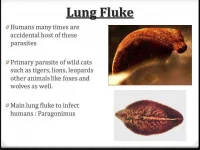
PHParagonimus is a parasitic lung fluke (flat worm). Cases of illness from infection occur after a person eats raw or undercooked infected crab or crayfish. The illness is known as paragonimiasis.
Certain Paragonimus species of flukes cause infections of the lungs.
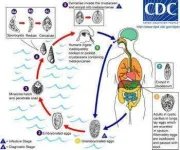
After the cysts are swallowed, the larvae leave the cyst, penetrate the wall of the intestine and enter the abdominal cavity. Then they pass through the diaphragm, and invade the lungs. There, they develop into adults and produce eggs.
The flukes may also go to the brain, liver, lymph nodes, skin, or spinal cord where they form cysts and produce eggs. However, the life cycle cannot be completed in these organs because the eggs have no way to exit the body.
From the lungs, eggs are passed in the sputum that is coughed up and spit out or swallowed and passed in stool. If the eggs enter fresh water, they hatch into larvae that are ingested by snails. Inside the snail, the larvae develop into a form (called cercariae) that can swim. Cercariae released from infected snails then infect crabs or crayfish and form cysts (called metacercariae).

Certain Paragonimus species of flukes cause infections of the lungs.
- People are infected when they swallow cysts containing fluke larvae in raw, undercooked, or pickled freshwater crabs or crayfish.
- Infected people may have diarrhea, abdominal pain, fever, cough, itching, and later symptoms due to damage to the lungs and other organs.
- Doctors diagnose the infection when they see eggs in a person's sputum or stool.
- Praziquantel or another drug is given to eliminate the flukes from the body.
- Paragonimus westermani
After the cysts are swallowed, the larvae leave the cyst, penetrate the wall of the intestine and enter the abdominal cavity. Then they pass through the diaphragm, and invade the lungs. There, they develop into adults and produce eggs.
The flukes may also go to the brain, liver, lymph nodes, skin, or spinal cord where they form cysts and produce eggs. However, the life cycle cannot be completed in these organs because the eggs have no way to exit the body.
From the lungs, eggs are passed in the sputum that is coughed up and spit out or swallowed and passed in stool. If the eggs enter fresh water, they hatch into larvae that are ingested by snails. Inside the snail, the larvae develop into a form (called cercariae) that can swim. Cercariae released from infected snails then infect crabs or crayfish and form cysts (called metacercariae).