 PH
PH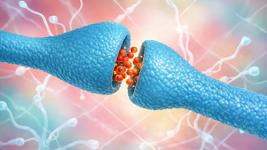
Biology Igcse Course Unit 14
Published 6/2026
MP4 | Video: h264, 1920x1080 | Audio: AAC, 44.1 KHz, 2 Ch
Language: English | Duration: 2h 27m | Size: 3.91 GB
Coordination and Response
What you'll learn
In this course students will learn exactly what they need to know for their Biology IGCSE exams. Students will learn about
1. State that electrical impulses travel along neurones
2. Describe the mammalian nervous system in terms of
(a) the central nervous system (CNS) consisting of the brain and the spinal cord
(b) the peripheral nervous system (PNS) consisting of the nerves outside of the brain and spinal cord
3. Describe the role of the nervous system as coordination and regulation of body functions
4. Identify in diagrams and images sensory, relay and motor neurones
6. Describe a reflex action as a means of automatically and rapidly integrating and coordinating stimuli with the responses of effectors (muscles and glands)
7. Describe a synapse as a junction between two neurones
8. Describe the structure of a synapse, including the presence of vesicles containing neurotransmitter molecules, the synaptic gap and receptor proteins
9. Describe the events at a synapse as
(a) an impulse stimulates the release of neurotransmitter molecules from vesicles into the synaptic gap
(b) the neurotransmitter molecules diffuse across the gap
(c) neurotransmitter molecules bind with receptor proteins on the next neurone
(d) an impulse is then stimulated in the next neurone
10. State that synapses ensure that impulses travel in one direction only
11. Describe sense organs as groups of receptor cells responding to specific stimuli: light, sound, touch, temperature and chemicals
12. Identify in diagrams and images the structures of the eye, limited to: cornea, iris, pupil, lens, retina, optic nerve and blind spot
13. Describe the function of each part of the eye, limited to
(a) cornea - refracts light
(b) iris - controls how much light enters the pupil
(c) lens - focuses light on to the retina
(d) retina - contains light receptors, some sensitive to light of different colours
(e) optic nerve - carries impulses to the brain
14. Explain the pupil reflex, limited to changes in light intensity and pupil diameter
15. Explain the pupil reflex in terms of the antagonistic action of circular and radial muscles in the iris
16. Explain accommodation to view near and distant objects in terms of the contraction and relaxation of the ciliary muscles
17. Describe the distribution of rods and cones in the retina of a human
18. Outline the function of rods and cones, limited to
(a) greater sensitivity of rods for night vision
(b) three different kinds of cones, absorbing light of different colours, for colour vision
19. Identify in diagrams and images the position of the fovea and state its function
20. Describe a hormone as a chemical substance, produced by a gland and carried by the blood, which alters the activity of one or more specific target organs
21. Identify in diagrams and images specific endocrine glands and state the hormones they secrete, limited to
(a) adrenal glands and adrenaline
(b) pancreas and insulin
(c) testes and testosterone
(d) ovaries and oestrogen
22. Describe adrenaline as the hormone secreted in 'fight or flight' situations and its effects, limited to
(a) increased breathing rate
(b) increased heart rate
(c) increased pupil diameter
23. Compare nervous and hormonal control, limited to speed of action and duration of effect
24. State that glucagon is secreted by the pancreas
25. Describe the role of adrenaline in the control of metabolic activity, limited to
(a) increasing the blood glucose concentration
(b) increasing heart rate
26. Describe homeostasis as the maintenance of a constant internal environment
27. State that insulin decreases blood glucose concentration
28. Explain the concept of homeostatic control by negative feedback with reference to a set point
29. Describe the control of blood glucose concentration by the liver and the roles of insulin and glucagon
30. Outline the treatment of Type 1 diabetes
31. Identify in diagrams and images of the skin: hairs, hair erector muscles, sweat glands, receptors, sensory neurones, blood vessels and fatty tissue
32. Describe the maintenance of a constant internal body temperature in mammals in terms of: insulation, sweating, shivering and the role of the brain
33. Describe the maintenance of a constant internal body temperature in mammals
34. Describe gravitropism as a response in which parts of a plant grow towards or away from gravity
35. Describe phototropism as a response in which parts of a plant grow towards or away from the direction of the light source
36. Describe phototropism as a response in which parts of a plant grow towards or away from the direction of the light source
37. Explain phototropism and gravitropism of a shoot as examples of the chemical control of plant growth
38. Explain the role of auxin in controlling shoot growth, limited to
(a) auxin is made in the shoot tip
(b) auxin diffuses through the plant from the shoot tip
(c) auxin is unequally distributed in response to light and gravity
(d) auxin stimulates cell elongation
Requirements
Access to a device to watch lessons - phone, tablet, or computer No textbook needed - everything is covered in the course
Description
This Biology course is structured specifically around the latest Cambridge IGCSE and GCE Biology syllabus, ensuring complete and accurate coverage of every objective students need to master for their examinations. Students preparing for AP Biology, IB Biology, or equivalent international curricula will also find this course highly valuable for building a thorough understanding of the theory component of their exams, as the core biological concepts covered are closely aligned across these specifications.
The course focuses onUnit 14: Coordination and Response, one of the most detailed and diverse units in the entire Biology course. From the nervous system and reflex arcs to hormones, homeostasis, the eye, and plant responses - this unit covers a wide range of concepts that examiners test consistently and in depth across all papers. Every syllabus objective is covered in full, with zero gaps.
Every syllabus objective is covered comprehensively, without overloading you with irrelevant material. The content is precise, focused, and directly aligned with what examiners expect - so you spend your time learning exactly what matters and nothing that does not. Throughout every lesson, real past paper questions are used to show you how this unit is examined, what a full-mark answer looks like, and the common mistakes that cost students marks every single year. You will know not just what to say, but how to say it - and equally importantly, what not to write.
The course builds strongexam technique alongside content knowledge, covering every question type across Papers 1, 2, 3 and 4 - from multiple choice and short answer to structured and extended response questions. Students leave this course knowing exactly how to approach any question on this unit regardless of how it is worded.
Every video lesson comes with adownloadable PDF resource that contains everything you need to know for that specific lesson - definitions, diagrams, key points and exam tips - all written and structured to match exactly what the syllabus requires. There is no need to open a textbook, search for revision guides, or look anything up online. Simply watch the lesson, download the PDF, study from it, and go straight to past papers. Everything you need is right here in one place.
Thepractical component is fully covered in this course. Students are taken through two core investigations - the investigation into gravitropism in pea radicles, and the investigation into phototropism in shoots. Both experiments are broken down in full - covering the method, variables, expected results, data interpretation and evaluation - with specific training on how to answer practical questions inPapers 5 and 6 that test experimental skills, data analysis and scientific reasoning under exam conditions.
This course is ideal for students aiming for high achievement and A* grades in Biology examinations.
Who this course is for
IGCSE Biology Students Preparing for External Exams
You do not have permission to view the full content of this post. Log in or register now.
You do not have permission to view the full content of this post. Log in or register now.
You do not have permission to view the full content of this post. Log in or register now.
You do not have permission to view the full content of this post. Log in or register now.
You do not have permission to view the full content of this post. Log in or register now.
