 PH
PH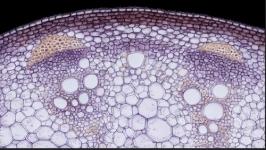
Biology Igcse Course Unit 8
Published 6/2026
MP4 | Video: h264, 1920x1080 | Audio: AAC, 44.1 KHz, 2 Ch
Language: English | Duration: 1h 20m | Size: 2.28 GB
Transport in Plants
What you'll learn
In this course students will learn exactly what they need to know for their Biology IGCSE exams. Students will learn about
1. State the functions of xylem and phloem
(a) xylem - transport of water and mineral ions, and support
(b) phloem - transport of sucrose and amino acids
2. Identify in diagrams and images the position of xylem and phloem as seen in sections of roots, stems and leaves of non-woody dicotyledonous plants
(a) thick walls with lignin (details of lignification are not required)
(b) no cell contents
(c) cells joined end to end with no cross walls to form a long continuous tube
4. Identify in diagrams and images root hair cells and state their functions
5. State that the large surface area of root hairs increases the uptake of water and mineral ions
6. Outline the pathway taken by water through the root, stem and leaf as: root hair cells, root cortex cells, xylem, mesophyll cells
7. Investigate, using a suitable stain, the pathway of water through the above-ground parts of a plant
8. Describe transpiration as the loss of water vapour from leaves
9. State that water evaporates from the surfaces of the mesophyll cells into the air spaces and then diffuses out of the leaves through stomata as water vapor
10. Explain how water vapour loss is related to: the large internal surface area and the size and number of stomata
11. Explain the mechanism by which water moves upwards in the xylem in terms of a transpiration pull that draws up a column of water molecules
12. Explain the effects on the rate of transpiration of varying the following factors: temperature, wind speed and humidity
13. Explain how and why wilting occurs
14. Describe translocation as the movement of sucrose and amino acids in phloem from sources to sinks
15. Describe
(a) sources as the parts of plants that release sucrose or amino acids
(b) sinks as the parts of plants that use or store sucrose or amino acids
16. Explain why some parts of a plant may act as a source and a sink at different times
Requirements
Access to a device to watch lessons - phone, tablet, or computer No textbook needed - everything is covered in the course
Description
This Biology course is structured specifically around the latest Cambridge IGCSE and GCE Biology syllabus, ensuring complete and accurate coverage of every objective students need to master for their examinations. Students preparing for AP Biology, IB Biology, or equivalent international curricula will also find this course highly valuable for building a thorough understanding of the theory component of their exams, as the core biological concepts covered are closely aligned across these specifications.
The course focuses onUnit 8: Transport in Plants, and is designed with one clear goal - to make sure you walk into any exam paper fully prepared and ready to score top marks.
Every syllabus objective is covered comprehensively, without overloading you with irrelevant material. The content is precise, focused, and directly aligned with what examiners expect - so you spend your time learning exactly what matters and nothing that does not. Throughout every lesson, real past paper questions are used to show you how this unit is examined, what a full-mark answer looks like, and the common mistakes that cost students marks every single year. You will know not just what to say, but how to say it - and equally importantly, what not to write.
The course builds strongexam technique alongside content knowledge, covering every question type across Papers 1, 2, 3 and 4 - from multiple choice and short answer to structured and extended response questions. Students leave this course knowing exactly how to approach any question on this unit regardless of how it is worded.
Every video lesson comes with adownloadable PDF resource that contains everything you need to know for that specific lesson - definitions, diagrams, key points and exam tips - all written and structured to match exactly what the syllabus requires. There is no need to open a textbook, search for revision guides, or look anything up online. Simply watch the lesson, download the PDF, study from it, and go straight to past papers. Everything you need is right here in one place.
Thepractical component is a core part of this course. Students are taken through every experiment they need to know for this unit - the investigation of water pathways through plant tissue using a suitable stain, and the investigation of factors affecting transpiration rate. Each experiment is broken down in detail - covering the method, variables, expected results, data interpretation and evaluation - with specific training on how to answer practical questions inPapers 5 and 6 that test experimental skills, data analysis and scientific reasoning under exam conditions.
This course is ideal for students aiming for high achievement and A* grades in Biology examinations.
Who this course is for
IGCSE Biology Students Preparing for External Exams
You do not have permission to view the full content of this post. Log in or register now.
You do not have permission to view the full content of this post. Log in or register now.
You do not have permission to view the full content of this post. Log in or register now.