🕯️ Traditions Jesus was a god?

Status
Not open for further replies.
Tawa tawa ka nalang TS eh paano Kulto pala kinakaaniban mo hahaha Charles tazes russel pa more
Pakisagot na lang po itong tanong ko

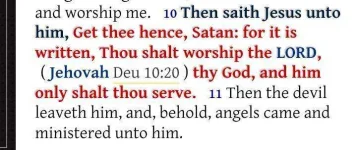
If Jesus was God, and God teach that you must woship thy God (Jehovah) .. Who would you worship?

Jesus or Jehovah?

Kasi si Jesus (na Diyos, gaya nga ng sinasabi mo rin), siya mismo nagsabi kung sino ang dapat sambahin .. Pa'no yan?

Kanino ka mas maniniwala? Sa sinulat ni Juan o sa sinabi ni Jesus?
 

Attachments

  • Screenshot_2021-03-11-21-35-29-09_e4424258c8b8649f6e67d283a50a2cbc.webp
    Screenshot_2021-03-11-21-35-29-09_e4424258c8b8649f6e67d283a50a2cbc.webp
    45.6 KB · Views: 28
In the words of the Nicene creed: We believe in one Lord, Jesus Christ, the only Son of God, eternally begotten of the Father, God from God, Light from Light, true God from true God, begotten, not made, of one Being with the Father. So we worship Jesus because of his divinity
Jesus Is God
You do not have permission to view the full content of this post. Log in or register now.11/1/2008

The You do not have permission to view the full content of this post. Log in or register now. is an essential teaching of the Catholic faith. Indeed, any community of faith that would deny Christ’s deity ceases to be Christian at all. Yet, not a few quasi-Christian sects do just that—vehemently reject this central teaching. So how can Catholics present a cogent defense steeped in Scripture and faithful to magisterial teaching?
Greater Than and Equal To
In John 14:28, Jesus says, “The Father is greater than I.” For many, this statement seems obvious: Jesus is not God. But is this really what our Lord was saying?
In Catholic theology, this text can be understood in two ways. First, being “greater” than another does not have to mean one is essentially different from the other, as when we say a man is essentially distinct from an animal. Greatness can refer to one person functioning in a greater way quantitatively, qualitatively, or even relationally in comparison to another without there being an essential distinction. For example, Matthew 11:11 tells us there has never “risen among [men] a greater than John the Baptist: yet he that is least in the kingdom of heaven is greater than he.” John is not something other than human because he is said to be greater than certain other people. All human beings share the same nature; therefore, they are absolutely equal in dignity.
Similarly, the Father can be said to be greater than the Son pertaining to their relation within the inner life of God, but not with respect to their shared nature as being fully and equally God. The Father alone is the first principle of life in the Godhead; thus, the Catechism of the Catholic Church can say, in paragraph 246: “Everything that belongs to the Father, except being Father, the Son has also eternally from the Father, from whom he is eternally born . . .” (emphasis added). In this sense, the Father can be said to be greater than the Son relationally, while they are absolutely equal with regard to their essence as God.
Another—and perhaps simpler—way one can legitimately interpret this text is to point out that John 14:28 seems to be emphasizing the humanity of Christ. Thus, because Jesus is fully man, it would be appropriate to say the Father would be greater than the Son. The entire verse reads: “You heard me say to you, ‘I go away, and I will come to you.’ If you loved me, you would have rejoiced, because I go to the Father; for the Father is greater than I.”
Jesus was emphasizing here and in previous verses his impending death, resurrection, and departure from the apostles. This would apply to his humanity most particularly. Thus, the same Jesus who can say, “I and the Father are one” in John 10:30—as God—can say, “The Father is greater than I” in John 14:28—as man.
Was Jesus Created?
Revelation 3:14 declares: “And to the angel of the church in Laodicea write: ‘The words of the Amen, the faithful and true witness, the beginning of God’s creation.’” Using these words, You do not have permission to view the full content of this post. Log in or register now. claim Jesus to be the first creation of Almighty God and therefore, not God. The only problem here is the actual text. The word translated “beginning” (Gk. arche) here actually means “source.” In other words, it means “beginning” as in the first cause, not in the sense of being the “first effect.” Arche is used as such elsewhere in the book of Revelation. In chapter 21, verse 6, Almighty God says: “I am the Alpha and the Omega, the beginning and the end . . .” Do we want to say God was created because arche is used to describe him? By no means! Understood properly, Revelation 3:14 reveals Jesus to be the source of God’s creation—God himself. This fits perfectly with John’s christological declaration in John 1:1-3: the Word created “all things . . . and without him was made nothing that was made.” If the Word was created, he would have had to create himself, which is absurd.
Colossians 1:15-17 reveals Jesus as the “first-born of every creature. For in him were all things created . . . he is before all and by him all things consist.” Many make the mistake of concluding Jesus was created because he is called “first-born of every creature.” One obvious problem here is born and created have very different definitions. Even when considering natural childbirth, we know a child does not come into being when he is born, but nine months earlier. Neither would Christ have “come into being” when he was begotten of the Father. Indeed, when Jesus is called first-born in Colossians, he is referred to as such before creation and time even existed. He was begotten from all eternity. As such, he would have never “come into being.” Thus, we say in the Creed, Jesus was “begotten, not made, one in being with the Father.” A second, related problem arises when one considers the title first-born. Even in its Old Testament usage, this title was not restricted to a sense of time. The emphasis was on a place of pre-eminence given by a father to his son. Isaac, Jacob, and Ephraim received the blessing of the first-born though they were not first-born in time.
But perhaps most important of all is the fact that the text simply does not say Jesus was created. If St. Paul were teaching Christ to have been created, he would have then had to refer to Christ as creator of all other things in verse 16, but he did not. (Jehovah’s Witnesses did add the word “other” here in Colossians 1:16 in their New World Translation—to make the text fit their doctrine.) Paul calls Jesus Creator of all things. Jesus is God.
A Positive Outlook
Some biblical texts positively demonstrate Christ’s divinity. John 1:1-3, mentioned above, first comes to mind: “In the beginning was the Word, the Word was with God, and the Word was God . . . All things were made by him: and without him was made nothing that was made.”
Jesus (the Word before his Incarnation) is revealed to be “God” and the Creator of all things that were created. Genesis 1:1 tells us, “In the beginning God created . . .” The conclusion is inescapable: Jesus is God!
Jehovah’s Witnesses respond by claiming the Greek text actually says “. . . the Word was a god.” They maintain Jesus is here revealed to be a god, not the God because the definite article (Gk. Ho, the) is not used before god (Gk. theos), when referring to Jesus. This line of reasoning has three main problems:​
The predicate nominative in Greek normally does not take the definite article. In this verse, then, the lack of the definite article is grammatically consistent. According to the Theological Dictionary of the New Testament, we see another example of this convention in John 8:54, where the predicate nominative is “Father”—again without the definite article preceding (3:105).


The JW’s are inconsistent. They translate the word theos as “Jehovah,” or the God numerous times in their New World Translation of the Bible when it does not have the article preceding it (see NWT: Matt. 5:9, 6:24; Luke 1:35, 2:40; John 1:6,12,13,18; Rom. 1:7,17,18; and Titus 1:1, just to name a few).


Jesus is referred to as theos with the definite article multiple times elsewhere in Scripture. For example: “But of the Son he says, ‘Thy throne, O God (ho theos, the definite article plus theos), is for ever and ever, the righteous scepter is the scepter of thy kingdom’” (Heb. 1:8). Jesus is not a god here. He is the God: “Awaiting our blessed hope, the appearing of the glory of our great God and Savior Jesus Christ ” (Titus 2:13, emphasis added—definite article appears in apposition to “great God”). Not only do we see the definite article before theos, but we see the article plus the adjective great. Jesus is not only the God, he is the great God and our Savior. The Bible is very clear that only Yahweh is both the great God and our Savior. (See Isaiah 41:4, 43:3,11, 44:6,8, 45:21; Hos. 13:4; and Luke 1:47.) Consider too: Thomas answered, and said to [Jesus]: “My Lord and My God” (John 20:28). The Greek text reads “the Lord of me and the God of me.” The definite article before Lord and God leaves no doubt that Thomas—directly addressing our Lord—calls Jesus both the Lord and the God.


What Only God Can Do


“And the Lord God (Gk. ho kurios ho theos, the Lord the God) of the spirits of the prophets sent his angel to show his servants the things which must be done shortly” (Rev. 22:6). Who is the Lord God who sent “his angel” in this verse? Some attempt to say this text is referring to the Father rather than Jesus. However, Revelation 22:16, just 10 verses later, reveals to us who “the Lord God” is who has “sent his angel:” ” I Jesus have sent my angel, to testify to you these things in the churches.” Jesus is clearly “the Lord God of the spirits of the prophets!”


In Luke 12:8-9, angels are called “angels of God”; in Matthew 13:41, angels are called “[Jesus’] angels.” Jesus and God are synonymous. Jesus does what only God can do. He forgives sins by his own authority (see Is. 43:25; Mark 2:5-9). He judges the world in Matthew 25:31-46. This is God’s prerogative according to Genesis 18:25 and Joel 3:12.


Jesus refers to himself with the divine name—I am —in several places. This “I am” formula is a reference back to the Divine Name revealed to Moses in Ex. 3:14. Not only does Jesus refer to himself as “I am” four times in John’s Gospel (see John 8:24; 58; 13:19 and 18:5-6), but when he does so in John 8:58, the Jews to whom he was speaking understood his meaning because they immediately wanted to stone him for blasphemy!


Jesus places his word on the same level as the word of God—the Old Testament. “You have heard it said . . . but I say to you . . .” (see Matt. 5:21-28). This is in sharp contrast to the prophets of old who always made clear the word they were speaking was not their own: “The word of the Lord came unto me, saying . . . ” (cf. Jer. 1:11; Ezek. 1:3, etc.). Only God possesses this kind of authority.


Jesus is referred to as “equal” with God by both John and Paul. In John 5:18, the author comments on why the Jews wanted to kill Jesus: “Because he called God his Father, making himself equal with God.” Paul refers to Jesus when he was “in the form (Gk. morphe; in Greek usage this word means the set of characteristics that makes a thing what it is) of God” thinking “his equality with God” not something to be grasped onto, but emptying himself and becoming man (cf. Phil. 2:6-10). Paul assumes his readers already knew Jesus to be equal with God, the Father.


Jesus is referred to in the New Testament with the title Lord as it is uniquely applied to Yahweh in the Old Testament. Jesus calls himself “the Lord of the Sabbath” in Mark 2:28. The Sabbath is referred to as the “Sabbath of Yahweh” in the Old Testament (cf. Ex. 20:10; see also Is. 8:13, referred to in 1 Peter 3:15; and Joel 2:31-32, quoted both in Acts 2:20-21 and in Rom. 10:13).


The First and Last Point


The final proof of Jesus’ divinity we will consider can be found in the last two chapters of the book of Revelation. According to Revelation 21:6-7, Almighty God reveals himself to us in plain terms: “And he said to me, ‘It is done! I am the Alpha and the Omega, the beginning and the end. To the thirsty I will give from the fountain of the water of life without payment. He who conquers shall have this heritage, and I will be his God and he shall be my son.’”


But then, in Revelation 22:6, 13, 16, we find Jesus revealing himself to be “the Alpha and the Omega . . . the beginning and the end”:


And he said to me, “These words are trustworthy and true. And the Lord, the God of the spirits of the prophets, has sent his angel to show his servants what must soon take place . . . I am the Alpha and the Omega, the first and the last, the beginning and the end . . . I Jesus have sent my angel to you with this testimony for the churches. I am the root and the offspring of David, the bright morning star.”


Jesus is God.
 
Ayan na sagotko bro as A Catholic Christian, a CHURCH FOUNDED BY OUR LORD JESUS CHRIST the ROMAN APOSTOLIC CATHOLIC CHURCH Basahin mo kasi masasagot fin jan yung maling translation at pagkakaintindi niyo kay Jesus Christ. BASAHIN MO PLEASE AT GAMITIN ANG UTAK WAG EMOTION LANG.
 
[XX='Pewdy, c: 913878, m: 1345309'][/XX] Yes .. Jesus is God .. Now, my question is .. If Jesus is God and God teach that you must worship thy God (Jehovah) .. Who would you worship?

Jesus or Jehovah?

Kanino ka po mas maniniwala, sa isinulat ni Juan or sa itinuro ni Jesus?

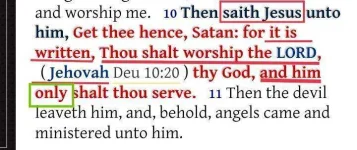
Nasa picture po yung reference para yan po ang pagbasehan ninyo ng sagot .. Galing po yan sa King James Bible ... hindi po sa NWT, baka sbhn po ninyo, Bias ako eh ...

Pakisagot lng po yung tanong ko

Who would you worship, Jesus or Jehovah?

Tandaan niyo po, God yung nagsabi po nyan ...
 

Attachments

  • IMG_20210311_235126.webp
    IMG_20210311_235126.webp
    48.4 KB · Views: 25
Pakisagot na lang po itong tanong ko

If Jesus was God, and God teach that you must woship thy God (Jehovah) .. Who would you worship?

Jesus or Jehovah?

Kasi si Jesus (na Diyos, gaya nga ng sinasabi mo rin), siya mismo nagsabi kung sino ang dapat sambahin .. Pa'no yan?

Kanino ka mas maniniwala? Sa sinulat ni Juan o sa sinabi ni Jesus?
In the words of the Nicene creed: We believe in one Lord, Jesus Christ, the only Son of God, eternally begotten of the Father, God from God, Light from Light, true God from true God, begotten, not made, of one Being with the Father. So we worship Jesus because of his divinity
Jesus Is God
You do not have permission to view the full content of this post. Log in or register now.11/1/2008

The You do not have permission to view the full content of this post. Log in or register now. is an essential teaching of the Catholic faith. Indeed, any community of faith that would deny Christ’s deity ceases to be Christian at all. Yet, not a few quasi-Christian sects do just that—vehemently reject this central teaching. So how can Catholics present a cogent defense steeped in Scripture and faithful to magisterial teaching?
Greater Than and Equal To
In John 14:28, Jesus says, “The Father is greater than I.” For many, this statement seems obvious: Jesus is not God. But is this really what our Lord was saying?
In Catholic theology, this text can be understood in two ways. First, being “greater” than another does not have to mean one is essentially different from the other, as when we say a man is essentially distinct from an animal. Greatness can refer to one person functioning in a greater way quantitatively, qualitatively, or even relationally in comparison to another without there being an essential distinction. For example, Matthew 11:11 tells us there has never “risen among [men] a greater than John the Baptist: yet he that is least in the kingdom of heaven is greater than he.” John is not something other than human because he is said to be greater than certain other people. All human beings share the same nature; therefore, they are absolutely equal in dignity.
Similarly, the Father can be said to be greater than the Son pertaining to their relation within the inner life of God, but not with respect to their shared nature as being fully and equally God. The Father alone is the first principle of life in the Godhead; thus, the Catechism of the Catholic Church can say, in paragraph 246: “Everything that belongs to the Father, except being Father, the Son has also eternally from the Father, from whom he is eternally born . . .” (emphasis added). In this sense, the Father can be said to be greater than the Son relationally, while they are absolutely equal with regard to their essence as God.
Another—and perhaps simpler—way one can legitimately interpret this text is to point out that John 14:28 seems to be emphasizing the humanity of Christ. Thus, because Jesus is fully man, it would be appropriate to say the Father would be greater than the Son. The entire verse reads: “You heard me say to you, ‘I go away, and I will come to you.’ If you loved me, you would have rejoiced, because I go to the Father; for the Father is greater than I.”
Jesus was emphasizing here and in previous verses his impending death, resurrection, and departure from the apostles. This would apply to his humanity most particularly. Thus, the same Jesus who can say, “I and the Father are one” in John 10:30—as God—can say, “The Father is greater than I” in John 14:28—as man.
Was Jesus Created?
Revelation 3:14 declares: “And to the angel of the church in Laodicea write: ‘The words of the Amen, the faithful and true witness, the beginning of God’s creation.’” Using these words, You do not have permission to view the full content of this post. Log in or register now. claim Jesus to be the first creation of Almighty God and therefore, not God. The only problem here is the actual text. The word translated “beginning” (Gk. arche) here actually means “source.” In other words, it means “beginning” as in the first cause, not in the sense of being the “first effect.” Arche is used as such elsewhere in the book of Revelation. In chapter 21, verse 6, Almighty God says: “I am the Alpha and the Omega, the beginning and the end . . .” Do we want to say God was created because arche is used to describe him? By no means! Understood properly, Revelation 3:14 reveals Jesus to be the source of God’s creation—God himself. This fits perfectly with John’s christological declaration in John 1:1-3: the Word created “all things . . . and without him was made nothing that was made.” If the Word was created, he would have had to create himself, which is absurd.
Colossians 1:15-17 reveals Jesus as the “first-born of every creature. For in him were all things created . . . he is before all and by him all things consist.” Many make the mistake of concluding Jesus was created because he is called “first-born of every creature.” One obvious problem here is born and created have very different definitions. Even when considering natural childbirth, we know a child does not come into being when he is born, but nine months earlier. Neither would Christ have “come into being” when he was begotten of the Father. Indeed, when Jesus is called first-born in Colossians, he is referred to as such before creation and time even existed. He was begotten from all eternity. As such, he would have never “come into being.” Thus, we say in the Creed, Jesus was “begotten, not made, one in being with the Father.” A second, related problem arises when one considers the title first-born. Even in its Old Testament usage, this title was not restricted to a sense of time. The emphasis was on a place of pre-eminence given by a father to his son. Isaac, Jacob, and Ephraim received the blessing of the first-born though they were not first-born in time.
But perhaps most important of all is the fact that the text simply does not say Jesus was created. If St. Paul were teaching Christ to have been created, he would have then had to refer to Christ as creator of all other things in verse 16, but he did not. (Jehovah’s Witnesses did add the word “other” here in Colossians 1:16 in their New World Translation—to make the text fit their doctrine.) Paul calls Jesus Creator of all things. Jesus is God.
A Positive Outlook
Some biblical texts positively demonstrate Christ’s divinity. John 1:1-3, mentioned above, first comes to mind: “In the beginning was the Word, the Word was with God, and the Word was God . . . All things were made by him: and without him was made nothing that was made.”
Jesus (the Word before his Incarnation) is revealed to be “God” and the Creator of all things that were created. Genesis 1:1 tells us, “In the beginning God created . . .” The conclusion is inescapable: Jesus is God!
Jehovah’s Witnesses respond by claiming the Greek text actually says “. . . the Word was a god.” They maintain Jesus is here revealed to be a god, not the God because the definite article (Gk. Ho, the) is not used before god (Gk. theos), when referring to Jesus. This line of reasoning has three main problems:​
The predicate nominative in Greek normally does not take the definite article. In this verse, then, the lack of the definite article is grammatically consistent. According to the Theological Dictionary of the New Testament, we see another example of this convention in John 8:54, where the predicate nominative is “Father”—again without the definite article preceding (3:105).


The JW’s are inconsistent. They translate the word theos as “Jehovah,” or the God numerous times in their New World Translation of the Bible when it does not have the article preceding it (see NWT: Matt. 5:9, 6:24; Luke 1:35, 2:40; John 1:6,12,13,18; Rom. 1:7,17,18; and Titus 1:1, just to name a few).


Jesus is referred to as theos with the definite article multiple times elsewhere in Scripture. For example: “But of the Son he says, ‘Thy throne, O God (ho theos, the definite article plus theos), is for ever and ever, the righteous scepter is the scepter of thy kingdom’” (Heb. 1:8). Jesus is not a god here. He is the God: “Awaiting our blessed hope, the appearing of the glory of our great God and Savior Jesus Christ ” (Titus 2:13, emphasis added—definite article appears in apposition to “great God”). Not only do we see the definite article before theos, but we see the article plus the adjective great. Jesus is not only the God, he is the great God and our Savior. The Bible is very clear that only Yahweh is both the great God and our Savior. (See Isaiah 41:4, 43:3,11, 44:6,8, 45:21; Hos. 13:4; and Luke 1:47.) Consider too: Thomas answered, and said to [Jesus]: “My Lord and My God” (John 20:28). The Greek text reads “the Lord of me and the God of me.” The definite article before Lord and God leaves no doubt that Thomas—directly addressing our Lord—calls Jesus both the Lord and the God.


What Only God Can Do


“And the Lord God (Gk. ho kurios ho theos, the Lord the God) of the spirits of the prophets sent his angel to show his servants the things which must be done shortly” (Rev. 22:6). Who is the Lord God who sent “his angel” in this verse? Some attempt to say this text is referring to the Father rather than Jesus. However, Revelation 22:16, just 10 verses later, reveals to us who “the Lord God” is who has “sent his angel:” ” I Jesus have sent my angel, to testify to you these things in the churches.” Jesus is clearly “the Lord God of the spirits of the prophets!”


In Luke 12:8-9, angels are called “angels of God”; in Matthew 13:41, angels are called “[Jesus’] angels.” Jesus and God are synonymous. Jesus does what only God can do. He forgives sins by his own authority (see Is. 43:25; Mark 2:5-9). He judges the world in Matthew 25:31-46. This is God’s prerogative according to Genesis 18:25 and Joel 3:12.


Jesus refers to himself with the divine name—I am —in several places. This “I am” formula is a reference back to the Divine Name revealed to Moses in Ex. 3:14. Not only does Jesus refer to himself as “I am” four times in John’s Gospel (see John 8:24; 58; 13:19 and 18:5-6), but when he does so in John 8:58, the Jews to whom he was speaking understood his meaning because they immediately wanted to stone him for blasphemy!


Jesus places his word on the same level as the word of God—the Old Testament. “You have heard it said . . . but I say to you . . .” (see Matt. 5:21-28). This is in sharp contrast to the prophets of old who always made clear the word they were speaking was not their own: “The word of the Lord came unto me, saying . . . ” (cf. Jer. 1:11; Ezek. 1:3, etc.). Only God possesses this kind of authority.


Jesus is referred to as “equal” with God by both John and Paul. In John 5:18, the author comments on why the Jews wanted to kill Jesus: “Because he called God his Father, making himself equal with God.” Paul refers to Jesus when he was “in the form (Gk. morphe; in Greek usage this word means the set of characteristics that makes a thing what it is) of God” thinking “his equality with God” not something to be grasped onto, but emptying himself and becoming man (cf. Phil. 2:6-10). Paul assumes his readers already knew Jesus to be equal with God, the Father.


Jesus is referred to in the New Testament with the title Lord as it is uniquely applied to Yahweh in the Old Testament. Jesus calls himself “the Lord of the Sabbath” in Mark 2:28. The Sabbath is referred to as the “Sabbath of Yahweh” in the Old Testament (cf. Ex. 20:10; see also Is. 8:13, referred to in 1 Peter 3:15; and Joel 2:31-32, quoted both in Acts 2:20-21 and in Rom. 10:13).


The First and Last Point


The final proof of Jesus’ divinity we will consider can be found in the last two chapters of the book of Revelation. According to Revelation 21:6-7, Almighty God reveals himself to us in plain terms: “And he said to me, ‘It is done! I am the Alpha and the Omega, the beginning and the end. To the thirsty I will give from the fountain of the water of life without payment. He who conquers shall have this heritage, and I will be his God and he shall be my son.’”


But then, in Revelation 22:6, 13, 16, we find Jesus revealing himself to be “the Alpha and the Omega . . . the beginning and the end”:


And he said to me, “These words are trustworthy and true. And the Lord, the God of the spirits of the prophets, has sent his angel to show his servants what must soon take place . . . I am the Alpha and the Omega, the first and the last, the beginning and the end . . . I Jesus have sent my angel to you with this testimony for the churches. I am the root and the offspring of David, the bright morning star.”


Jesus is God.

Ayan na ang sagot bro from the CHURCH FOUNDED BY JESUS CHRIST WHICH IS THE CATHOLIC CHURCH
 
[XX='Pewdy, c: 913899, m: 1345309'][/XX] Ang sinasamba niyo pala ay si Jesus ..

Pero, paano yan? Si Jesus mismo nagsabi na you must worship thy God (Jehovah) ..


Hindi po ba pagsalungat mismo iyon sa kaniyang utos?
 
Same lang po si johovah at si jesus dahil nakasulat naman sa exodus 20:3-4 wag ka mag samba ng sino mang diyos dahil nagiisa nga lang naman sya ito pa reference wag mo gamitin ang pangalan ng diyos sinulat ito na wala pa si jesus at wala pa namang pangalan ang diyos noon at dumating si jesus na sya ang diyos at meron na syang pangalan na si jesus nagpakumbaba lang sya nong nagpakatao sya kaya tumatawag sya ng diyos na spirito pero iisa lang sila kasi ito lang iisipin natin ts kong madami namumuno sa langit malamang mag aaway away sila kaya nag iisa lang talaga yan kaya nga si satan na angel hinulog dito eh kasi gusto nya pa lumamang sa diyos na isa lang naman syang angel na kanang kamay
 
Correction hindi po si jesus ang nag founded ng catholic na found ang catholic church sa panahon ni jesus, si jesus ay isang judio po sya jewish, Ang nag found ng catholic ay ang mga romano kaya roman catholic kong saan ay ang mga romano naman ang nagpako kay jesus sa cruz roman din ang pinakamalupet na nagpapahirap sa mga judio ng matagal na panahon, Naniniwala ang mga catholic kay jesus pero sa rebulto not on jesus spirit into heaven at salungat ang mga turo na iba katulad nalang na wag mag samba ng anomang anyo larawan pero ginawa ng catholic wag kumain ng dugo at baboy nasa bible din ni ultimo bato sa kweba pag nagpakita ng himala e sinasamba ng catholico😂hayyy
Hindi ako born again inc or muslim
Pero yan talaga ang totoo catholic is worthship to the beast not to jesus kapalit ng pera ang pagsisinungaling ng mga pari
 
[XX='Jazzpper, c: 913925, m: 1478155'][/XX] Kung iisa lang sila, bakit sinabi ni Jesus na "Thou shalt worship thy LORD (Jehovah), thy God, and him ONLY thou must worship"?

sabi po ni Jesus, ONLY?

So, it means, si Jehova LANG ang dapat sambahin ... pero bakit si Jesus ang sasambahin kung sabi niya na si Jehova LANG ang dapat sambahin? Sinasalungat ba ni Jesus ang sinabi mo or ikaw ang sumasalungat po sa sinabi ni Jesus?

Oo nga't sabi ninyo na Diyos si Jesus, pero sabi din ng Bibliya, huwag sasamba sa ibang diyos ... at sabi din ng Diyos ninyo na si Jesus, si Jehova LANG ang dapat sambahin, pa'no po yun kung sabay ninyo silang sasambahin?

diba pag ginamit yung "LANG” or "ONLY" sa english, it means, isa lang ang sasambahin, hindi dalawa ....

Si Jesus naman na kasi nagsabi non .. di po ba? Nabasa niyo naman po sa teksto, sa picture ... Pano niyo ipapaliwanag yun???
 
naku JW ka siguro nu? ibig muba sabihin di ka luluhod at sasamba kay hesus? tanong nga kita luluhod kaba kaba at sasabihin na si Jesus siya ang dakilang diyos?
 

What is the Basis for the Differing Beliefs Between Jehovah's Witnesses and Catholics?​


A PRIMARY difference and the basis for the differing beliefs between Jehovah's Witnesses and Catholics is because Catholics look to the Pope as the final authority while JWs believe that the Bible is the final authority on doctrinal belief and it cannot be overridden by any human or organization. JWs do not believe that any human is infallible.

The WTS itself has reproved Witnesses for even using terminology that would even appear to place the WTS as their authority on any subject, re-emphasizing that JW's should use only the Bible as their source.--(w98 3/15 p.18)


Catholics view the Pope as infallible in his interpretation of doctrines (or educated Catholics refer to the "magisterium" as infallible). Catholics look to the Pope/magisterium and "tradition" as the final authority on what the Bible "really" teaches and view the Bible as a secondary and untrustworthy source.*

This is the greatest difference and is the reason that Catholics do not accept the clear teaching of the Bible and also why they were not officially allowed to read the Bible on their own until recent history.


On the other hand, Witnesses have no "clergy class" and their teachers are described with the Biblical terms "Elder," "Overseer," and "Minister." As the description implies these men are simply experienced counselors and shepherds. These Overseers are not "masters of our faith" but are given authority to keep the Christian Congregation clean of immoral/doctrinal influences (Heb.13:17,24; 1 Thes. 5:12; 1Cor.16:16).

The Witnesses teaching is very clear:

"What GOD'S WORD has to say on any issue should be considered as final and binding on all members"--w68 2/1 p. 84

They direct attention to the BIBLE as:

"the FINAL AUTHORITY."--km 9/02 p.2; g80 9/22 p.12; it-1 p.1205; g75 10/22 p.22; g70 4/22 p.25

"The ABSOLUTE AUTHORITY." --sg p.155; w77 5/1 p.287; w56 11/15 p.704

"The SOLE AUTHORITY for all that they believe."--w85 5/15 p.30

"The ONLY SOURCE of truth."--g00 4/8 p.9

"The Watchtower does not claim to be inspired in its utterances, nor is it dogmatic. It invites careful and critical examination of its contents in the light of the Scriptures."--Wt 15 Aug 1950

"And we still urge, as in the past, that each reader study the subjects we present in the light of the Scriptures, proving all things by the Scriptures, accepting what they see to be thus approved, and rejecting all else."-- WT 12/15/1896

All our beliefs and teachings are derived from the Bible as the final authority (2Tim 3:16,17; Gal. 1:8, 9).


These quotes also show how we are sure that our beliefs are correct. From the first study with JWs a person is taught to examine the Bible and compare their personal beliefs. We do not just believe what is said but we do what the Bereans did; we "carefully check the Scriptures" to make sure what is said is Truth (Ac.17:11).


So, Witnesses accept what the Bible explicitly says without trying to make it fit our own preconceived ideas. We also take the Bible in context by finding all the verses on one subject so that we get a clear and unified picture of what it is saying. To this we must add a knowledge of what the original words meant at the time the Bible was written and a knowledge of the grammar.

Through extensive study individual Jehovah's Witnesses have come to trust the accuracy of their beliefs. Through experience they have proven that all True Christians are associated with Jehovah's Witnesses and this organization is the only one which gives solid evidence of being God's congregation.

So, we do not blindly follow any organization but we recognize those who give evidence of accurate teaching. Witnesses give evidence that they are True Christians by their strictly following Scriptural truth and by their fruitage (Mat.7:16-19; Jn.13:34,35).

All Witnesses do is to invite others to do the same, critically examine your beliefs in light of the plain and explicit teaching of Scripture and the evidence in the actions of your religion and its members, then choose to follow Christ closely (Rom.10:1-3; Eph.1:17).
----------------------------------------------------------

*Catholics always like to make it seem that the issue is tradition vs Scripture. No one denies that the 1st cent. Christians had regard for tradition or that we don't appeal to tradition today. The issue is "Does our traditions contradict the Bible" and "Does tradition ever take precedence over the Bible."

Nowhere does the Bible say that "tradition" is how you discern truth. And the present Catholic "traditions" clearly contradict the Bible and even historical Catholic traditional teachings!
 
PARA PO SA MGA TRINITARIAN DITO NA MAMBABASA O NALIGAW po DITO meron lamang po akong mga katanungan na hanggang sa ngayon ay wala parin malinaw na nakasasagot, kung talagang kaya nyo panindigan yan paniniwala po ninyo, mangyari lamang po na sagutin itong mga tanong ko.. willing po ako maghintay.. pero kung walang makakasagot.. isa lang ang ibig sabihin nyan hindi po nyo kaya i defend ang paniniwala nyo o kaya hindi yan ang siyang talagang itinuturo ng Bibliya...

Questions For Those Who Believe in the Trinity​


If Jesus is Almighty God...

1. Then why is "God head of Christ just as Christ is head of man"? (1 Cor. 11:3)

2. Then why does Scripture consistently phrase Jesus as a separate person from God? (John 20:17; John 14:1; Mark 10:18; John 17:1-3; etc. Also in heaven, 1 Cor. 11:3; Luke 22:69; etc.)
3. Then how can Jesus have a God? Could Almighty God have a God? (Mic. 5:4; Ps. 45:6, 7; 89:26; John 20:17; Rom. 15:6; 2 Cor. 1:3; Eph 1:3; Col 1:3; Mark 15:34; John 17:1-3; Also in heaven, Rev. 1:6; 3:2, 12)

4. Then why does Scripture say he was You do not have permission to view the full content of this post. Log in or register now. and is part of Creation? (Col. 1:15)

5. Then why does Rev. 3:14 say that Jesus is "the beginning of the creation of God"?

6. Then why is he subject to GOD, like we're subject to him? (1 Cor. 15:27, 28; Eph. 1:17)

7. Then why does Micah 5:2 say that Jesus' ORIGIN was “from early times”?

8. Then why does Jesus not know what God knows? (Matt. 24:36, Rev.1:1; Luke 8:45)

9. Then why is Jesus still subject to God when he is as high as he will ever be? (1 Cor. 15:27, 28)

10. Then why does Proverbs 8:22-31 show that the Messiah was CREATED / PRODUCED by God?

11. Then why is he not powerful enough to subject things to himself? (1 Cor. 15:27, Eph. 1:17, 22)

12. Then why would he have to be given any power and authority? (Mt. 28:18; 11:27; Jn. 5:22; 17:2; 3:35; 2 Pet. 1:17)

13. Then why did he have to learn anything? (Heb. 5:8; John 5:19; 8:28)

14. Then why is speaking against him not as bad as speaking against the Holy Spirit? (Mt. 12:31,32; Luke 12:10)

15. Then why did Jesus call the "Father...the only true God"? (John 17:3)

16. Then why did he need to be saved? (Heb. 5:7; John 12:27)

17. Then why did he have to be exalted to Leader and Savior? (Acts 5:31)

18. Then how could he be exalted and given a higher name than he had? (Phil. 2:9-11; Heb. 1:2-4)
19. Then why did he have to be given life in himself? (John 5:25,26)
20. Then how can the Father be greater than he? (John 14:28)
21. Then how could Jesus be tempted by Satan when God cannot be tempted with evil? (James 1:13)
22. Then why did he worship the Father? (John 4:22)

23. Then why can he not do anything on his own? (John 5:19; 6:38)

24. Then why would he pray to anybody? (Luke 22:44; John 17:1,2; Heb. 5:7)

25. Then why do John 1:18 and 1 John 4:9 say that Jesus is God's "only BEGOTTEN Son"? ASV

26. Then how can he be God's servant? (Acts 4:26,27,30)

27. Then how could he receive strength from an angel? (Luke 22:43)

28. Then how could he be a mediator between God and man? (1 Tim. 2:5)

29. Then how could he be with God (ton theon)? (John 1:1)

30. Then how can he be God's image? (Col. 1:15; Heb. 1:3)

31. Then why is he called the agency (dia) of creation and not the Originator (ek)? (1 Cor. 8:6; John 1:1-3; Prov. 8:30; Heb. 2:10; Col. 1:15,16)
32. Then why did Jesus say GOD was "good" in a way that Jesus was not? (Mark 10:18)

33. Then why does he have an archangel's voice instead of God's voice? (1 Thess. 4:16)

34. Then why is the only "worship" given to him the same given to humans? (Heb. 1:6, cf. Mt. 18:26; Rev. 3:9 - "Proskuneo")

35. Then why do many who believe this rely on a few selected, so-called 'proof-texts' instead of the context of the consistent teaching of the entire Bible?

36. Then how could he be commanded to do anything? (John 12:49; Deut. 18:18)

37. Then why did Steven see two separate entities, GOD and Jesus, and not just one God or three persons? (Acts 7:55)

38. Then how could he be seen at GOD's right hand? (Luke 22:69; Acts 7:55; Rom. 8:34)

39. Then how could Jesus be exalted (not to become God Himself, but) to the position of the "right hand OF God"? (Acts 2:33)

40. Then why would he have to receive a revelation from God? (Rev.1:1)

41. Then why is he called God's "begotten" Son before he came to earth? (John 3:16; Gal. 4:4; 1 John 4:9)

42. Then how could he have a Father? (John 20:17)

43. Then how could he come in flesh? (1 Kings 8:27; Acts 17:24,25)

44. Then why did he not come in his own name? (John 5:41-44)

45. Then why did Jesus "come down from heaven to do" God's will and not his own will? (Luke 22:42; John 6:38; John 5:30; John 8:42)

46. Then how could he appear before GOD? (Heb. 9:24)
47. Then how could he die? Can God die? Can part of God die? (Rom. 5:10; Acts 5:30; 1 Cor. 15:3; Hab.1:12; cf. 1 Tim. 6:16; Num. 23:19; Ps. 90:2; Dan. 6:25-26)

48. Then why is it that God resurrected Jesus? (Acts 2:32)
49. Then why can we see him if "no man has seen God at any time"? (John 1:18)

50. Then why is there not one clear Scripture where Jesus is called "God the Son," (equal to those declaring "God, the Father)?

51. How is it that the Jews rounded up some false witnesses to make up lies to obtain a death sentence for Jesus, but neither the Jewish officials nor even one of these false witnesses made a claim that he was God or equally God? (Matt. 26:59-67)

52. John summed up his whole Gospel by saying that it was written that we may believe "that Jesus is the Christ, the Son of God." Why is there is no mention in that summary of the entire Gospel of what would be the most important thing of all - that Jesus is God? (John 20:31)

53. How could Jesus teach in the Jewish synagogues and the temple? This would never happen if any of the authorities believed he claimed to be God (or that his followers believed such a thing). - Matt. 26:55; John 7:14, 28. Matt. 4:23.
54. How could Jesus' followers teach in Jewish synagogues after Jesus' death and for the remainder of that first century (at least)? Again, this would not have been allowed if there were any suspicion that they believed Jesus to be God. Acts 9:20; 13:5, Acts 13:13-15.


If the Holy Spirit is Almighty God...

1. Then why do quotes from Trinitarians admit that the Holy Spirit is not God but rather is a force from God?

2. Then why would Jews instructed in the Old Testament scriptures and in the teachings of John the Baptist, NOT EVEN KNOW WHAT THE HOLY SPIRIT WAS? (Acts 19:2)

3. Then why isn't the Holy Spirit given equal description in the Bible?

4. Then why didn't Jesus ever teach that the Holy Spirit was God along with the Father and Son?

5. Then why does the Bible describe the Holy Spirit as an "it"? (Is. 34:16 ASV, KJV; Numbers 11:17, 25 ASV, KJV, RSV, NRSV, AT, LB, NEB, REB, NAB, JB, NJB; and Romans 8:16, 26 in the KJV.)

6. Then why does the Bible describe the Holy Spirit as a thing that can be poured out into portions? (Acts 2:17, 18, 33; Numbers 11:17, 25)

7. Then why is the holy spirit nameless and indistinguishable from all of the other holy spirits?

8. Then why did the Council of Nicaea in 325 AD disregard the Holy Spirit as a member of the Godhead when they made Jesus 'God' in 325 AD? Why did they wait until the Council of Constantinople in 381 AD to include the Holy Spirit in the formula?
9. Then wouldn't the water and blood be persons too according to Trinitarian reasoning and 1 John 5:8?

10. Then why is the Holy Spirit sandwiched between a list of QUALITIES at 2 Cor. 6:6?

11. Then why does the NT Greek Lexicon describes the Holy Spirit as "You do not have permission to view the full content of this post. Log in or register now." at Acts 2:33?

12. Then why is it that nowhere in the Bible is the Holy Spirit ever said to be an equal member of a trinity?

13. Then why is it that nowhere is it mentioned in the Bible the words, "God, the Holy Spirit," or "The Holy Spirit is God"?

14. Then why is it that there is never mentioned a vision, dream or clear description in scripture wherein God and the Holy Spirit are shown as the same person?
If the Trinity Doctrine is a Bible teaching...

1. Then why do NUMEROUS encyclopedias agree that

"... the doctrine of the Trinity was of gradual and comparatively late formation; that it had its origin in a source entirely foreign from that of the Jewish and Christian scriptures; that it grew up, and was ingrafted on Christianity"? – p. 34, The Church of the First Three Centuries, Alvan Lamson, D.D.

2. Then why do many encyclopedias, dictionaries and other sources (You do not have permission to view the full content of this post. Log in or register now.) agree that the "Trinity was a pagan corruption imposed on Christianity in the fourth century by Athanasius"?

3. Then why does the Bible consistently identify God by singular person pronouns: "I, "Me," "He, and "Him" instead of "We", "Us", "They" or "Them"?

4. Then why does 2 Cor. 13:14 say that the Lord Jesus Christ is one individual, the Holy Spirit is another individual (whether a person or a thing), and that "GOD" IS ANOTHER DIFFERENT INDIVIDUAL?

5. Then why is there not even one Scripture which clearly defines the Trinity?

6. Then why is there not even one Scripture of a vision, dream, or CLEAR description wherein God is shown as three persons?

7. Then why is there not even one Scripture where God is described using the word "three"?
 
Hay naku talagang walang magawang mabuti yang mga sulpot na yan pati pagka diyos ni jesus christ di nila maintindihan eh paano founder nila tao lang
 
Huy sulpot nassaan ang evidence mo puro kayo opinion eh wala naman kayong ebidensiya, hahaha magbasa ka ng catechism ng catholic ng malaman mo at maintindihan mo ang ang turo na totoo, hindi yang Jehovah's witnesses mo na founder si CHARLES TAZE RUSSEL
 
Correction hindi po si jesus ang nag founded ng catholic na found ang catholic church sa panahon ni jesus, si jesus ay isang judio po sya jewish, Ang nag found ng catholic ay ang mga romano kaya roman catholic kong saan ay ang mga romano naman ang nagpako kay jesus sa cruz roman din ang pinakamalupet na nagpapahirap sa mga judio ng matagal na panahon, Naniniwala ang mga catholic kay jesus pero sa rebulto not on jesus spirit into heaven at salungat ang mga turo na iba katulad nalang na wag mag samba ng anomang anyo larawan pero ginawa ng catholic wag kumain ng dugo at baboy nasa bible din ni ultimo bato sa kweba pag nagpakita ng himala e sinasamba ng catholico😂hayyy
Hindi ako born again inc or muslim
Pero yan talaga ang totoo catholic is worthship to the beast not to jesus kapalit ng pera ang pagsisinungaling ng mga pari
Nassan evidence mo ?alam mo ba na from credible and famous historians na catholic church was the church founded by our LORD AND SAVIOUR JESUS CHRIST. Magresearch ka naman, magpakita ka ng credible na facts bago ka magsalita, alam mo ba na ang first pope ng catholic is si San Pedro? Siguro di mo alam yun kasi di ka nagreresearch hahaha. Lol yang mga claims mo puro paninira tas wala ka man lang credible evidences sa mga claims mo ulol
 
The Holy Spirit is God

TIM STAPLES • 4/5/2014

Share

Listen to the audio version of this content

The third person of the Blessed Trinity, the Holy Spirit, is sometimes referred to as “the forgotten” member of the godhead. He is, no doubt, the least spoken of among the three persons of God, the Father, the Son and the Holy Spirit. It is; therefore, no surprise to find many Catholics ill-equipped to deal with some of the more notable errors concerning he who is “the Lord and giver of life.” Thus, studying the person and nature of the Holy Spirit, though sometimes neglected, is crucial for us as Catholic apologists and as Catholics in general.

The most common attacks on Catholic belief concerning the Holy Spirit generally come from quasi-Christian sects such as the Iglesia Ni Cristo, Jehovah’s Witnesses and others who deny the central mystery of the Christian faith—the Trinity. Both the personhood as well as the divinity of the Holy Spirit are rejected by these groups. The Holy Spirit is spoken of as a “force,” or as “power” emanating from God; rather than as God himself. For the Catholic, then, we must be able to respond to these two key misunderstandings concerning the Holy Spirit. 1. He is a person. 2. He is God.

A Personal Message from the Spirit of God

One of the first reasons given for denying the divine nature of the Holy Spirit is often to point out the fact that the Greek word for “spirit” (pneuma) is neuter. John 14:26, for example, refers to the Spirit as to pneuma to hagion (the Holy Spirit). This is, in fact, neuter. While the Father and the Son are clearly personal terms, and therefore, most will see them revealed to be persons, “spirit,” being neuter, it is claimed, indicates we are dealing with an impersonal force rather than a person.

While it is a fact that “spirit” in Greek is a neuter term, this does not necessarily mean the Holy Spirit is impersonal. Nouns in Greek are assigned gender as they are in many languages. In Latin and the modern romance languages this is the case as well. For example, the Latin word for lance is lancea which is feminine. This does not mean that lances or daggers are actually female and personal! The same can be said for Greek words such as kardia, which means, “heart.” The fact that this Greek word is feminine does not indicate hearts to be female and personal. Nor does the fact that a word like baros, Greek for arrow, which is neuter, indicate arrows to be impersonal forces. Words are simply assigned gender in these languages.

Further, if being referred to as “spirit” indicates the third person of the Blessed Trinity is impersonal, then both angels and God the Father would have to be “forces” rather than persons as well. In John 4:24, Jesus says “God is spirit (Gr. – pneuma) and those who worship him must worship in spirit and truth.” And in Hebrews 1:14 angels are referred to as “ministering spirits (Gr. – pneumata) sent forth to serve, for the sake of those who are to obtain salvation.” Thus, the key here is to examine the context and usage of a word in Scripture, rather than just its “gender,” in order to determine whether we are dealing with a person, a force, or perhaps just an arrow.

Speaking of the importance of context, the truth is, the very verse of Scripture often used to “prove” the Holy Spirit to be an impersonal force actually demonstrates the Holy
Spirit to be both personal and masculine when examined more fully. John 14:26 in its entirety actually says:

But the Counselor, the Holy Spirit, whom the Father will send in my name, he will teach you all things, and bring to your remembrance all that I have said to you.

There are three key points to be made here.

“The Counselor” is ho paracleto in Greek which is masculine, not neuter.

When the text says he will teach you all things the demonstrative pronoun (Gr. ekeinos) is used in the masculine singular. This is very significant because the inspired author could have used the neuter ekeino, but he did not. If the Holy Spirit were an impersonal force, the inspired author would not refer to “it” as a “he.”

Notice what the Holy Spirit does. Jesus says he will both teach and remind us “all that [he has] said to [us].” Action follows being. One cannot “teach” and “remind” if one does not have the intellectual powers unique to rational persons that enable one to do so! The Holy Spirit is here clearly revealed to be a person.

Indeed, the Holy Spirit is referred to in personal terms by our Lord throughout the New Testament. If we only consider John chapters 14, 15 and 16, the evidence is overwhelming. This is not to mention the abundance of examples we could cite throughout the Scriptures, both Old (in seed form) and New Testaments. Here are some more examples to add to John 14:26 already mentioned.

In John 14:16-17, Jesus says,

And I will pray the Father, and he will give you another Counselor, to be with you for ever, even the Spirit of truth, who the world cannot receive, because it neither sees him nor knows him; you know him, for he dwells with you, and will be in you (emphasis added).

In John 15:26, Jesus says,

But when the Counselor comes, whom I shall send to you from the Father, even the Spirit of Truth, who proceeds from the Father, he will bear witness to me; and you also are witnesses, because you have been with me from the beginning (emphasis added).

And in John 16:7-13, Jesus makes it very plain,

Nevertheless I tell you the truth: it is to your advantage that I go away, for if I do not go away, the Counselor will not come to you; but if I go, I will send him to you. And when he comes, he will convince the world of sin and of righteousness and of judgment; of sin, because they do not believe in me; of righteousness, because I go to the Father, and you will see me no more; of judgment, because the ruler of this world is judged. I have yet many things to say to you, but you cannot bear them now. When the Spirit of truth comes, he will guide into all the truth; for he will not speak on his own authority, but whatever he hears he will speak, and he will declare to you the things that are to come. He will glorify me, for he will take what is mine and declare it to you. All that the Father has is mine; therefore I said that he will take what is mine and declare it to you (emphasis added).

The Holy Spirit is clearly personal. He “convinces of sin,” “teaches” the truth, “speaks,” “declares things that are to come,” etc. There is no doubt as to the person of the Holy Spirit in these texts.

How to “Pour Out” a Person in One Easy Step

One last obstacle for some who deny the personhood of the Holy Spirit is found in Acts 2:14-18. In this text, St. Peter describes the power of God being manifested on the day of Pentecost quoting Joel 2:28:

But Peter, standing with the eleven, lifted up his voice and addressed them, “Men of Judea and all who dwell in Jerusalem, let this be known to you, and give ear to my words. For these men are not drunk, as you suppose, since it is only the third hour of the day; but this is what was spoken by the prophet Joel:

And in the last days it shall be, God declares, that I will pour out my Spirit upon all flesh, and your sons and your daughters shall prophesy, and your young men shall see visions, and your old men shall dream dreams; yea, and on my menservants and my maidservants in those days I will pour out my Spirit; and they shall prophesy.”

The question is often asked, “How can you pour out a person? Is this not proof the Holy Spirit is a force rather than a person?” The answer is a resounding “no!” Consider Psalm 22. This is a messianic Psalm referring to our Lord’s passion. But notice how it describes our Lord in verse 15: “I am poured out like water…” Would we say Jesus is just a force and not a person because he is “poured out” in this verse? Of course not! So it goes with the Holy Spirit. We do not deny the plain verses of Scripture indicating his person because he is described as being “poured out” in Acts 2:17.

The Holy Spirit is Omniscient

There is one key phrase from John 16, cited above, that we should examine more fully when considering the truth that the Holy Spirit is revealed to be not only a person, but divine—God himself. Verse 13 tells us that the Holy Spirit “will guide [us] into all truth.” We have a hint here of what we see even more plainly in texts like I Corinthians 2:11: the Scripture indicates the Holy Spirit is omniscient, a quality that God alone possesses or even has the capability to possess.

For what person knows a man’s thoughts except the spirit of the man which is in him? So also no one comprehends the thoughts of God except the Spirit of God.

The reason “no one comprehends the thoughts of God except the Spirit of God” is because it would require infinite power to be able to comprehend the thoughts of God which are infinite. Romans 11:33-34 tells us:

O the depth of the riches and wisdom and knowledge of God! How unsearchable are his judgments and how inscrutable his ways! “For who has known the mind of the Lord, or who has been his counselor?”

The fact that the Holy Spirit of God fully comprehends the thoughts of God proves beyond a reasonable doubt that he is, in fact, God.

The Lord and Giver of Life

Among the manifold texts of Scripture revealing the Holy Spirit to be God, St. Thomas Aquinas comments on a key verse most pass over: I Cor. 6:19

Do you not know that your body is a temple of the Holy Spirit within you, which you have from God?

According to The Summa Theologiae, Part I, Q. 27, Art. 1, St. Thomas says it is the prerogative of God, and God alone, to have a temple; therefore the Holy Spirit is here revealed to be God, and our bodies are revealed to be his temple.

Acts 5:1-4:

But a man named Anani’as with his wife Sapphi’ra sold a piece of property, and with his wife’s knowledge he kept back some of the proceeds, and brought only a part and laid it at the apostle’s feet. But Peter said, “Anani’as, why has Satan filled your heart to lie to the Holy Spirit and to keep back part of the proceeds of the land? … How is it that you have contrived this deed in your heart? You have not lied to men but to God.”

St. Peter is remarkably clear here that lying to the Holy Spirit is identical to lying to God. The Holy Spirit is once again revealed to be God.

Perhaps the most plain and unmistakable texts demonstrating the divinity of the Holy Spirit are found in Hebrews. First, we’ll examine Hebrews 3:7-10:

Therefore, as the Holy Spirit says, “Today, when you hear his voice, do not harden your hearts as in the rebellion, on the day of testing in t

The Holy Spirit is God

TIM STAPLES • 4/5/2014

Share

Listen to the audio version of this content

The third person of the Blessed Trinity, the Holy Spirit, is sometimes referred to as “the forgotten” member of the godhead. He is, no doubt, the least spoken of among the three persons of God, the Father, the Son and the Holy Spirit. It is; therefore, no surprise to find many Catholics ill-equipped to deal with some of the more notable errors concerning he who is “the Lord and giver of life.” Thus, studying the person and nature of the Holy Spirit, though sometimes neglected, is crucial for us as Catholic apologists and as Catholics in general.

The most common attacks on Catholic belief concerning the Holy Spirit generally come from quasi-Christian sects such as the Iglesia Ni Cristo, Jehovah’s Witnesses and others who deny the central mystery of the Christian faith—the Trinity. Both the personhood as well as the divinity of the Holy Spirit are rejected by these groups. The Holy Spirit is spoken of as a “force,” or as “power” emanating from God; rather than as God himself. For the Catholic, then, we must be able to respond to these two key misunderstandings concerning the Holy Spirit. 1. He is a person. 2. He is God.

A Personal Message from the Spirit of God

One of the first reasons given for denying the divine nature of the Holy Spirit is often to point out the fact that the Greek word for “spirit” (pneuma) is neuter. John 14:26, for example, refers to the Spirit as to pneuma to hagion (the Holy Spirit). This is, in fact, neuter. While the Father and the Son are clearly personal terms, and therefore, most will see them revealed to be persons, “spirit,” being neuter, it is claimed, indicates we are dealing with an impersonal force rather than a person.

While it is a fact that “spirit” in Greek is a neuter term, this does not necessarily mean the Holy Spirit is impersonal. Nouns in Greek are assigned gender as they are in many languages. In Latin and the modern romance languages this is the case as well. For example, the Latin word for lance is lancea which is feminine. This does not mean that lances or daggers are actually female and personal! The same can be said for Greek words such as kardia, which means, “heart.” The fact that this Greek word is feminine does not indicate hearts to be female and personal. Nor does the fact that a word like baros, Greek for arrow, which is neuter, indicate arrows to be impersonal forces. Words are simply assigned gender in these languages.

Further, if being referred to as “spirit” indicates the third person of the Blessed Trinity is impersonal, then both angels and God the Father would have to be “forces” rather than persons as well. In John 4:24, Jesus says “God is spirit (Gr. – pneuma) and those who worship him must worship in spirit and truth.” And in Hebrews 1:14 angels are referred to as “ministering spirits (Gr. – pneumata) sent forth to serve, for the sake of those who are to obtain salvation.” Thus, the key here is to examine the context and usage of a word in Scripture, rather than just its “gender,” in order to determine whether we are dealing with a person, a force, or perhaps just an arrow.

Speaking of the importance of context, the truth is, the very verse of Scripture often used to “prove” the Holy Spirit to be an impersonal force actually demonstrates the Holy
Spirit to be both personal and masculine when examined more fully. John 14:26 in its entirety actually says:

But the Counselor, the Holy Spirit, whom the Father will send in my name, he will teach you all things, and bring to your remembrance all that I have said to you.

There are three key points to be made here.

“The Counselor” is ho paracleto in Greek which is masculine, not neuter.

When the text says he will teach you all things the demonstrative pronoun (Gr. ekeinos) is used in the masculine singular. This is very significant because the inspired author could have used the neuter ekeino, but he did not. If the Holy Spirit were an impersonal force, the inspired author would not refer to “it” as a “he.”

Notice what the Holy Spirit does. Jesus says he will both teach and remind us “all that [he has] said to [us].” Action follows being. One cannot “teach” and “remind” if one does not have the intellectual powers unique to rational persons that enable one to do so! The Holy Spirit is here clearly revealed to be a person.

Indeed, the Holy Spirit is referred to in personal terms by our Lord throughout the New Testament. If we only consider John chapters 14, 15 and 16, the evidence is overwhelming. This is not to mention the abundance of examples we could cite throughout the Scriptures, both Old (in seed form) and New Testaments. Here are some more examples to add to John 14:26 already mentioned.

In John 14:16-17, Jesus says,

And I will pray the Father, and he will give you another Counselor, to be with you for ever, even the Spirit of truth, who the world cannot receive, because it neither sees him nor knows him; you know him, for he dwells with you, and will be in you (emphasis added).

In John 15:26, Jesus says,

But when the Counselor comes, whom I shall send to you from the Father, even the Spirit of Truth, who proceeds from the Father, he will bear witness to me; and you also are witnesses, because you have been with me from the beginning (emphasis added).

And in John 16:7-13, Jesus makes it very plain,

Nevertheless I tell you the truth: it is to your advantage that I go away, for if I do not go away, the Counselor will not come to you; but if I go, I will send him to you. And when he comes, he will convince the world of sin and of righteousness and of judgment; of sin, because they do not believe in me; of righteousness, because I go to the Father, and you will see me no more; of judgment, because the ruler of this world is judged. I have yet many things to say to you, but you cannot bear them now. When the Spirit of truth comes, he will guide into all the truth; for he will not speak on his own authority, but whatever he hears he will speak, and he will declare to you the things that are to come. He will glorify me, for he will take what is mine and declare it to you. All that the Father has is mine; therefore I said that he will take what is mine and declare it to you (emphasis added).

The Holy Spirit is clearly personal. He “convinces of sin,” “teaches” the truth, “speaks,” “declares things that are to come,” etc. There is no doubt as to the person of the Holy Spirit in these texts.

How to “Pour Out” a Person in One Easy Step

One last obstacle for some who deny the personhood of the Holy Spirit is found in Acts 2:14-18. In this text, St. Peter describes the power of God being manifested on the day of Pentecost quoting Joel 2:28:

But Peter, standing with the eleven, lifted up his voice and addressed them, “Men of Judea and all who dwell in Jerusalem, let this be known to you, and give ear to my words. For these men are not drunk, as you suppose, since it is only the third hour of the day; but this is what was spoken by the prophet Joel:

And in the last days it shall be, God declares, that I will pour out my Spirit upon all flesh, and your sons and your daughters shall prophesy, and your young men shall see visions, and your old men shall dream dreams; yea, and on my menservants and my maidservants in those days I will pour out my Spirit; and they shall prophesy.”

The question is often asked, “How can you pour out a person? Is this not proof the Holy Spirit is a force rather than a person?” The answer is a resounding “no!” Consider Psalm 22. This is a messianic Psalm referring to our Lord’s passion. But notice how it describes our Lord in verse 15: “I am poured out like water…” Would we say Jesus is just a force and not a person because he is “poured out” in this verse? Of course not! So it goes with the Holy Spirit. We do not deny the plain verses of Scripture indicating his person because he is described as being “poured out” in Acts 2:17.

The Holy Spirit is Omniscient

There is one key phrase from John 16, cited above, that we should examine more fully when considering the truth that the Holy Spirit is revealed to be not only a person, but divine—God himself. Verse 13 tells us that the Holy Spirit “will guide [us] into all truth.” We have a hint here of what we see even more plainly in texts like I Corinthians 2:11: the Scripture indicates the Holy Spirit is omniscient, a quality that God alone possesses or even has the capability to possess.

For what person knows a man’s thoughts except the spirit of the man which is in him? So also no one comprehends the thoughts of God except the Spirit of God.

The reason “no one comprehends the thoughts of God except the Spirit of God” is because it would require infinite power to be able to comprehend the thoughts of God which are infinite. Romans 11:33-34 tells us:

O the depth of the riches and wisdom and knowledge of God! How unsearchable are his judgments and how inscrutable his ways! “For who has known the mind of the Lord, or who has been his counselor?”

The fact that the Holy Spirit of God fully comprehends the thoughts of God proves beyond a reasonable doubt that he is, in fact, God.

The Lord and Giver of Life

Among the manifold texts of Scripture revealing the Holy Spirit to be God, St. Thomas Aquinas comments on a key verse most pass over: I Cor. 6:19

Do you not know that your body is a temple of the Holy Spirit within you, which you have from God?

According to The Summa Theologiae, Part I, Q. 27, Art. 1, St. Thomas says it is the prerogative of God, and God alone, to have a temple; therefore the Holy Spirit is here revealed to be God, and our bodies are revealed to be his temple.

Acts 5:1-4:

But a man named Anani’as with his wife Sapphi’ra sold a piece of property, and with his wife’s knowledge he kept back some of the proceeds, and brought only a part and laid it at the apostle’s feet. But Peter said, “Anani’as, why has Satan filled your heart to lie to the Holy Spirit and to keep back part of the proceeds of the land? … How is it that you have contrived this deed in your heart? You have not lied to men but to God.”

St. Peter is remarkably clear here that lying to the Holy Spirit is identical to lying to God. The Holy Spirit is once again revealed to be God.

Perhaps the most plain and unmistakable texts demonstrating the divinity of the Holy Spirit are found in Hebrews. First, we’ll examine Hebrews 3:7-10:

Therefore, as the Holy Spirit says, “Today, when you hear his voice, do not harden your hearts as in the rebellion, on the day of testing in the wilderness, where your fathers put me to the test and saw my works for forty years. he wilderness, where your fathers put me to the test and saw my works for forty years.
 
Status
Not open for further replies.

About this Thread

  • 67
    Replies
  • 2K
    Views
  • 14
    Participants
Last reply from:
Ace106

Online now

Members online
1,056
Guests online
1,073
Total visitors
2,129

Forum statistics

Threads
2,277,493
Posts
28,976,972
Members
1,228,968
Latest member
Sachitom21
Back
Top