 PH
PHThis deadly mushrooms is very poisonous
Amanita phalloides You do not have permission to view the full content of this post. Log in or register now., commonly known as the death cap, is a deadly poisonous You do not have permission to view the full content of this post. Log in or register now. You do not have permission to view the full content of this post. Log in or register now., one of many in the genus You do not have permission to view the full content of this post. Log in or register now.. Widely distributed across You do not have permission to view the full content of this post. Log in or register now., A. phalloides forms You do not have permission to view the full content of this post. Log in or register now. with various broadleaved trees. In some cases, the death cap has been introduced to new regions with the cultivation of non-native species of You do not have permission to view the full content of this post. Log in or register now., You do not have permission to view the full content of this post. Log in or register now., and You do not have permission to view the full content of this post. Log in or register now.. The large fruiting bodies (You do not have permission to view the full content of this post. Log in or register now.) appear in summer and autumn; the You do not have permission to view the full content of this post. Log in or register now. are generally greenish in colour with a white You do not have permission to view the full content of this post. Log in or register now. and You do not have permission to view the full content of this post. Log in or register now.. Cap colour is variable, including white forms (see Taxonomy below) and thus not a reliable identifier.
Amanita phalloides
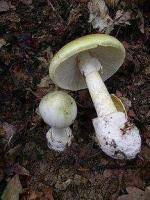
You do not have permission to view the full content of this post. Log in or register now.
Kingdom: You do not have permission to view the full content of this post. Log in or register now.
Phylum: You do not have permission to view the full content of this post. Log in or register now.
Class: You do not have permission to view the full content of this post. Log in or register now.
Order: You do not have permission to view the full content of this post. Log in or register now.
Family: You do not have permission to view the full content of this post. Log in or register now.
Genus: You do not have permission to view the full content of this post. Log in or register now.
Species: A. phalloides
You do not have permission to view the full content of this post. Log in or register now.
Amanita phalloides
(You do not have permission to view the full content of this post. Log in or register now. ex You do not have permission to view the full content of this post. Log in or register now.) You do not have permission to view the full content of this post. Log in or register now. (1833)
These toxic mushrooms resemble several edible species (most notably You do not have permission to view the full content of this post. Log in or register now. and the You do not have permission to view the full content of this post. Log in or register now.) commonly consumed by humans, increasing the risk of accidental You do not have permission to view the full content of this post. Log in or register now.. You do not have permission to view the full content of this post. Log in or register now., the class of toxins found in these mushrooms, are You do not have permission to view the full content of this post. Log in or register now.: they resist changes due to heat, so their toxic effects are not reduced by cooking.
A. phalloides is one of the most poisonous of all known You do not have permission to view the full content of this post. Log in or register now.. It is estimated that as little as half a mushroom contains enough toxin to kill an ãdül† human. It has been involved in the majority of human deaths from You do not have permission to view the full content of this post. Log in or register now.,You do not have permission to view the full content of this post. Log in or register now. possibly including the deaths of You do not have permission to view the full content of this post. Log in or register now. You do not have permission to view the full content of this post. Log in or register now. in AD 54 and You do not have permission to view the full content of this post. Log in or register now. You do not have permission to view the full content of this post. Log in or register now. in 1740. It has been the subject of much research, and many of its biologically active agents have been isolated. The principal toxic constituent is You do not have permission to view the full content of this post. Log in or register now., which damages the You do not have permission to view the full content of this post. Log in or register now. and You do not have permission to view the full content of this post. Log in or register now., causing hepatic and renal failure that can be fatal.
Taxonomy and namingYou do not have permission to view the full content of this post. Log in or register now.
The death cap is named in Latin as such in the correspondence between the English physician You do not have permission to view the full content of this post. Log in or register now. and You do not have permission to view the full content of this post. Log in or register now..You do not have permission to view the full content of this post. Log in or register now. and was described by French botanist You do not have permission to view the full content of this post. Log in or register now. in 1727, who gave a succinct phrase name "Fungus phalloides, annulatus, sordide virescens, et patulus", which is still recognizable as the fungus today.You do not have permission to view the full content of this post. Log in or register now. Though the You do not have permission to view the full content of this post. Log in or register now. phalloides means "phallus-shaped", it is unclear whether it is named for its resemblance to a literal You do not have permission to view the full content of this post. Log in or register now. or the stinkhorn mushrooms You do not have permission to view the full content of this post. Log in or register now.. In 1821, You do not have permission to view the full content of this post. Log in or register now. described it as Agaricus phalloides, but included all white amanitas within its description.You do not have permission to view the full content of this post. Log in or register now. Finally in 1833, You do not have permission to view the full content of this post. Log in or register now. settled on the name Amanita phalloides,You do not have permission to view the full content of this post. Log in or register now. after You do not have permission to view the full content of this post. Log in or register now. had named it Amanita viridis 30 years earlier.You do not have permission to view the full content of this post. Log in or register now.You do not have permission to view the full content of this post. Log in or register now. Although You do not have permission to view the full content of this post. Log in or register now.'s use of the name Amanita phalloides predates Link's, it has been rejected for nomenclatural purposes because Secretan's works did not use You do not have permission to view the full content of this post. Log in or register now. consistently;You do not have permission to view the full content of this post. Log in or register now.You do not have permission to view the full content of this post. Log in or register now. some taxonomists have, however, disagreed with this opinion.You do not have permission to view the full content of this post. Log in or register now.You do not have permission to view the full content of this post. Log in or register now.
Amanita phalloides is the You do not have permission to view the full content of this post. Log in or register now. of Amanita You do not have permission to view the full content of this post. Log in or register now. Phalloideae, a group that contains all of the deadly poisonous Amanita species thus far identified. Most notable of these are the species known as You do not have permission to view the full content of this post. Log in or register now., namely You do not have permission to view the full content of this post. Log in or register now. and You do not have permission to view the full content of this post. Log in or register now., as well as the fool's mushroom (You do not have permission to view the full content of this post. Log in or register now.). The term "destroying angel" has been applied to A. phalloides at times, but "death cap" is by far the most common vernacular name used in English. Other common names also listed include "stinking amanita"You do not have permission to view the full content of this post. Log in or register now. and "deadly amanita".You do not have permission to view the full content of this post. Log in or register now.
A rarely appearing, all-white form was initially described A. phalloides f. alba by You do not have permission to view the full content of this post. Log in or register now.,You do not have permission to view the full content of this post. Log in or register now.You do not have permission to view the full content of this post. Log in or register now. though its status has been unclear. It is often found growing amid normally colored death caps. It has been described, in 2004, as a distinct variety and includes what was termed A. verna var. tarda.You do not have permission to view the full content of this post. Log in or register now. The true Amanita verna fruits in spring and turns yellow with You do not have permission to view the full content of this post. Log in or register now. solution, whereas A. phalloides never does.You do not have permission to view the full content of this post. Log in or register now.
Amanita phalloides

You do not have permission to view the full content of this post. Log in or register now.
 gills on You do not have permission to view the full content of this post.
Log in or register now.
gills on You do not have permission to view the full content of this post.
Log in or register now.


You do not have permission to view the full content of this post. Log in or register now. is convex
or flat
 You do not have permission to view the full content of this post.
Log in or register now. is free
You do not have permission to view the full content of this post.
Log in or register now. is free
 You do not have permission to view the full content of this post.
Log in or register now. has a ring and volva
You do not have permission to view the full content of this post.
Log in or register now. has a ring and volva
 You do not have permission to view the full content of this post.
Log in or register now. is white
You do not have permission to view the full content of this post.
Log in or register now. is white
 ecology is You do not have permission to view the full content of this post.
Log in or register now.
ecology is You do not have permission to view the full content of this post.
Log in or register now.
 edibility: You do not have permission to view the full content of this post.
Log in or register now.
edibility: You do not have permission to view the full content of this post.
Log in or register now.
©wikipidya
Amanita phalloides You do not have permission to view the full content of this post. Log in or register now., commonly known as the death cap, is a deadly poisonous You do not have permission to view the full content of this post. Log in or register now. You do not have permission to view the full content of this post. Log in or register now., one of many in the genus You do not have permission to view the full content of this post. Log in or register now.. Widely distributed across You do not have permission to view the full content of this post. Log in or register now., A. phalloides forms You do not have permission to view the full content of this post. Log in or register now. with various broadleaved trees. In some cases, the death cap has been introduced to new regions with the cultivation of non-native species of You do not have permission to view the full content of this post. Log in or register now., You do not have permission to view the full content of this post. Log in or register now., and You do not have permission to view the full content of this post. Log in or register now.. The large fruiting bodies (You do not have permission to view the full content of this post. Log in or register now.) appear in summer and autumn; the You do not have permission to view the full content of this post. Log in or register now. are generally greenish in colour with a white You do not have permission to view the full content of this post. Log in or register now. and You do not have permission to view the full content of this post. Log in or register now.. Cap colour is variable, including white forms (see Taxonomy below) and thus not a reliable identifier.
Amanita phalloides
You do not have permission to view the full content of this post. Log in or register now.
Kingdom: You do not have permission to view the full content of this post. Log in or register now.
Phylum: You do not have permission to view the full content of this post. Log in or register now.
Class: You do not have permission to view the full content of this post. Log in or register now.
Order: You do not have permission to view the full content of this post. Log in or register now.
Family: You do not have permission to view the full content of this post. Log in or register now.
Genus: You do not have permission to view the full content of this post. Log in or register now.
Species: A. phalloides
You do not have permission to view the full content of this post. Log in or register now.
Amanita phalloides
(You do not have permission to view the full content of this post. Log in or register now. ex You do not have permission to view the full content of this post. Log in or register now.) You do not have permission to view the full content of this post. Log in or register now. (1833)
These toxic mushrooms resemble several edible species (most notably You do not have permission to view the full content of this post. Log in or register now. and the You do not have permission to view the full content of this post. Log in or register now.) commonly consumed by humans, increasing the risk of accidental You do not have permission to view the full content of this post. Log in or register now.. You do not have permission to view the full content of this post. Log in or register now., the class of toxins found in these mushrooms, are You do not have permission to view the full content of this post. Log in or register now.: they resist changes due to heat, so their toxic effects are not reduced by cooking.
A. phalloides is one of the most poisonous of all known You do not have permission to view the full content of this post. Log in or register now.. It is estimated that as little as half a mushroom contains enough toxin to kill an ãdül† human. It has been involved in the majority of human deaths from You do not have permission to view the full content of this post. Log in or register now.,You do not have permission to view the full content of this post. Log in or register now. possibly including the deaths of You do not have permission to view the full content of this post. Log in or register now. You do not have permission to view the full content of this post. Log in or register now. in AD 54 and You do not have permission to view the full content of this post. Log in or register now. You do not have permission to view the full content of this post. Log in or register now. in 1740. It has been the subject of much research, and many of its biologically active agents have been isolated. The principal toxic constituent is You do not have permission to view the full content of this post. Log in or register now., which damages the You do not have permission to view the full content of this post. Log in or register now. and You do not have permission to view the full content of this post. Log in or register now., causing hepatic and renal failure that can be fatal.
Taxonomy and namingYou do not have permission to view the full content of this post. Log in or register now.
The death cap is named in Latin as such in the correspondence between the English physician You do not have permission to view the full content of this post. Log in or register now. and You do not have permission to view the full content of this post. Log in or register now..You do not have permission to view the full content of this post. Log in or register now. and was described by French botanist You do not have permission to view the full content of this post. Log in or register now. in 1727, who gave a succinct phrase name "Fungus phalloides, annulatus, sordide virescens, et patulus", which is still recognizable as the fungus today.You do not have permission to view the full content of this post. Log in or register now. Though the You do not have permission to view the full content of this post. Log in or register now. phalloides means "phallus-shaped", it is unclear whether it is named for its resemblance to a literal You do not have permission to view the full content of this post. Log in or register now. or the stinkhorn mushrooms You do not have permission to view the full content of this post. Log in or register now.. In 1821, You do not have permission to view the full content of this post. Log in or register now. described it as Agaricus phalloides, but included all white amanitas within its description.You do not have permission to view the full content of this post. Log in or register now. Finally in 1833, You do not have permission to view the full content of this post. Log in or register now. settled on the name Amanita phalloides,You do not have permission to view the full content of this post. Log in or register now. after You do not have permission to view the full content of this post. Log in or register now. had named it Amanita viridis 30 years earlier.You do not have permission to view the full content of this post. Log in or register now.You do not have permission to view the full content of this post. Log in or register now. Although You do not have permission to view the full content of this post. Log in or register now.'s use of the name Amanita phalloides predates Link's, it has been rejected for nomenclatural purposes because Secretan's works did not use You do not have permission to view the full content of this post. Log in or register now. consistently;You do not have permission to view the full content of this post. Log in or register now.You do not have permission to view the full content of this post. Log in or register now. some taxonomists have, however, disagreed with this opinion.You do not have permission to view the full content of this post. Log in or register now.You do not have permission to view the full content of this post. Log in or register now.
Amanita phalloides is the You do not have permission to view the full content of this post. Log in or register now. of Amanita You do not have permission to view the full content of this post. Log in or register now. Phalloideae, a group that contains all of the deadly poisonous Amanita species thus far identified. Most notable of these are the species known as You do not have permission to view the full content of this post. Log in or register now., namely You do not have permission to view the full content of this post. Log in or register now. and You do not have permission to view the full content of this post. Log in or register now., as well as the fool's mushroom (You do not have permission to view the full content of this post. Log in or register now.). The term "destroying angel" has been applied to A. phalloides at times, but "death cap" is by far the most common vernacular name used in English. Other common names also listed include "stinking amanita"You do not have permission to view the full content of this post. Log in or register now. and "deadly amanita".You do not have permission to view the full content of this post. Log in or register now.
A rarely appearing, all-white form was initially described A. phalloides f. alba by You do not have permission to view the full content of this post. Log in or register now.,You do not have permission to view the full content of this post. Log in or register now.You do not have permission to view the full content of this post. Log in or register now. though its status has been unclear. It is often found growing amid normally colored death caps. It has been described, in 2004, as a distinct variety and includes what was termed A. verna var. tarda.You do not have permission to view the full content of this post. Log in or register now. The true Amanita verna fruits in spring and turns yellow with You do not have permission to view the full content of this post. Log in or register now. solution, whereas A. phalloides never does.You do not have permission to view the full content of this post. Log in or register now.
Amanita phalloides
You do not have permission to view the full content of this post. Log in or register now.
gills on You do not have permission to view the full content of this post.
Log in or register now. You do not have permission to view the full content of this post. Log in or register now. is convex
or flat
You do not have permission to view the full content of this post.
Log in or register now. is free You do not have permission to view the full content of this post.
Log in or register now. has a ring and volva You do not have permission to view the full content of this post.
Log in or register now. is white ecology is You do not have permission to view the full content of this post.
Log in or register now. edibility: You do not have permission to view the full content of this post.
Log in or register now.©wikipidya

