 PH
PHCUPERTINO—We love a cheeky mention of a major Silicon Valley beef. There is none more famous and enduring than the one between You do not have permission to view the full content of this post.
Log in or register now.. Some of it is made up, sure, and perpetuated by those of us keeping the rivalry alive. And then developer conference season comes in fast, bringing with it all the reminders of who is playing catch-up with whom.
This week at You do not have permission to view the full content of this post. Log in or register now., Apple showed us how it reworked the entirety of Apple Intelligence and You do not have permission to view the full content of this post. Log in or register now. from the ground up. Many of the features showcased during the presentation reminded me of abilities I've already been actively using on the You do not have permission to view the full content of this post. Log in or register now. with Google's You do not have permission to view the full content of this post. Log in or register now.. At the end of the day, it's good news that Apple Intelligence is leveling up, especially as the rest of the industry barrels full steam ahead into this current You do not have permission to view the full content of this post. Log in or register now.. But I couldn't help noticing the similarities. Here are a few that stand out.
(Credit: Apple)
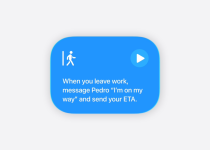
I got to demo Apple's newest You do not have permission to view the full content of this post. Log in or register now. feature at WWDC. It seemed all too familiar the moment I started pawing at it on iOS and iPadOS. Then I realized this feature follows much of the ethos behind Gemini's "help me create" in Google Home, which offers ideas for automations based on patterns in your smart home usage.
However, Apple's feature extends beyond the smart home. Because the company controls the hardware, the software, and the app-level APIs, it can daisychain all those bits together to offer a little more flexibility for automations that you can't get on Android.

Tech editors react to Apple's WWDC 2026: What did we learn?
Google has been honing Adaptive Connectivity for a few generations on the Pixel. One of the main marketing points of the Pixel 10 Pro is its AI-enhanced network handoff, which can predictively switch between connections as needed. Whether it works is another thing entirely, because I still have trouble connecting to the cellular network outside once I leave my house.
Remember Google's Inbox app? That's where it all started for Gmail's sorting algorithm. Back in 2014, Google launched the app as an experiment to help organize your inbox. It's the app that introduced a ranking system to prioritize mail and bundle related messages and threads together. Google shut down the standalone app in 2019, though its DNA is now in the current Gmail app. And like Siri AI, Gemini uses the Personal Intelligence integration to access contextual information in apps like Gmail and Photos.
(Credit: Apple)
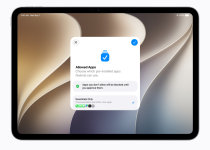
Most of the iOS 27 You do not have permission to view the full content of this post. Log in or register now. features I saw demonstrated reminded me of the time I spent with You do not have permission to view the full content of this post. Log in or register now. on Android and my kid nagging me for more screen time. iPhone-using parents and guardians will face a similar battle come this fall when Child Safety rolls out. It's the first time Apple has offered a truly robust parental control suite. Previously, iOS users had to manage Screen Time to achieve the same digital boundaries. Android users have had Family Link available since 2017—it debuted during the Android 7 Nougat era—and it offers a literal kill switch to lock down all Android devices linked with your child's Google account.
You do not have permission to view the full content of this post. Log in or register now.
You do not have permission to view the full content of this post. Log in or register now.
You do not have permission to view the full content of this post. Log in or register now.
You do not have permission to view the full content of this post. Log in or register now.
You do not have permission to view the full content of this post. Log in or register now.
You do not have permission to view the full content of this post. Log in or register now.
At the end of the day, both Siri's on-screen awareness and Gemini's Circle to Search share the same goal: removing the need to copy and paste data across different apps to get a simple answer.
(Credit: Apple)
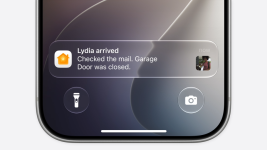
Apple is finally getting granular with its smart You do not have permission to view the full content of this post. Log in or register now. alerts, and it's about time. The company launched HomeKit Secure Video (HSV) in 2019, ensuring that security footage from your home stays end-to-end encrypted. But the devotion to privacy also meant that Siri couldn't tap into the footage for features like event summaries, which have helped make Google's Nest cameras so popular.
iOS 27's Apple Intelligence integration will finally bring this capability to those in the walled garden. You'll be able to ask Siri to scrub security footage using natural language. Apple has already promised that the models processing all this will run locally rather than pinging the cloud with that sensitive data. Google has also made major strides in moving much of that processing on-device on its latest Nest cameras.
At WWDC, Apple announced that it's bringing some of iOS 27's core features to older devices, including the You do not have permission to view the full content of this post. Log in or register now.. That phone launched in 2019 and doesn't even have the specialized neural hardware required to run Apple Intelligence, yet Apple continues to support it because so many of its users are still holding on. Those users will benefit from slightly faster, optimized processing, helping prolong the aging phone's lifecycle. This has proved to be the winning formula for Apple, so far. And it ensures anyone hesitant about mobile software's agentic future still feels represented by the brand.
Source: You do not have permission to view the full content of this post. Log in or register now.
This week at You do not have permission to view the full content of this post. Log in or register now., Apple showed us how it reworked the entirety of Apple Intelligence and You do not have permission to view the full content of this post. Log in or register now. from the ground up. Many of the features showcased during the presentation reminded me of abilities I've already been actively using on the You do not have permission to view the full content of this post. Log in or register now. with Google's You do not have permission to view the full content of this post. Log in or register now.. At the end of the day, it's good news that Apple Intelligence is leveling up, especially as the rest of the industry barrels full steam ahead into this current You do not have permission to view the full content of this post. Log in or register now.. But I couldn't help noticing the similarities. Here are a few that stand out.
Natural Language Shortcuts
(Credit: Apple)
I got to demo Apple's newest You do not have permission to view the full content of this post. Log in or register now. feature at WWDC. It seemed all too familiar the moment I started pawing at it on iOS and iPadOS. Then I realized this feature follows much of the ethos behind Gemini's "help me create" in Google Home, which offers ideas for automations based on patterns in your smart home usage.
However, Apple's feature extends beyond the smart home. Because the company controls the hardware, the software, and the app-level APIs, it can daisychain all those bits together to offer a little more flexibility for automations that you can't get on Android.
Faster Wi-Fi-to-Cellular Transitions
Apple says iOS 27 will enable "smoother handoffs" between Wi-Fi and cellular networks—that it will know when to log off your flight's Wi-Fi once the plane has landed. iOS 27 does this by detecting weak networks or poor backhaul, then switching back to cellular without waiting for connectivity to time out.
Tech editors react to Apple's WWDC 2026: What did we learn?
Google has been honing Adaptive Connectivity for a few generations on the Pixel. One of the main marketing points of the Pixel 10 Pro is its AI-enhanced network handoff, which can predictively switch between connections as needed. Whether it works is another thing entirely, because I still have trouble connecting to the cellular network outside once I leave my house.
Mail Ranking System
Finally, some help parsing your inbox on iOS 27. Apple made a big to-do about rearchitecting iOS 27's Spotlight search infrastructure so the system can find your stuff more easily. It works across Mail, Messages, Photos, and other core apps, and it's all in preparation for Siri AI to pluck out that information later this year.Remember Google's Inbox app? That's where it all started for Gmail's sorting algorithm. Back in 2014, Google launched the app as an experiment to help organize your inbox. It's the app that introduced a ranking system to prioritize mail and bundle related messages and threads together. Google shut down the standalone app in 2019, though its DNA is now in the current Gmail app. And like Siri AI, Gemini uses the Personal Intelligence integration to access contextual information in apps like Gmail and Photos.
Personal Context Understanding
Apple basically announced its own version of Google's You do not have permission to view the full content of this post. Log in or register now. for iOS 27. It's called Personal Context Understanding, and it's a major part of You do not have permission to view the full content of this post. Log in or register now.. It hooks into the revamped Spotlight Index to scan your emails, photos, and any third-party apps that use this API. Apple's approach is heavier on emphasizing its on-device privacy, but it's exactly the kind of agentic capability Google has been touting for the past year.Child Safety
(Credit: Apple)
Most of the iOS 27 You do not have permission to view the full content of this post. Log in or register now. features I saw demonstrated reminded me of the time I spent with You do not have permission to view the full content of this post. Log in or register now. on Android and my kid nagging me for more screen time. iPhone-using parents and guardians will face a similar battle come this fall when Child Safety rolls out. It's the first time Apple has offered a truly robust parental control suite. Previously, iOS users had to manage Screen Time to achieve the same digital boundaries. Android users have had Family Link available since 2017—it debuted during the Android 7 Nougat era—and it offers a literal kill switch to lock down all Android devices linked with your child's Google account.
On-Screen Awareness
Apple's new On-Screen Awareness serves as the eyes for Siri AI coming in iOS 27. Siri can analyze the visual and textual content displayed on your screen by tapping into the Vision framework. To hear the feature described, it sounds exactly like what Android has been doing with You do not have permission to view the full content of this post. Log in or register now.. But the two abilities are technically quite different. Apple has an API that lets third-party apps tag UI data for Siri to find, while Gemini's ability leans heavily on its own multimodal understanding of what it sees on-screen.Recommended by Our Editors
You do not have permission to view the full content of this post. Log in or register now.
You do not have permission to view the full content of this post. Log in or register now.
You do not have permission to view the full content of this post. Log in or register now.
You do not have permission to view the full content of this post. Log in or register now.
You do not have permission to view the full content of this post. Log in or register now.
You do not have permission to view the full content of this post. Log in or register now.
At the end of the day, both Siri's on-screen awareness and Gemini's Circle to Search share the same goal: removing the need to copy and paste data across different apps to get a simple answer.
Security Camera Smarts
(Credit: Apple)
Apple is finally getting granular with its smart You do not have permission to view the full content of this post. Log in or register now. alerts, and it's about time. The company launched HomeKit Secure Video (HSV) in 2019, ensuring that security footage from your home stays end-to-end encrypted. But the devotion to privacy also meant that Siri couldn't tap into the footage for features like event summaries, which have helped make Google's Nest cameras so popular.
iOS 27's Apple Intelligence integration will finally bring this capability to those in the walled garden. You'll be able to ask Siri to scrub security footage using natural language. Apple has already promised that the models processing all this will run locally rather than pinging the cloud with that sensitive data. Google has also made major strides in moving much of that processing on-device on its latest Nest cameras.
Where Apple Remains Ahead: Software Support
Even as Google fights to make Android the ultimate driver of the intelligent era, it hasn't solved the fragmentation of its own ecosystem. Android doesn't have the luxury of a unified hardware-software lifecycle because there are so many manufacturing players in the game. While Google and Samsung, for example, offer some of the longest software update policies in the ecosystem, once Gemini becomes the core of Android's feature set and relies more on those neural chips, the software update gap will become even wider among users.At WWDC, Apple announced that it's bringing some of iOS 27's core features to older devices, including the You do not have permission to view the full content of this post. Log in or register now.. That phone launched in 2019 and doesn't even have the specialized neural hardware required to run Apple Intelligence, yet Apple continues to support it because so many of its users are still holding on. Those users will benefit from slightly faster, optimized processing, helping prolong the aging phone's lifecycle. This has proved to be the winning formula for Apple, so far. And it ensures anyone hesitant about mobile software's agentic future still feels represented by the brand.
Source: You do not have permission to view the full content of this post. Log in or register now.