PH
PH
Microsoft has launched three in‑house MAI models—MAI‑Transcribe‑1, MAI‑Voice‑1, and MAI‑Image‑2, positioning them as fast, high‑quality, and aggressively priced building blocks for real‑world apps.
The three models in one glance
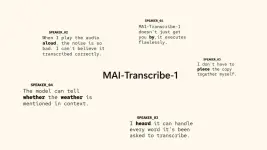
- MAI‑Transcribe‑1 (speech‑to‑text)
- Multilingual STT tuned for noisy, real‑world audio across the top 25 languages in Microsoft products.
- Benchmarked to beat leading open and proprietary models on FLEURS while running ~2.5x faster than Microsoft’s previous “Fast” transcription tier.
- Priced from 0.36 USD per audio hour, pitched as best price‑performance among major clouds.
- MAI‑Voice‑1 (text‑to‑speech / voice)
- Natural, emotionally E×ρréššive TTS that holds speaker identity across long‑form content.
- Supports “few‑second” custom voices with enterprise‑grade consent and safety controls.
- Can generate ~60 seconds of audio in about a second, with pricing from 22 USD per 1M characters.
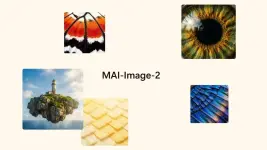
- MAI‑Image‑2 (text‑to‑image)
- New image model behind Copilot image generation, ranked near the top of public leaderboards.
- Optimized for realistic lighting, skin tones, textures, and legible in‑image text for layouts and diagrams.
- Delivers ~2x faster generation in Foundry/Copilot, with token‑based pricing on input and image output.
Platform and positioning
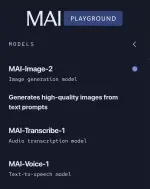
- All three are available via Microsoft Foundry, with Transcribe‑1 and Voice‑1 also exposed in MAI Playground (US‑only for now).
- Microsoft’s narrative: “better, faster, cheaper” than competing cloud offerings, tightly integrated into Copilot, Bing, PowerPoint, and other Microsoft surfaces.
- The models are framed as “Humanist AI”: trained for real‑world communication, red‑teamed, and wrapped in governance, guardrails, and compliance tooling for enterprise deployment.
Why it matters
- Instead of another giant general LLM, Microsoft is shipping focused, production‑ready blocks for audio, voice, and visuals.
- For builders, this means a coherent multimodal stack—transcribe → reason → speak → visualize—inside the Microsoft ecosystem, with predictable performance and costs.
- For enterprises, it’s a clearer path to multimodal Copilot‑style experiences without stitching together third‑party models.
Try it here:
You do not have permission to view the full content of this post.
Log in or register now.
Your feedback is highly appreciated

Support my other posts

- Google just KILLED Photoshop!
- 50 Brilliant Ways to Supercharge Creativity with Nano Banana
- Nano Banana Prompt Gallery
- AI Fashion Studio: AI Virtual Try-On Powered By Nano Banana
- Free Image Upscaler up to 16K Quality!
- Travel the World with Nano Banana
- Nano Banana Polaroid Trend
- AI Profile Picture Generator
- AI Snapshot Generator
- ᑕᕼᗩTGᑭT Prompt Packs
- Perplexity at Work
- Free AI Image Editor
- DumPDF: PDF Editor
- LuxPDF: Open Source PDF Tools
- Affinity Studio: Free, Powerful Design Tool
- Gemini Edu ID Card Generator
- CanVâ Education Invite Link 2
- Create UNCENS0RED/NSFW AI Characters
- Student ID Card Prompt
- Introducing Nano Banana Pro
- Nano Banana Pro Image And Prompt Gallery
- Create 4K Nano Banana Pro Images
- Create Pro-Grade Infographics
- IHatePDF: Toolkit For Everyday Documents
- OpenClaw: An AI Agent That Actually Does Things
- Stunning Nano Banana Prompts Gallery
- Lyria 3: Google's AI Music Studio
- Meet Gemini 3.1 Pro
- Create City Map Posters
- Seedream 5.0 Lite: A Smart, Web-Aware AI Image Model
- Nano Banana 2: ProLevel Image Generation at Flash Speed
- Meet Gemini 3.1 Flash‑Lite: Google’s New High‑Throughput AI Workhorse
- GPT‑5.3 Instant: Smarter, Faster Everyday Chat
- GPT‑5.4: OpenAI’s New Flagship GPT‑5‑Series Model
- Inside MAI‑Image‑2
- Meet Luma Uni-1