PH
PHYou do not have permission to view the full content of this post.
Log in or register now. has exposed a Chinese-linked disinformation network pushing pro-Duterte and anti-Marcos narratives on X (formerly Twitter) in an investigative report presented during a House of Representatives hearing on Tuesday.
Niceforo Balbedina III, a UST master’s in journalism student and multimedia editor of PressOne.PH, discovered 107 suspicious accounts systematically publishing content supporting Vice President Sara Duterte while attacking President Ferdinand “Bongbong” Marcos Jr. The network is also pushing content against Manila’s claim on the South China Sea.
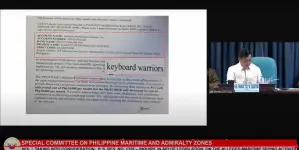
Balbedina and UST Department of Journalism Chair Felipe Salvosa II, founding editor of PressOne.PH, discussed the report and other aspects of foreign influence operations (FIO) and foreign information manipulation and interference (FIMI) during a hearing at the House of Representatives about disinformation.
You do not have permission to view the full content of this post. Log in or register now.“Kasagsagan ng March hanggang July, mayro’n po kaming monitor na Chinese state media na actively po na nagso-sow ng iba’t ibang at mga kuwestyonableng impormasyon tungkol sa sigalot sa West Philippine Sea,” Balbedina said.
“At ito po ‘yong latest na mayro’n po kaming nahukay na pro-China na network of X accounts na nagsususog ng anti-Philippine sentiment, habang nagpu-push ng content related po kay Vice President Sara Duterte,” he said.
Balbedina noted that the accounts often resurfaced and recycled old content, such as the “polvoron video,” a clip falsely depicting Marcos Jr. using îllégâl drugs.
These videos were published either during significant events, such as the signing of the Maritime Zones Law and Baselines Law, or when there was negative news about Duterte.
Salvosa said fact-checking organizations like PressOne.PH have included FIO and FIMI investigations in their work, flagging state or non-state actors seeking to influence democratic processes and values through manipulation.
Salvosa told lawmakers that fact-checkers and journalism academics have long dropped the term “fake news,” which has been politicized and misused to label opposing viewpoints.
“We want to focus on the term information disorder … which also distinguishes between disinformation, misinformation, and malinformation,” he said.
Salvosa also urged Congress to inquire into the content moderation rules of social media platforms, particularly Facebook, which has dropped its third-party fact-checking program in favor of the community notes model already being used by X.
“Instead of fact-checkers, community notes are written by users. The problem is they don’t have codes of ethics and they are anonymous,” he said.
PressOne.PH is one of six Manila-based verified signatories of the Code of Principles of the International Fact-Checking Network, a coalition of about 100 fact-checking organizations founded in 2015.
Fraudulent X accounts
Apart from attacking the president, the network of Chinese-linked accounts also shared content criticizing Washington’s involvement in the West Philippine Sea and framing Philippine efforts to assert its sovereignty as part of a US-led “proxy war.”
“‘Yong posting activity po nila ay very reactionary sa oras at sa development sa ating bansa,” Balbedina said. “Anti-Philippine sentiments po. Against West Philippine Sea efforts ng Pilipinas and against our president.”
The PressOne.PH report flagged multiple accounts showing suspicious activity, including employing artificially boosted followers from Spanish-speaking countries, which have no clear interest in the Philippines-China maritime dispute.
Balbedina also found evidence of fraudulent account creation, as many of the suspended Chinese-linked accounts used stock or artificial intelligence-generated profile photos.
“‘Yong profile pic na ginagamit ng Twitter accounts ay galing sa mga advertisements, ‘yong iba galing sa pornography, ‘yong iba galing sa stock photos at ‘yong iba AI-generated. Pinagbabawal ng Twitter ‘yong ganitong practice sa kanilang website. So we think this is one of the reasons why they banned these accounts,” he said.
Only 24 out of the 107 identified accounts have been permanently removed so far. Balbedina said several pro-China disinformation networks remain active by bypassing platform restrictions of X, which is owned by billionaire Elon Musk.
The investigative report was developed with the help of UST data journalism instructor, Nathaniel Melican.
Balbedina is part of the Varsitarian’s graduate scholarship program.
Only three of the more than 40 invited online personalities attended the “tri-committee” hearing called by the House committees on public order and safety, public information, and information and communications technology.
The hearing sought to explore possible content regulation rules that can be implemented on social media.
Niceforo Balbedina III, a UST master’s in journalism student and multimedia editor of PressOne.PH, discovered 107 suspicious accounts systematically publishing content supporting Vice President Sara Duterte while attacking President Ferdinand “Bongbong” Marcos Jr. The network is also pushing content against Manila’s claim on the South China Sea.
Balbedina and UST Department of Journalism Chair Felipe Salvosa II, founding editor of PressOne.PH, discussed the report and other aspects of foreign influence operations (FIO) and foreign information manipulation and interference (FIMI) during a hearing at the House of Representatives about disinformation.
You do not have permission to view the full content of this post. Log in or register now.“Kasagsagan ng March hanggang July, mayro’n po kaming monitor na Chinese state media na actively po na nagso-sow ng iba’t ibang at mga kuwestyonableng impormasyon tungkol sa sigalot sa West Philippine Sea,” Balbedina said.
“At ito po ‘yong latest na mayro’n po kaming nahukay na pro-China na network of X accounts na nagsususog ng anti-Philippine sentiment, habang nagpu-push ng content related po kay Vice President Sara Duterte,” he said.
Balbedina noted that the accounts often resurfaced and recycled old content, such as the “polvoron video,” a clip falsely depicting Marcos Jr. using îllégâl drugs.
These videos were published either during significant events, such as the signing of the Maritime Zones Law and Baselines Law, or when there was negative news about Duterte.
Salvosa said fact-checking organizations like PressOne.PH have included FIO and FIMI investigations in their work, flagging state or non-state actors seeking to influence democratic processes and values through manipulation.
Salvosa told lawmakers that fact-checkers and journalism academics have long dropped the term “fake news,” which has been politicized and misused to label opposing viewpoints.
“We want to focus on the term information disorder … which also distinguishes between disinformation, misinformation, and malinformation,” he said.
Salvosa also urged Congress to inquire into the content moderation rules of social media platforms, particularly Facebook, which has dropped its third-party fact-checking program in favor of the community notes model already being used by X.
“Instead of fact-checkers, community notes are written by users. The problem is they don’t have codes of ethics and they are anonymous,” he said.
PressOne.PH is one of six Manila-based verified signatories of the Code of Principles of the International Fact-Checking Network, a coalition of about 100 fact-checking organizations founded in 2015.
Fraudulent X accounts
Apart from attacking the president, the network of Chinese-linked accounts also shared content criticizing Washington’s involvement in the West Philippine Sea and framing Philippine efforts to assert its sovereignty as part of a US-led “proxy war.”
“‘Yong posting activity po nila ay very reactionary sa oras at sa development sa ating bansa,” Balbedina said. “Anti-Philippine sentiments po. Against West Philippine Sea efforts ng Pilipinas and against our president.”
The PressOne.PH report flagged multiple accounts showing suspicious activity, including employing artificially boosted followers from Spanish-speaking countries, which have no clear interest in the Philippines-China maritime dispute.
Balbedina also found evidence of fraudulent account creation, as many of the suspended Chinese-linked accounts used stock or artificial intelligence-generated profile photos.
“‘Yong profile pic na ginagamit ng Twitter accounts ay galing sa mga advertisements, ‘yong iba galing sa pornography, ‘yong iba galing sa stock photos at ‘yong iba AI-generated. Pinagbabawal ng Twitter ‘yong ganitong practice sa kanilang website. So we think this is one of the reasons why they banned these accounts,” he said.
Only 24 out of the 107 identified accounts have been permanently removed so far. Balbedina said several pro-China disinformation networks remain active by bypassing platform restrictions of X, which is owned by billionaire Elon Musk.
The investigative report was developed with the help of UST data journalism instructor, Nathaniel Melican.
Balbedina is part of the Varsitarian’s graduate scholarship program.
Only three of the more than 40 invited online personalities attended the “tri-committee” hearing called by the House committees on public order and safety, public information, and information and communications technology.
The hearing sought to explore possible content regulation rules that can be implemented on social media.