 PH
PH-
Welcome to PHCorner Forums! Sign up for free to unlock full access and exclusive privileges, including:
- Asking questions about computer and mobile issues
- Discovering internet tips for your mobile network and computer
You are using an out of date browser. It may not display this or other websites correctly.
You should upgrade or use an alternative browser.
You should upgrade or use an alternative browser.
🎓 Academic STATICS OF RIGID BODIES (PAHELP)
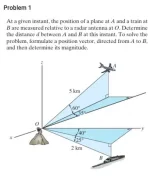
We can solve this problem by following these steps:
* Define position vectors for points A and B relative to point O.
* Subtract the position vectors to find the vector directed from A to B.
* Determine the magnitude of the resulting vector to find the distance between A and B.
Here's a breakdown of the solution process:
* Position vectors:
* Let's denote the position vector of point O as (0, 0).
* Given that the plane is at a distance of 5 km at an angle of 60° from O, its position vector can be represented as (5 * cos(60°), 5 * sin(60°)) = (2.5, 4.33).
* Similarly, the position vector of the train at a distance of 2 km and an angle of 25° from O is (2 * cos(25°), 2 * sin(25°)) = (1.8, 0.87).
* Vector directed from A to B:
* To find the vector directed from A to B, we subtract the position vector of O from the position vector of B and subtract the position vector of A from the position vector of B.
* Resulting vector (B w.r.t. O) - (A w.r.t. O) = (1.8, 0.87) - (2.5, 4.33) = (-0.7, -3.46).
* Magnitude of the resulting vector:
* The distance between A and B is the magnitude of the vector directed from A to B.
* Magnitude = sqrt((-0.7)^2 + (-3.46)^2) = sqrt(12.33) ≈ 3.5 km.
Therefore, the distance between the plane and the train at this instant is approximately 3.5 km.
ᑕᕼᗩTGᑭT hahahaha
trying to help lang, sorry kung mali
* Define position vectors for points A and B relative to point O.
* Subtract the position vectors to find the vector directed from A to B.
* Determine the magnitude of the resulting vector to find the distance between A and B.
Here's a breakdown of the solution process:
* Position vectors:
* Let's denote the position vector of point O as (0, 0).
* Given that the plane is at a distance of 5 km at an angle of 60° from O, its position vector can be represented as (5 * cos(60°), 5 * sin(60°)) = (2.5, 4.33).
* Similarly, the position vector of the train at a distance of 2 km and an angle of 25° from O is (2 * cos(25°), 2 * sin(25°)) = (1.8, 0.87).
* Vector directed from A to B:
* To find the vector directed from A to B, we subtract the position vector of O from the position vector of B and subtract the position vector of A from the position vector of B.
* Resulting vector (B w.r.t. O) - (A w.r.t. O) = (1.8, 0.87) - (2.5, 4.33) = (-0.7, -3.46).
* Magnitude of the resulting vector:
* The distance between A and B is the magnitude of the vector directed from A to B.
* Magnitude = sqrt((-0.7)^2 + (-3.46)^2) = sqrt(12.33) ≈ 3.5 km.
Therefore, the distance between the plane and the train at this instant is approximately 3.5 km.
ᑕᕼᗩTGᑭT hahahaha
trying to help lang, sorry kung mali
yong concept lng ng sine at cos paps yong tanong ko HAHAHAHAWe can solve this problem by following these steps:
* Define position vectors for points A and B relative to point O.
* Subtract the position vectors to find the vector directed from A to B.
* Determine the magnitude of the resulting vector to find the distance between A and B.
Here's a breakdown of the solution process:
* Position vectors:
* Let's denote the position vector of point O as (0, 0).
* Given that the plane is at a distance of 5 km at an angle of 60° from O, its position vector can be represented as (5 * cos(60°), 5 * sin(60°)) = (2.5, 4.33).
* Similarly, the position vector of the train at a distance of 2 km and an angle of 25° from O is (2 * cos(25°), 2 * sin(25°)) = (1.8, 0.87).
* Vector directed from A to B:
* To find the vector directed from A to B, we subtract the position vector of O from the position vector of B and subtract the position vector of A from the position vector of B.
* Resulting vector (B w.r.t. O) - (A w.r.t. O) = (1.8, 0.87) - (2.5, 4.33) = (-0.7, -3.46).
* Magnitude of the resulting vector:
* The distance between A and B is the magnitude of the vector directed from A to B.
* Magnitude = sqrt((-0.7)^2 + (-3.46)^2) = sqrt(12.33) ≈ 3.5 km.
Therefore, the distance between the plane and the train at this instant is approximately 3.5 km.
ᑕᕼᗩTGᑭT hahahaha
trying to help lang, sorry kung mali
sorry wala ako alam dyanyong concept lng ng sine at cos paps yong tanong ko HAHAHAHA

PHC-Doraemon
Fanatic
una pili ka muna kung ano gusto mo unahin kung saang POV
for example dyan sa problem, POV from Y-axis, ang makikita mo na lang is yung X and Z saka yung A (silip silip lang)
SOHCAHTOA lang
SINE=OPPOSITE/HYPOTENUSE
COSINE=ADJACENT/HYPOTENUSE
yung A is may 5km na hypotenuse, yung angle is 60,
opposite nya is yung Az, apply lang natin sohcatoa
may opposite kana saka hypotenuse kaya sine gagamitin
sin(60)=Az/5
Az=5sin(60)-----mas madali gantong format rekta mo na agad na ganto
yung isa naman yung Ax which is adjacent from angle
cosine naman dito,
cos(60)=Ax/5
Ax=5cos60
next lipat ka na ng POV kasi wala ka na makukuha
from X-axis naman (silip ka uli), ang makikita mo naman is Y at Z saka yung B na may 25 degrees
hypotenuse = 2km
opposite = Bz
adjacent = By
Bz=2sin(25)
By=2cos(25)
next from Z-axis
Kita mo rito yung X at Y
saka yung dalawang angle na medyo dark yung pagkablue
Dapat may values ka na ng Az,Ax,Bz, and By (nasolve na to sa taas)
unahin natin yung sa A,
yung hypotenuse naman yung nawawala
angle = 35 degrees
adjacent = Ax
opposite = Ay
unahin natin dito yung cosine kasi wala pa tayong value ng Ay
cos(35)=Ax/hyp
hyp=Ax/cos(35)
masosolve mo na value ng hypotenuse para magamit mo sa Ay
Ay=hyp*sin(35)
ganyan lang then proceed sa next
for example dyan sa problem, POV from Y-axis, ang makikita mo na lang is yung X and Z saka yung A (silip silip lang)
SOHCAHTOA lang
SINE=OPPOSITE/HYPOTENUSE
COSINE=ADJACENT/HYPOTENUSE
yung A is may 5km na hypotenuse, yung angle is 60,
opposite nya is yung Az, apply lang natin sohcatoa
may opposite kana saka hypotenuse kaya sine gagamitin
sin(60)=Az/5
Az=5sin(60)-----mas madali gantong format rekta mo na agad na ganto
yung isa naman yung Ax which is adjacent from angle
cosine naman dito,
cos(60)=Ax/5
Ax=5cos60
next lipat ka na ng POV kasi wala ka na makukuha
from X-axis naman (silip ka uli), ang makikita mo naman is Y at Z saka yung B na may 25 degrees
hypotenuse = 2km
opposite = Bz
adjacent = By
Bz=2sin(25)
By=2cos(25)
next from Z-axis
Kita mo rito yung X at Y
saka yung dalawang angle na medyo dark yung pagkablue
Dapat may values ka na ng Az,Ax,Bz, and By (nasolve na to sa taas)
unahin natin yung sa A,
yung hypotenuse naman yung nawawala
angle = 35 degrees
adjacent = Ax
opposite = Ay
unahin natin dito yung cosine kasi wala pa tayong value ng Ay
cos(35)=Ax/hyp
hyp=Ax/cos(35)
masosolve mo na value ng hypotenuse para magamit mo sa Ay
Ay=hyp*sin(35)
ganyan lang then proceed sa next
About this Thread
-
4Replies
-
609Views
-
3Participants
Last reply from:
PHC-Doraemon
PHC-Doraemon
New Topics
-
Just Wait For The Sun
- Started by kristonecold
- Replies: 0
- 🤝 Social & Personal
-
A Portrait of a Dog as an Older Guy
- Started by kristonecold
- Replies: 0
- 🤝 Social & Personal
-
Spinoza's God vs the God of the Bible
- Started by jamesiswizard_1
- Replies: 0
- 🤝 Social & Personal
-
OLD BUT GOLD: Nasaan na ang mga Legends ng Forum?
- Started by jamesiswizard_1
- Replies: 6
- 🤝 Social & Personal
-
Daily Mass Readings: October 24, 2026
- Started by jdoomtwenty14
- Replies: 0
- 🤝 Social & Personal
-
Daily Mass Readings: October 23, 2026
- Started by jdoomtwenty14
- Replies: 1
- 🤝 Social & Personal
-
Happy Birthday to Me!
- Started by Rastafries420
- Replies: 2
- 🤝 Social & Personal
-
Happy Birthday to me !!
- Started by PHC-FREENET EHI
- Replies: 23
- 🤝 Social & Personal
Trending Topics
-
-
-
The World Is Not Perfect. You Have to Choose Based on Consequence. Naintindihan Ko Na Ang Pilipinas.
- Asherah Goddess
Replies: 5 -
-
-
-
Online now
- Members online
- 741
- Guests online
- 7,698
- Total visitors
- 8,439