🕯️ Traditions Quotes: Holy Spirit is a Force from God, Trinitarians Admit

Status
Not open for further replies.

Gentleman007

Forum Expert
In the Old Testament (OT) it is clear that the inspired Bible writers intended holy spirit (ruah or ruach in Hebrew) to be understood as an invisible, powerful force from God. Even many trinitarian scholars will admit that.

For example, The Catholic Encyclopedia, p. 269, 1976, admits: "In the OT the Holy Spirit means a divine power..."

And the New Bible Dictionary, Tyndale House Publishers, 1984, pp. 1136,1137, says:

"Spirit, Holy Spirit. OT, Heb. ruah 378 times ...; NT, Gk. pneuma 379 times." And "Divine power, where ruah is used to describe ... a supernatural force...." And "At its [the Old Testament's concept of ruah, God's spirit] heart is the experience of a mysterious, awesome power - the mighty invisible force of the wind, the mystery of its vitality, the otherly power that transforms - all ruah, all manifestations of divine energy." And "at this early stage [pre-Christian] of understanding, God's ruah was thought of simply as a supernatural power (under God's authority) exerting force in some direction."

The Encyclopedia Americana tells us:

"The doctrine of the Holy Spirit [as a person who is God] is a distinctly Christian [?] one.... the Spirit of Jehovah [in the OT] is the active divine principle in nature. .... But it is in the New Testament [NT] that we find the bases of the doctrine of the Spirit's personality." And "Yet the early Church did not forthwith attain to a complete doctrine; nor was it, in fact, until after the essential divinity of Jesus had received full ecclesiastical sanction [in 325 A.D. at the Council of Nicaea] that the personality of the Spirit was explicitly recognized, and the doctrine of the Trinity formulated." Also, "It is better to regard the Spirit as the agency which, proceeding from the Father and the Son, dwells in the church as the witness and power of the life therein." - Vol. 14, p. 326, 1957 ed.

And the Encyclopedia Britannica Micropaedia, 1985 ed., Vol. 6, p. 22 says:

"The Hebrew word ruah (usually translated `spirit') is often found in texts referring to the free and unhindered activity of God, .... There was, however, no explicit belief in a separate divine person in Biblical Judaism; in fact, the New Testament itself is not entirely clear in this regard

....

"The definition that the Holy Spirit was a distinct divine Person equal in substance to the Father and the Son and not subordinate to them came at the Council of Constantinople in AD 381...."

Many historians and Bible scholars (most of them trinitarians) freely admit the above truth. For example:

"On the whole, the New Testament, like the Old, speaks of the Spirit as a divine energy or power." - A Catholic Dictionary.

An Encyclopedia of Religion agrees:
"In the New Testament there is no direct suggestion of the Trinity. The Spirit is conceived as an impersonal power by which God effects his will through Christ." - p. 344, Virgilius Ferm, 1945 ed.

Even the trinitarian New Bible Dictionary tells us:

"It is important to realize that for the first Christians the Spirit was thought of in terms of divine power." - p. 1139, Tyndale House Publishers, 1984.

And the respected (and trinitarian) New International Dictionary of New Testament Theology confirms:

"As in earlier Jewish thought, pneuma [`spirit'] denotes that power which man experiences as relating him to the spiritual realm of reality which lies beyond ordinary observation and human control. Within this broad definition pneuma has a fairly wide range of meaning. But by far the most frequent use of pneuma in the NT (more than 250 times) is as a reference to the Spirit of God, the Holy Spirit, that power which is most immediately of God as to source and nature." - p. 693.

"The Spirit in the earliest Christian Communities and in Acts. `Holy Spirit' denotes supernatural power, altering, working through, directing the believer .... This is nowhere more clearly evident than in Acts where the Spirit is presented as an almost tangible force, visible if not in itself, certainly in its effects. This power of the Spirit manifests itself in three main areas in Luke's account of the early church [Acts]. (a) The Spirit as a transforming power in conversion. [p. 698] .... (b) The Spirit of prophecy. For the first Christians, the Spirit was most characteristically a divine power manifesting itself in inspired utterance. The same power that had inspired David and the prophets in the old age (Acts 1:16; 3:18; 4:25; 28:25) [p. 699] .... (c) The Spirit was evidently experienced as a numinous power pervading the early community ....

"The Spirit in the Pauline Letters. [p. 700] .... It is important to realize that for Paul too the Spirit is a divine power whose impact upon or entrance into a life is discernible by its
effects." - pp. 693-701, Vol. 3, Zondervan, 1986.

"The emergence of Trinitarian speculations in early church theology led to great difficulties in the article about the Holy Spirit. For the being-as-person of the Holy Spirit, which is evident in the New Testament as divine power ..., could not be clearly grasped.... The Holy Spirit was viewed NOT AS A PERSONAL FIGURE BUT RATHER AS A POWER
" - The New Encyclopedia Britannica.
 
Simple Biblical & Logical Answer:

1. A force cannot be grieved.
Ephesians 4:30

"And do not grieve the Holy Spirit of God, by whom you were sealed for the day of redemption."

2. A force cannot teach.
John 14:26

"But the Helper, the Holy Spirit, whom the Father will send in my name, he will teach you all things and bring to your remembrance all that I have said to you."

3. You can't lie to a force.
Acts 5:3-4
3
But Peter said, “Ananias, why has Satan filled your heart to lie to the Holy Spirit and to keep back for yourself part of the proceeds of the land?
4 While it remained unsold, did it not remain your own? And after it was sold, was it not at your disposal? Why is it that you have contrived this deed in your heart? You have not lied to man but to God.
 
Simple Biblical & Logical Answer:

1. A force cannot be grieved.
Ephesians 4:30

"And do not grieve the Holy Spirit of God, by whom you were sealed for the day of redemption."

2. A force cannot teach.
John 14:26

"But the Helper, the Holy Spirit, whom the Father will send in my name, he will teach you all things and bring to your remembrance all that I have said to you."

3. You can't lie to a force.
Acts 5:3-4
3
But Peter said, “Ananias, why has Satan filled your heart to lie to the Holy Spirit and to keep back for yourself part of the proceeds of the land?
4 While it remained unsold, did it not remain your own? And after it was sold, was it not at your disposal? Why is it that you have contrived this deed in your heart? You have not lied to man but to God.
Simple test. Just fill in the blanks to answer:

1. Does the Jerusalem's gates can lament and mourn? _______ Is it a 'person', so it can mourn and cry? ___________

Isaias 3:26
You do not have permission to view the full content of this post. Log in or register now.
The city gates will mourn and cry, and the city itself will be like a woman sitting on the ground, stripped *****.

You do not have permission to view the full content of this post. Log in or register now.
And Jerusalem’s gates will lament (cry out in grief) and mourn [as those who wail for the dead]; And she, being ruined and desolate, will sit upon the ground.

2. Does the law can be a 'teacher', a 'tutor', a 'guardian'? _______ Is it a 'person', so it can teach? _______________

Galacia 3:24
You do not have permission to view the full content of this post. Log in or register now.
In fact, the Law was to be our teacher until Christ came. Then we could have faith and be acceptable to God.

You do not have permission to view the full content of this post. Log in or register now.
The law, then, was our guardian until Christ, so that we could be justified by faith.

You do not have permission to view the full content of this post. Log in or register now.
Therefore the law was our tutor to bring us to Christ, that we might be justified by faith.

3. Can someone lie to the 'law', so it can judge you? ______ Is the 'law' a person? __________

James 2:9
You do not have permission to view the full content of this post. Log in or register now.
But if you show partiality, you are sinning, and you are reproved by The Written Law as violators against The Written Law.

Santiago 2:9
Ang Dating Biblia 1905
Datapuwa't kung kayo'y nagtatangi ng mga tao, ay nangagkakasala kayo, at kayo'y hinahatulan ng kautusan na gaya ng mga suwail.
 
Simple test. Just fill in the blanks to answer:

1. Does the Jerusalem's gates can lament and mourn? _______ Is it a 'person', so it can mourn and cry? ___________

Isaias 3:26
You do not have permission to view the full content of this post. Log in or register now.
The city gates will mourn and cry, and the city itself will be like a woman sitting on the ground, stripped *****.

You do not have permission to view the full content of this post. Log in or register now.
And Jerusalem’s gates will lament (cry out in grief) and mourn [as those who wail for the dead]; And she, being ruined and desolate, will sit upon the ground.

2. Does the law can be a 'teacher', a 'tutor', a 'guardian'? _______ Is it a 'person', so it can teach? _______________

Galacia 3:24
You do not have permission to view the full content of this post. Log in or register now.
In fact, the Law was to be our teacher until Christ came. Then we could have faith and be acceptable to God.

You do not have permission to view the full content of this post. Log in or register now.
The law, then, was our guardian until Christ, so that we could be justified by faith.

You do not have permission to view the full content of this post. Log in or register now.
Therefore the law was our tutor to bring us to Christ, that we might be justified by faith.

3. Can someone lie to the 'law', so he can judge you? ______ Is the 'law' a person? __________

James 2:9
You do not have permission to view the full content of this post. Log in or register now.
But if you show partiality, you are sinning, and you are reproved by The Written Law as violators against The Written Law.

Santiago 2:9
Ang Dating Biblia 1905
Datapuwa't kung kayo'y nagtatangi ng mga tao, ay nangagkakasala kayo, at kayo'y hinahatulan ng kautusan na gaya ng mga suwail.
Very bad proof texting. Very bad analyzing of the text. This is not even a test.

1. Who would be in the right mind would interpret Isaiah 3:26 in a literal sense? Have you known that prophets used poetic, simile, metaphor, hyperbole, idioms, personification in their writings?

- Ephesians 4:30 is a literal text and both command and warning.


2. Again trying make it as literal sense is a grave mistake. Have you not wondered that the law was never called He?

3. The LAW was written for as to know that WE are in sin. But the Holy Spirit will teach or convict us in our sin.
John 16:8
8
And when he comes, he will convict the world concerning sin and righteousness and judgment.

You just skip to answer Acts 5:3-4. CONTEXT and understanding the literature of the Bible is the key.
 
Have you known that prophets used poetic, simile, metaphor, hyperbole, idioms, personification in their writings?
1. Did only prophets write in such a way?

2. If Ephesians 4:30 is a literal text? What about the previous verses? That is, the previous verses that were written were also literal?

Verse 26: let not the sun go down upon your wrath.

- How the first century Christians do not let the sun go down, if it is a literal text?

Who would be in the right mind that could literally stop the sun because he/she still wrath with someone?

Verse 27: neither give place to the devil.

- Will they literally give a place to the devil? What kind of place it is?

Just want to say what you have said:

Again trying make it as literal sense is a grave mistake.

May original sin po ba pagka panganak po ng bata?
What kind of sin are you referring to?


If you want to know the Bible's answer, try to read this article, on this website:

You do not have permission to view the full content of this post. Log in or register now.
 
1. Did only prophets write in such a way?

2. If Ephesians 4:30 is a literal text? What about the previous verses? That is, the previous verses that were written were also literal?

Verse 26: let not the sun go down upon your wrath.

- How the first century Christians do not let the sun go down, if it is a literal text?

Who would be in the right mind that could literally stop the sun because he/she still wrath with someone?

Verse 27: neither give place to the devil.

- Will they literally give a place to the devil? What kind of place it is?

Just want to say what you have said:

Again trying make it as literal sense is a grave mistake.


What kind of sin are you referring to?


If you want to know the Bible's answer, try to read this article, on this website:

You do not have permission to view the full content of this post. Log in or register now.
Lol. Your jumping conclusions

1. Then tell what are there writings are if not of what I described? Of course they are written on those literary styles and it either way around. It can literal or poetic or even wisdom.

2. Of course Ephesians 4:30 is literal. Those previous verses is both figure of speech. I mean it's not hard to understand english idioms. Unless you never study textual literatures and how the writers compose those words. You can apply those literature styles in the whole chapter.

Sample of Hyperbolic words of the Bible:

"And if your eye causes you to stumble, gouge it out and throw it away. It is better for you to enter life with one eye than to have two eyes and be thrown into the fire of hell." Matthew 18:9
- Those words was never meant in literal sense.

Proper understanding of the Bible literature styles will keep you away from grave error.

3. Lastly there are descriptive or prescriptive on how we interpret or apply the text.
 
Lol. Your jumping conclusions

1. Then tell what are there writings are if not of what I described? Of course they are written on those literary styles and it either way around. It can literal or poetic or even wisdom.

2. Of course Ephesians 4:30 is literal. Those previous verses is both figure of speech. I mean it's not hard to understand english idioms. Unless you never study textual literatures and how the writers compose those words. You can apply those literature styles in the whole chapter.

Sample of Hyperbolic words of the Bible:

"And if your eye causes you to stumble, gouge it out and throw it away. It is better for you to enter life with one eye than to have two eyes and be thrown into the fire of hell." Matthew 18:9
- Those words was never meant in literal sense.

Proper understanding of the Bible literature styles will keep you away from grave error.

3. Lastly there are descriptive or prescriptive on how we interpret or apply the text.

So, a reader can choose whether a figure of speech had been used or not, huh? Haha.

Somehow, it depends lang pala on the readers interpretation, like what you did, in Ephesians 4:30. Lol.

1. Figure of speech kuno sa naunang verses then pagdating sa Efeso 4:30 biglang literal. 🤦 Ano yun, English idioms ba ginamit sa sulat ni Pablo sa liham niya sa mga taga-Efeso? Sa pagkakaalam ko kasi isinulat siya sa Griego 😬

2. Yung pagbubuhos ng banal na espiritu sa mga alagad noong Pentecostes 33 C.E. ay literal din pala? So, ilan yung Holy Ghost na ibinuhos sa mga alagad? Lol 😆 (Reference, Gawa 2:17) Binubuhos lang pala yung Holy Ghost niyo eh. Nagtuturo na, binubuhos pa.

3. Tapos yung pagbibigay ng Ama ng Holy Ghost sa mga humihingi sa kaniya ay literal din pala na persona ang ibibigay sa kanila, hindi puwersa? (Lucas 11:13) So, kung maraming Kristiyano ang hihiling ng Holy Ghost, edi madami din ang Holy Ghost na ibibigay? Kala ko ba isang persona lang siya? 😬🤦

Lol.
 
So, a reader can choose whether a figure of speech had been used or not, huh? Haha.

Somehow, it depends lang pala on the readers interpretation, like what you did, in Ephesians 4:30. Lol.

1. Figure of speech kuno sa naunang verses then pagdating sa Efeso 4:30 biglang literal. 🤦 Ano yun, English idioms ba ginamit sa sulat ni Pablo sa liham niya sa mga taga-Efeso? Sa pagkakaalam ko kasi isinulat siya sa Griego 😬

2. Yung pagbubuhos ng banal na espiritu sa mga alagad noong Pentecostes 33 C.E. ay literal din pala? So, ilan yung Holy Ghost na ibinuhos sa mga alagad? Lol 😆 (Reference, Gawa 2:17) Binubuhos lang pala yung Holy Ghost niyo eh. Nagtuturo na, binubuhos pa.

3. Tapos yung pagbibigay ng Ama ng Holy Ghost sa mga humihingi sa kaniya ay literal din pala na persona ang ibibigay sa kanila, hindi puwersa? (Lucas 11:13) So, kung maraming Kristiyano ang hihiling ng Holy Ghost, edi madami din ang Holy Ghost na ibibigay? Kala ko ba isang persona lang siya? 😬🤦

Lol.

Lol. Can you even read in comprehension? Literally you just butchered those literature styles.

Those literature styles are being used by the writers themselves. They communicate with us through poetry, idioms, wisdom, hyperbolic, etc... It is for us to understand what literature styles the author want to communicate. 🥱

1. If you deny those facts then basically your ignorance of its important, as if we can choose our own meaning of the text.

I mean it's so obvious what part of it is literal and what's part of it is figure of speech. Only illiterate would not find the obvious. Even in our daily lives we use different kinds of literature styles.

I already provide some examples but hey I understand why your can't understand. 😉

2. Again your jumping into different places.. 😅 But let me answer that. Yes it's literal in the spiritual sense "the pouring of the spirit" on the day of Pentecost. Pouring of the power of the Holy Spirit.

3. Faulty understanding of the text. Will result to faulty interpretation and application. I mean God is omnipresent right. He can be anywhere at anytime and anyplace at the same time.

: san san na tayo nagpunta. Answer those very simple biblical and logical explaination above. My first and 2nd reply.
 
Pouring of the power of the Holy Spirit.
What?!

Pouring of the power of the Holy Spirit?

Saan sinabi sa Gawa 2:17 na 'power ng Holy Spirit' ang binanggit na 'ibubuhos'?

Can you even read in comprehension? 🤔

It says 'pour out of my Spirit', not 'pour out the power of my Spirit'. Lol. Akala ko naman eh mahusay kang umuwa sa pagbasa.

You denied those facts basically.

Pour out of my Spirit, not pour out the power of the Spirit 🤦 Hayysss .. San sinabi na 'power'? Lol.

King James Version
Acts 2:17
And it shall come to pass in the last days, saith God, I will pour out of my Spirit upon all flesh: and your sons and your daughters shall prophesy, and your young men shall see visions, and your old men shall dream dreams:


You know, Faulty understanding of the text will result to faulty interpretation and application.
 
What?!

Pouring of the power of the Holy Spirit?

Saan sinabi sa Gawa 2:17 na 'power ng Holy Spirit' ang binanggit na 'ibubuhos'?

Can you even read in comprehension? 🤔

It says 'pour out of my Spirit', not 'pour out the power of my Spirit'. Lol. Akala ko naman eh mahusay kang umuwa sa pagbasa.

You denied those facts basically.

Pour out of my Spirit, not pour out the power of the Spirit 🤦 Hayysss .. San sinabi na 'power'? Lol.

King James Version
Acts 2:17
And it shall come to pass in the last days, saith God, I will pour out of my Spirit upon all flesh: and your sons and your daughters shall prophesy, and your young men shall see visions, and your old men shall dream dreams:


You know, Faulty understanding of the text will result to faulty interpretation and application.

Is that what you can only say? You basically copy my own words? You know that's cheap, especially when you just skip the many words that I said and only point one sentence. ;) That is what we call cherry picking argument. Just hollow words.

Anyway, it's not a surprise since you deny the personhood of the Holy Spirit is the reason of your faulty interpretation and application of the text. He is the ultimate teacher of Christianity.
 
Is that what you can only say? You basically copy my own words? You know that's cheap, especially when you just skip the many words that I said and only point one sentence. ;) That is what we call cherry picking argument. Just hollow words.

Anyway, it's not a surprise since you deny the personhood of the Holy Spirit is the reason of your faulty interpretation and application of the text. He is the ultimate teacher of Christianity.
Well, that's how you interpreted my answers.

False interpretation again. Why? kasi yung simpleng pag-unawa nga na magkaiba ang 'pour out of my Spirit' sa 'pour out the POWER of the Spirit' eh hindi mo maunawaan. 🤭

It's not a surprise since you deny the personhood of the Holy Spirit, eh? the reason of your faulty interpretation and application of the text?

Whew. Hindi rin naman ako nagulat na iba ang basa at unawa mo sa Gawa 2:17. 😆🤭

Hindi mo nga pinansin yung tanong ko about sa sagot mo na 'pour out the power of the Spirit' kuno na sinabi mo na hindi naman nakasulat sa Bible.

Puwedeng dalawa lang yan eh,

1. Hindi mo maamin na ang 'power' ng Diyos na binigay niya sa mga Kristiyano noon ay ang kaniyang banal na espiritu mismo. (Ayaw mo 'to ❌)

or

2. Mas gusto mong paniwalaan ang sinasabi mong
'ibinuhos ang kapangyarihan ng Espiritu' na hindi naman yan ang binanggit sa Bible. (✔️) 😆🤦 Whew.

Tapos sasabihin mong 'cheap' yung sagot ko. Well, cheap din naman ng sagot mo friend kasi di mo sinagot yung tanong ko kung saan nanggaling yang sinasabi mo na 'pour out the power of the Spirit' at anong pagkakaiba niya sa nakasulat na 'pour out of my Spirit'?

Haha. Lol. 😉

Ano ulit yung sagot mo?

let me answer that. Yes it's literal in the spiritual sense "the pouring of the spirit" on the day of Pentecost. Pouring of the power of the Holy Spirit.

Ayaw mo maniwala na ang Spirit ay 'force' lang galing sa Diyos pero naniniwala ka naman pala na ang ibinigay sa mga Kristiyano noon ay 'power' galing din sa Espiritu, eh kanino ba galing yung Espiritu na yon, eh diba, sa Diyos din galing? 😆

Basahin mo kaya ulet?

King James Version
Acts 2:17
And it shall come to pass in the last days, SAITH GOD, I will pour out of MY Spirit upon all flesh: and your sons and your daughters shall prophesy, and your young men shall see visions, and your old men shall dream dreams.
 
Well, that's how you interpreted my answers.

False interpretation again. Why? kasi yung simpleng pag-unawa nga na magkaiba ang 'pour out of my Spirit' sa 'pour out the POWER of the Spirit' eh hindi mo maunawaan. 🤭

It's not a surprise since you deny the personhood of the Holy Spirit, eh? the reason of your faulty interpretation and application of the text?

Whew. Hindi rin naman ako nagulat na iba ang basa at unawa mo sa Gawa 2:17. 😆🤭

Hindi mo nga pinansin yung tanong ko about sa sagot mo na 'pour out the power of the Spirit' kuno na sinabi mo na hindi naman nakasulat sa Bible.

Puwedeng dalawa lang yan eh,

1. Hindi mo maamin na ang 'power' ng Diyos na binigay niya sa mga Kristiyano noon ay ang kaniyang banal na espiritu mismo. (Ayaw mo 'to ❌)

or

2. Mas gusto mong paniwalaan ang sinasabi mong
'ibinuhos ang kapangyarihan ng Espiritu' na hindi naman yan ang binanggit sa Bible. (✔️) 😆🤦 Whew.

Tapos sasabihin mong 'cheap' yung sagot ko. Well, cheap din naman ng sagot mo friend kasi di mo sinagot yung tanong ko kung saan nanggaling yang sinasabi mo na 'pour out the power of the Spirit' at anong pagkakaiba niya sa nakasulat na 'pour out of my Spirit'?

Haha. Lol. 😉

Ano ulit yung sagot mo?


Ayaw mo maniwala na ang Spirit ay 'force' lang galing sa Diyos pero naniniwala ka naman pala na ang ibinigay sa mga Kristiyano noon ay 'power' galing din sa Espiritu, eh kanino ba galing yung Espiritu na yon, eh diba, sa Diyos din galing? 😆

Basahin mo kaya ulet?

King James Version
Acts 2:17
And it shall come to pass in the last days, SAITH GOD, I will pour out of MY Spirit upon all flesh: and your sons and your daughters shall prophesy, and your young men shall see visions, and your old men shall dream dreams.
Why would I answer the other issues you put? When you never answer my own? I am not obligated to answer unless you answer the points that I said above. ;)
 
Why would I answer the other issues you put? When you never answer my own? I am not obligated to answer unless you answer the points that I said above. ;)
Nah ..

Oh, sige balikan ko ah, para sagutin mo tanong ko friend 🤭😉

1. Who would be in the right mind would interpret Isaiah 3:26 in a literal sense? Have you known that prophets used poetic, simile, metaphor, hyperbole, idioms, personification in their writings?
You know why I didn't answer your question?

Because you asked then you answered it by a question again 🤣

Well, I can answer the first one naman

Who would be in the right mind would interpret Isaiah 3:26 in a literal sense?
It's just an example of how a text or a Bible verses can have a different meaning by someone's understanding.

Actually, I asked you naman, 'persona ba iyon para iyon ay mag-mourn and mag-cry?'

The real question behind this is, (unless you didn't get it) have you wondered why the Bible writers used connotative ways (or, different ways, like what you have mentioned) in their writings?

Isipin mo, kahit hindi persona ang tinutukoy eh ginagamitan ng pang-person na mga katangian.

Well, It depends sa reader pa din, like you, if they will take it as a literal text or symbolical, or it has a meaning in spiritual sense. Same din yan sa Efeso 4:30. At ano ulit ang sabi mo about sa writings ng mga manunulat ng Bible?

Of course they are written on those literary styles and it either way around. It can literal or poetic or even wisdom.
Have you known that prophets used poetic, simile, metaphor, hyperbole, idioms, personification in their writings?

See, aminado ka mismo na iba ibang paraan din ang ginamit nila sa pagsulat.

Ba'le, mas pinili mo lang talaga na unawain ng literal yung Efeso 4:30 para masabing 'persona' ang Espiritu?

How did you know that Ephesians 4:30 wasn't literal after all if the Bible writers can used poetic, simile, metaphor, hyperbole, idioms, personification in their writings? Eh ikaw na nagsabi ..

They communicate with us through poetry, idioms, wisdom, hyperbolic, etc... It is for us to understand what literature styles the author want to communicate.

Eh, diba tinanong nga kita about sa previous verses ng Efeso 4:30? Or you'll just cherry picked the verse that you will take as literal and just ignored the context? 🤭

Of course Ephesians 4:30 is literal. Those previous verses is both figure of speech. I mean it's not hard to understand english idioms. Unless you never study textual literatures and how the writers compose those words. You can apply those literature styles in the whole chapter.

See .. It's just your interpretation that the meaning is literal without considering the previous verses were written symbolically 🤦

Have you not wondered that the law was never called He?
Well, 'it' not 'he', just a mistake 😉

-

Okay, nasagot ko na mga tanong mo .. Ikaw naman po sumagot sa mga tanong ko ..

saan nanggaling yang sinasabi mo na 'pour out the power of the Spirit' at anong pagkakaiba niya sa nakasulat na 'pour out of my Spirit'?

Ayaw mo maniwala na ang Spirit ay 'force' lang galing sa Diyos pero naniniwala ka naman pala na ang ibinigay sa mga Kristiyano noon ay 'power' galing din sa Espiritu, eh kanino ba galing yung Espiritu na yon?
 
It's just an example of how a text or a Bible verses can have a different meaning by someone's understanding.

Actually, I asked you naman, 'persona ba iyon para iyon ay mag-mourn and mag-cry?'

The real question behind this is, (unless you didn't get it) have you wondered why the Bible writers used connotative ways (or, different ways, like what you have mentioned) in their writings?

Isipin mo, kahit hindi persona ang tinutukoy eh ginagamitan ng pang-person na mga katangian.

Well, It depends sa reader pa din, like you, if they will take it as a literal text or symbolical, or it has a meaning in spiritual sense. Same din yan sa Efeso 4:30. At ano ulit ang sabi mo about sa writings ng mga manunulat ng Bible?
Di mo rin na gets eh.. I already explain it on my second or 3rd reply. The Bible is not subjective to one's understanding. Di pwde yung own understanding mo yun yung ebibigay mong meaning sa text. Yun palang invalid na.

Kaya nga it's either poetic literature or something else. Hindi issue yun na kahit persona or hindi. Ang issue is how the writer communicates his letter. And that's what we are going to find out.

No, it will not depend on the reader kung anong meaning sa text. Sobrang mali nyan. Kasi from the first place may gusto nang epaabot ng author sa mga letters nya. Kaya nga CONTEXT is always necessary.

We want to know what the author meant on the text not we want to put our own meaning to the text.
Context. Context. Context. Context.

See, aminado ka mismo na iba ibang paraan din ang ginamit nila sa pagsulat.

Ba'le, mas pinili mo lang talaga na unawain ng literal yung Efeso 4:30 para masabing 'persona' ang Espiritu?

How did you know that Ephesians 4:30 wasn't literal after all if the Bible writers can used poetic, simile, metaphor, hyperbole, idioms, personification in their writings? Eh ikaw na nagsabi ..
Anong amindo? I just given you some of how the writers communicate their letters. It's up to you to find out. Nag bigay nga ako ng example syempre alam ko.

How do I know?
A. As what I said above. We need to know what the author wants to communicate. Para malaman anong ibig talaga nilang sabihin sa text. It needs a lot of studies. We should study the following:
1. CONTEXTUAL
2. Literary Criticism
3. Textual Criticism
4. Cultural Background
5. Hebrew/Greek Grammar
6. Historical Background (Church History)
7. Commentaries by Scholars
8. Etc...

B. Since we trust the scholars and the translator with the Bible we have today. Then a proper study of English literature will help us a lot.

Note: By this we will come to a correct understanding of what the authors meant. It can apply naman to sa any kind of books or ancient books.


Ayaw mo maniwala na ang Spirit ay 'force' lang galing sa Diyos pero naniniwala ka naman pala na ang ibinigay sa mga Kristiyano noon ay 'power' galing din sa Espiritu, eh kanino ba galing yung Espiritu na yon, eh diba, sa Diyos din galing? 😆

Basahin mo kaya ulet?

King James Version
Acts 2:17
And it shall come to pass in the last days, SAITH GOD, I will pour out of MY Spirit upon all flesh: and your sons and your daughters shall prophesy, and your young men shall see visions, and your old men shall dream dreams.

Context matters. Acts 2:17-21 is a quote prophecy from Joel 2:28-32. And the people surrounding in that place was Jews. That's why by the Holy Spirit guidance, Peter spoke those words from the prophet Joel.

To understand who the Holy Spirit on Acts is 2:17-21. We need to go back to what Jesus said on John 14.

John 14:16-17
16
I will ask the Father, and He will give you another Helper, so that He may be with you forever;
17 the Helper is the Spirit of truth, whom the world cannot receive, because it does not see Him or know Him; but you know Him because He remains with you and will be in you.

John 14:25-27
25 “These things I have spoken to you while remaining with you.
26 But the Helper, the Holy Spirit whom the Father will send in My name, He will teach you all things, and remind you of all that I said to you.

Spirit is not even meant "power". Holy Spirt in Greek: παράκλητος means advocate or helper.
 
CONTEXT is always necessary.

We want to know what the author meant on the text not we want to put our own meaning to the text.
Context. Context. Context. Context.
Context ka ng context. Binigay kong example as context yung Efeso 4:26, 27 para ipakitang hindi literal ang sinabi ni Pablo, pero pagdating sa Efeso 4:30 biglang ni-literal mo yung pagkapighati ng Espiritu.
Context matters.
🤦🤦🤦

Don't teach me or advice me to learn and apply the contextual concepts if you yourself cannot apply what you're preaching.

Simpleng konteksto nga di mo maunawaan. You still insisted that the Spirit na 'to eh literal. Duh 🙄

Pero belief mo yan, so, hmmm 🤷👍 ..

Spirit is not even meant "power".
Huh? So kinokontra mo sagot mo?
Pouring of the power of the Holy Spirit.
Enebetelege? Pouring of the power ba? or pouring of the Spirit?

Again, sino yung nagbigay nung Spirit na yan para maging Helper?

Hindi ka ba nagtataka na kailangan pang "ibigay" ng Ama ang "Espiritu" para maging Helper?

Wala bang sariling desisyon ang "Espiritu" anupat kailangan pa siyang ibigay ng Ama para maging Helper?

Ano yun? They all eternals and Almighty but they can't do anything without the Father?
 
Context ka ng context. Binigay kong example as context yung Efeso 4:26, 27 para ipakitang hindi literal ang sinabi ni Pablo, pero pagdating sa Efeso 4:30 biglang ni-literal mo yung pagkapighati ng Espiritu.
Di naman context ang binagay mo. Proof texting. Di mo nga ma apply yung literature styles that the Apostle Paul want to communicate.

Di ko belief yan. Belief yan ni Paul at sa lahat ng mga church fathers. ;)

Enebetelege? Pouring of the power ba? or pouring of the Spirit?

Again, sino yung nagbigay nung Spirit na yan para maging Helper?

Hindi ka ba nagtataka na kailangan pang "ibigay" ng Ama ang "Espiritu" para maging Helper?

Wala bang sariling desisyon ang "Espiritu" anupat kailangan pa siyang ibigay ng Ama para maging Helper?

Ano yun? They all eternals and Almighty but they can't do anything without the Father?
Pneumatology: The Holy Spirit (in-depth)
 
Di naman context ang binagay mo. Proof texting.
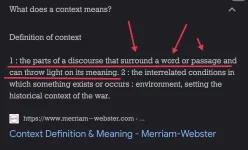
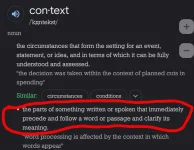
toinks. 🤦 di mo yata alam meaning ng context at proof texting 🤦

IMG_20220725_140831.webp
Screenshot_2022-07-25-14-06-54-84_e4424258c8b8649f6e67d283a50a2cbc.webp
Kaya nga ipinakita ko yung mga naka-surround na verse sa Efeso 4:30 (26 and 27) to know na yung sinabi ni Pablo ay hindi literal. Tas sasabihin mo, proof texting?

Duh. Weird. 🙄🤦
 
Status
Not open for further replies.

About this Thread

  • 28
    Replies
  • 891
    Views
  • 5
    Participants
Last reply from:
finzyditch

Online now

Members online
968
Guests online
743
Total visitors
1,711

Forum statistics

Threads
2,275,574
Posts
28,964,202
Members
1,231,870
Latest member
Dabojax
Back
Top