 PH
PH-
Welcome to PHCorner Forums! Sign up for free to unlock full access and exclusive privileges, including:
- Asking questions about computer and mobile issues
- Discovering internet tips for your mobile network and computer
You are using an out of date browser. It may not display this or other websites correctly.
You should upgrade or use an alternative browser.
You should upgrade or use an alternative browser.
🔒 Closed PYTHON Dictionaries
- Thread starter PHC rem
- Start date
- Status
- Not open for further replies.
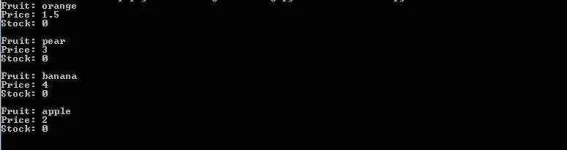
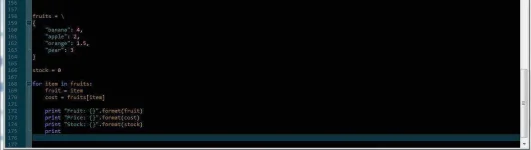
salamat paps..bago lang kasi ako sa dictionariespede din ganto dinagdag lang
fruit = item
cost = fruits[item]
para mas maganda pangalan ng variable
View attachment 723620
nalito din ako jan datisalamat paps..bago lang kasi ako sa dictionaries
Ech iY uri
Forum Veteran
pa help po gusto ko din malaman yung coding. saan po makakahanap ng dictionary ng ganyan?
kaya nga paps e..nalilito din ako kagabinalito din ako jan dati
hirap nga hanapin paps e..hinahanap ko din..para ma tutunan kopa help po gusto ko din malaman yung coding. saan po makakahanap ng dictionary ng ganyan?
Ech iY uri
Forum Veteran
mero naman sa p.s pero. html yunhirap nga hanapin paps e..hinahanap ko din..para ma tutunan ko
paps alam mo ba to?..hirap na hirap nako.hahahapede din ganto dinagdag lang
fruit = item
cost = fruits[item]
para mas maganda pangalan ng variable
View attachment 723620
The idea here is to see how many years it will take a bank account to grow to at least a given value, assuming a fixed annual interest. Write a program savings.py. Prompt the user for three numbers: an initial balance, the annual percentage for interest as a decimal, like .04 for 4%, and the final balance desired.
All the monetary amounts that you print should be rounded to exactly two decimal places. Start by printing the initial balance this way. For example, if the initial balance was entered as 123.5, it should be reprinted by your program as 123.50. Also print the balance each year until the desired amount is reached or passed. The first balance at or past the target should be the last one printed.
The math: The amount next year is the amount now times (1 + interest fraction), so if I have $500 now and the interest rate is .04, I have $500*(1.04) = $520 after one year and after two years I have, $520*(1.04) = $540.80....
For example, if I respond to the prompts, and enter into the program a $500 starting balance, .04 interest rate and a target of $550, the program prints:
500.00
520.00
540.80
562.43
madali lang yan paps tignan mo lang sa formula at gamitan ng logicpaps alam mo ba to?..hirap na hirap nako.hahaha
The idea here is to see how many years it will take a bank account to grow to at least a given value, assuming a fixed annual interest. Write a program savings.py. Prompt the user for three numbers: an initial balance, the annual percentage for interest as a decimal, like .04 for 4%, and the final balance desired.
All the monetary amounts that you print should be rounded to exactly two decimal places. Start by printing the initial balance this way. For example, if the initial balance was entered as 123.5, it should be reprinted by your program as 123.50. Also print the balance each year until the desired amount is reached or passed. The first balance at or past the target should be the last one printed.
The math: The amount next year is the amount now times (1 + interest fraction), so if I have $500 now and the interest rate is .04, I have $500*(1.04) = $520 after one year and after two years I have, $520*(1.04) = $540.80....
For example, if I respond to the prompts, and enter into the program a $500 starting balance, .04 interest rate and a target of $550, the program prints:
500.00
520.00
540.80
562.43
enter initial amount -> enter growth -> enter target
-> while initial amount < target -> perform the formula
-> if initial amount is >= to target -> break

asan po yong formula paps?madali lang yan paps tignan mo lang sa formula at gamitan ng logic
enter initial amount -> enter growth -> enter target
-> while initial amount < target -> perform the formula
-> if initial amount is >= to target -> break
View attachment 723980
paps bat pag nag input ako ng 550 sa target amountmadali lang yan paps tignan mo lang sa formula at gamitan ng logic
enter initial amount -> enter growth -> enter target
-> while initial amount < target -> perform the formula
-> if initial amount is >= to target -> break
View attachment 723980
ayaw tumigil ng loop.
#CASE STUDY
in_amount = float(input("Enter Initial Amount: "))
annual_grow = float(input("Enter Annual Growth: "))
target_amount = float(input("Enter Target Amount: "))
while in_amount < target_amount:
rate = 1 + annual_grow
total = (in_amount * rate)
totals = total * rate
print("Initial Amount: {}".format(in_amount))
print("Year 1: {}".format(total))
print("Year 2: {}".format(totals))
print("Year 3: {}".format(totals * rate))
if totals >= target_amount:
break
dalawang print lang kelangan jan at yung formula simplehan mo lang para di ka malito,paps bat pag nag input ako ng 550 sa target amount
ayaw tumigil ng loop.
#CASE STUDY
in_amount = float(input("Enter Initial Amount: "))
annual_grow = float(input("Enter Annual Growth: "))
target_amount = float(input("Enter Target Amount: "))
while in_amount < target_amount:
rate = 1 + annual_grow
total = (in_amount * rate)
totals = total * rate
print("Initial Amount: {}".format(in_amount))
print("Year 1: {}".format(total))
print("Year 2: {}".format(totals))
print("Year 3: {}".format(totals * rate))
if totals >= target_amount:
break
wag ka na mag declare ng kung ano ano
di na kelangan ideclare yung formula at isang line lang yun
#CASE STUDYdalawang print lang kelangan jan at yung formula simplehan mo lang para di ka malito,
wag ka na mag declare ng kung ano ano
di na kelangan ideclare yung formula at isang line lang yun
in_amount = float(input("Enter Initial Amount: "))
annual_grow = float(input("Enter Annual Growth: "))
target_amount = float(input("Enter Target Amount: "))
rate = annual_grow + 1
year = 1
print("Initial Amount: {}".format(in_amount))
while in_amount < target_amount:
in_amount *= rate
print("Year",year,":",in_amount)
year += 1
if in_amount >= target_amount:
break
thank you paps..nakuha ko na
my book kaba ng python paps?dalawang print lang kelangan jan at yung formula simplehan mo lang para di ka malito,
wag ka na mag declare ng kung ano ano
di na kelangan ideclare yung formula at isang line lang yun
di ako nagbook eh tamang search lang hahamy book kaba ng python paps?
pahingi ng link paps hahahadi ako nagbook eh tamang search lang haha
google, w3schools, stackoverflow jaan langpahingi ng link paps hahaha
- Status
- Not open for further replies.
Similar threads
-
❓ Help Guide naman po dyan ng Python para sa mga beginner na kagaya ko po
- Started by leocel
- Replies: 1
-
👨🏫 Tutorial Revenue and Pricing Analytics with Excel & Python
- Started by WSODownload
- Replies: 0
-
[UDEMY] FastAPI Interview Questions | Python Developer Practice Test
- Started by flex012
- Replies: 0
-
[UDEMY] Python for Absolute Beginners: Get PCEP Certified in 30 Days
- Started by flex012
- Replies: 0
-
👨🏫 Tutorial Python for Everybody with Dr. Chuck (PY4E)
- Started by WSODownload
- Replies: 0
About this Thread
-
22Replies
-
2KViews
-
6Participants
Last reply from:
S4BRETOOTH
S4BRETOOTH
New Topics
-
Looking for Google Cloud Console
- Started by S A K A T A
- Replies: 0
- 💻 Coding & Programming
-
SIM CARD CHECKER
- Started by HiroshiKim
- Replies: 4
- 💻 Coding & Programming
-
How to Redeem Your 1 Billion Tokens in Muse AI
- Started by Keinz
- Replies: 1
- 💻 Coding & Programming
-
CODING AI Is FREE on Cline Desktop ( LIMITED TIME )
- Started by Keinz
- Replies: 0
- 💻 Coding & Programming
-
Scan and fix compromised wordpress website
- Started by caredebs
- Replies: 0
- 💻 Coding & Programming
-
Zefame Free Service Automated
- Started by mtplay
- Replies: 2
- 💻 Coding & Programming
-
Newbie Coding/Programming Question.
- Started by zhaenarez25
- Replies: 10
- 💻 Coding & Programming
-
Cαиνα TEAMS LINK
- Started by Keinz
- Replies: 2
- 💻 Coding & Programming
Trending Topics
Online now
- Members online
- 1,141
- Guests online
- 3,601
- Total visitors
- 4,742