PH
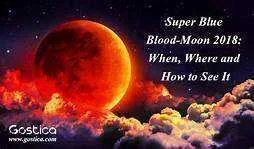
PH Blue Blood Supermoon eclipse
On Jan. 31, 2018, skywatchers across much of the world will receive a postholiday gift: the total lunar eclipse of a full supermoon that is also a Blue Moon! Unlike last summer's You do not have permission to view the full content of this post. Log in or register now., lunar eclipses are completely safe to look at because the sun is below the horizon. Any sunlight that reaches the eclipsed moon has to pass over the Earth's horizon, panting the moon with reddish light — hence the nickname "blood moon" for eclipsed moons.
January skywatchers are in for a rare treat: a Blue Moon, a total lunar eclipse and a supermoon all in the same month.
A You do not have permission to view the full content of this post. Log in or register now. is when two full moons happen in the same calendar month; You do not have permission to view the full content of this post. Log in or register now. occur when the moon passes into Earth's shadow; and You do not have permission to view the full content of this post. Log in or register now. happen when the moon's perigee — its closest approach to Earth in a single orbit — coincides with a full moon. In this case, the supermoon also happens to be the day of the lunar eclipse.
the world will experience three partial solar eclipses and two total lunar eclipses — but whether you can see them depends on where you live. The first event is a total lunar eclipse that happens on the morning of Jan. 31. This eclipse will be special!'.. The moon will be both "super" and "blue," and if skies are clear, skywatchers in North America will be able to see all or part of the eclipse.
Mobile astronomy apps such as SkySafari 6 are an ideal tool to preview celestial events. The total lunar eclipse on the morning of Jan. 31, 2018 features an enlarged supermoon. It's also a Blue Moon, the second full moon in January — a combination that hasn't occurred in many years. In the eastern US and Canada, the moon will set mid-eclipse. But skywatchers in the west will be able to watch the entire eclipse, as shown here near the end of the eclipse at 6:15 a.m. PST in San Francisco, CA. By telling you where in the sky it will occur, your astronomy app can help you plan to observe or photograph any eclipse.
Unfortunately the UK will not witness the lunar eclipse because it will peak at 1.30pm GMT in the middle of day when the moon is not out.
Western Europe, the west side of Africa and the east side of South America will not be able to see the lunar eclipse.
But the USA, Canada, Asia and the eastern side of Europe are lucky and will be able to see the lunar eclipse on January 31.
Credit: You do not have permission to view the full content of this post. Log in or register now. and You do not have permission to view the full content of this post. Log in or register now.
~Professora Hakimi Kazumi
Asianism
On Jan. 31, 2018, skywatchers across much of the world will receive a postholiday gift: the total lunar eclipse of a full supermoon that is also a Blue Moon! Unlike last summer's You do not have permission to view the full content of this post. Log in or register now., lunar eclipses are completely safe to look at because the sun is below the horizon. Any sunlight that reaches the eclipsed moon has to pass over the Earth's horizon, panting the moon with reddish light — hence the nickname "blood moon" for eclipsed moons.
January skywatchers are in for a rare treat: a Blue Moon, a total lunar eclipse and a supermoon all in the same month.
A You do not have permission to view the full content of this post. Log in or register now. is when two full moons happen in the same calendar month; You do not have permission to view the full content of this post. Log in or register now. occur when the moon passes into Earth's shadow; and You do not have permission to view the full content of this post. Log in or register now. happen when the moon's perigee — its closest approach to Earth in a single orbit — coincides with a full moon. In this case, the supermoon also happens to be the day of the lunar eclipse.
the world will experience three partial solar eclipses and two total lunar eclipses — but whether you can see them depends on where you live. The first event is a total lunar eclipse that happens on the morning of Jan. 31. This eclipse will be special!'.. The moon will be both "super" and "blue," and if skies are clear, skywatchers in North America will be able to see all or part of the eclipse.
Mobile astronomy apps such as SkySafari 6 are an ideal tool to preview celestial events. The total lunar eclipse on the morning of Jan. 31, 2018 features an enlarged supermoon. It's also a Blue Moon, the second full moon in January — a combination that hasn't occurred in many years. In the eastern US and Canada, the moon will set mid-eclipse. But skywatchers in the west will be able to watch the entire eclipse, as shown here near the end of the eclipse at 6:15 a.m. PST in San Francisco, CA. By telling you where in the sky it will occur, your astronomy app can help you plan to observe or photograph any eclipse.
Unfortunately the UK will not witness the lunar eclipse because it will peak at 1.30pm GMT in the middle of day when the moon is not out.
Western Europe, the west side of Africa and the east side of South America will not be able to see the lunar eclipse.
But the USA, Canada, Asia and the eastern side of Europe are lucky and will be able to see the lunar eclipse on January 31.
Credit: You do not have permission to view the full content of this post. Log in or register now. and You do not have permission to view the full content of this post. Log in or register now.
~Professora Hakimi Kazumi
Asianism