PH
PHThreadworm
Animal
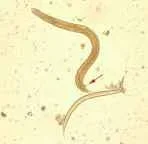
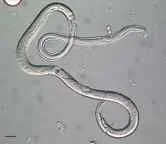
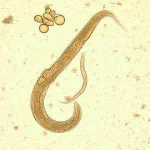
Strongyloides stercoralis is a human pathogenic parasitic roundworm causing the disease strongyloidiasis. Its common name is threadworm. You do not have permission to view the full content of this post. Log in or register now.
Scientific name:Strongyloides stercoralis
Class:Secernentea
Did you know:To date, occurrence of autoinfection in humans with helminthic infections is recognized only in Strongyloides stercoralis and Capillaria philippinensis infections. You do not have permission to view the full content of this post. Log in or register now.
Ingat kayo lage kayo mag tsinelas hehehe
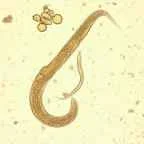
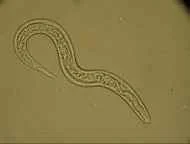
Cause
What causes strongyloides?
Strongyloidiasis is caused by the parasitic roundworm S. stercoralis. This worm infects mainly humans. It's most often found in tropical and subtropical climates, but it can occasionally be found in more temperate climates. This may include parts of the southern United States and Appalachia.
Strongyloidiasis is caused by the nematode (roundworm) Strongyloides stercoralis. The genus Strongyloides is classified in the order Rhabditida, and most members are soil-dwelling microbiverous nematodes. Most of the 52 species of Strongyloides do not infect humans. S stercoralis is the most common human pathogen.
How is strongyloides transmitted?
Strongyloides is classified as a soil-transmitted helminth. This means that the primary mode of infection is through contact with soil that is contaminated with free-living larvae. ... In addition to contact with soil and auto-infection, there have been rare cases of person-to-person transmission in: organ transplantation.
What is the infective stage of strongyloides Stercoralis?
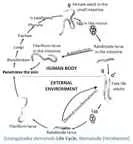
The free-living males and females of S. stercoralis die after one generation; they do not persist in the soil. The latter, in turn, can either develop into a new generation of free-living adults or develop into infective filariform larvae. ... In the small intestine, they molt twice and become ãdül† female worms
How do you treat
Acute and chronic strongyloidiasis
You do not have permission to view the full content of this post. Log in or register now. › parasites › health
Animal
Strongyloides stercoralis is a human pathogenic parasitic roundworm causing the disease strongyloidiasis. Its common name is threadworm. You do not have permission to view the full content of this post. Log in or register now.
Scientific name:Strongyloides stercoralis
Class:Secernentea
Did you know:To date, occurrence of autoinfection in humans with helminthic infections is recognized only in Strongyloides stercoralis and Capillaria philippinensis infections. You do not have permission to view the full content of this post. Log in or register now.
Ingat kayo lage kayo mag tsinelas hehehe
Cause
What causes strongyloides?
Strongyloidiasis is caused by the parasitic roundworm S. stercoralis. This worm infects mainly humans. It's most often found in tropical and subtropical climates, but it can occasionally be found in more temperate climates. This may include parts of the southern United States and Appalachia.
Strongyloidiasis is caused by the nematode (roundworm) Strongyloides stercoralis. The genus Strongyloides is classified in the order Rhabditida, and most members are soil-dwelling microbiverous nematodes. Most of the 52 species of Strongyloides do not infect humans. S stercoralis is the most common human pathogen.
How is strongyloides transmitted?
Strongyloides is classified as a soil-transmitted helminth. This means that the primary mode of infection is through contact with soil that is contaminated with free-living larvae. ... In addition to contact with soil and auto-infection, there have been rare cases of person-to-person transmission in: organ transplantation.
What is the infective stage of strongyloides Stercoralis?
The free-living males and females of S. stercoralis die after one generation; they do not persist in the soil. The latter, in turn, can either develop into a new generation of free-living adults or develop into infective filariform larvae. ... In the small intestine, they molt twice and become ãdül† female worms
How do you treat
Acute and chronic strongyloidiasis
- First line therapy. Ivermectin, in a single dose, 200 µg/kg orally for 1-2 days.
- Albendazole, 400 mg orally two times a day for 7 days.
- Ivermectin, 200 µg/kg per day orally until stool and/or sputum exams are negative for 2 weeks.
- More on: Handwashing.
You do not have permission to view the full content of this post. Log in or register now. › parasites › health