 PH
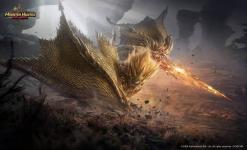
MANILA, Philippines – The Monster Hunter series has always been centered around its grind and with its first purely mobile game in Outlanders it kinda doubles down on that and that in itself is a double edged sword that will be welcomed and shunned at the same time.
Its hunting loop, built around tracking enormous creatures, learning their attack patterns, and collecting materials to craft better equipment is fine tuned for a different kind of mobile experience. If you know what to expect alongside the gacha elements that come with the mobile genre, then you might just lose hundreds of ours in Outlanders.
Developed by TiMi Studio Group and published by Garena under Capcom’s license, Outlanders is a free-to-play action RPG that brings the series’ familiar monsters, weapon-based combat, and equipment crafting to Android and iOS. It takes considerable inspiration from Monster Hunter World, particularly its large environments and approach to exploration, while making adjustments to accommodate touchscreen controls and shorter play sessions.
The Outlanders mimics the original experience very well. The hunts feel familiar, the monsters remain dangerous, and there is a satisfying sense of progression in improving equipment. Unfortunately, the game also brings along many of the conventions associated with free-to-play mobile games. Its multiple progression systems, character recruitment, gacha, and increasingly demanding upgrade requirements eventually make the experience more cumbersome than it needs to be.
RELATED STORY: Charess stands her ground: ‘cosplay is not consent’
Bringing Monster Hunter to smartphones
Players join an Adventurer’s Guild expedition to the uncharted island of Aesolan, where a mineral called Radiantite is affecting the behavior of local creatures.
The story provides a reason to explore the island and encounter its monsters, although it is not particularly compelling on its own but to be honest Monster Hunter franchise plots are not exactly the most exciting. The more interesting part is the opportunity to explore its different environments, from the forests of Giantwood Locale to the Searing Plains and the decaying Rotfall Abyss.
These locations are populated by familiar creatures from the franchise, including Great Jagras, Rathalos, and Diablos. Each has recognizable attack patterns and behaviors, with additional moves introduced when monsters become enraged or reach certain stages of a fight. Larger predators can also interrupt ongoing encounters, turning an otherwise manageable hunt into a more chaotic battle.
The environments borrow much of their structure from Monster Hunter World. Players can explore large zones, gather materials, complete side quests, and hunt monsters without necessarily having to begin a formal mission. Camps provide resting points and fast travel, while other environmental constructions help with traversal. There are even smaller activities and diversions that give players something to do between hunts.
Combat is where the mobile adaptation faces its biggest challenge. Monster Hunter’s traditional controls can be demanding even on a dedicated controller, with different weapon types requiring their own combinations, timings, and defensive techniques. Replicating that experience on a touchscreen would be difficult.
Outlanders address this through two control schemes: Adventure Mode and Classic Mode. Adventure Mode simplifies combat into three context-sensitive buttons for attacking, reacting, and unleashing special attacks. Their functions change depending on the situation, allowing the game to handle certain actions automatically. Classic Mode provides a more traditional control layout, offering greater manual control over attacks and defensive actions.
It is simplified but players still need to recognize monster attack patterns, identify openings, and understand when to retreat. The game retains much of the deliberate pacing that separates Monster Hunter from faster action games, even if some of the more complicated mechanics have been removed.
There are compromises, however. Outlanders remove dedicated jumping, meaning most encounters take place on the ground. Some environmental interactions have also been reduced to contextual prompts, making them more convenient but less dependent on player improvisation. The game also offers only eight weapon types, leaving out familiar favorites such as the Hunting Horn and Insect Glaive.
These omissions will definitely be noticed by longtime fans rather than newcomers, particularly those who have spent years mastering specific weapons. Still, the two control schemes provide a reasonable way to make the franchise accessible to players who have never experienced its more demanding combat.
Familiar monsters, new companions
One of Outlanders’ more interesting additions is its roster of recruitable Adventurers. Rather than relying exclusively on a customizable hunter and different equipment combinations, players can build a party of characters with their own weapons, abilities, and elemental affinities.
These characters can be switched during combat, giving players additional ways to approach encounters. Keres, for example, uses claw-like dual blades and has a drilling attack, while Luxheart wields a large sword with attacks that incorporate fireworks. Other Adventurers offer different combat styles, allowing players to build teams around the elemental weaknesses of their targets.
The character designs are considerably more colorful and exaggerated than what players might expect from traditional Monster Hunter hunters. They bring a distinct personality to Outlanders, and their individual abilities help break up the repetition of fighting the same monsters to collect materials.
The problem is that recruiting these characters is tied to a gacha system. Players spend in-game currency to obtain random Adventurers, with stronger or limited-time characters potentially requiring considerable luck. The game provides free currency that makes it possible to build a capable roster without immediately spending money, but obtaining specific high-tier characters is another matter.
The monster roster is arguably more important to the experience, and Outlanders does a good job of drawing from the franchise’s history. Its Radiant variants introduce stronger versions of familiar creatures with additional attacks and behaviors, rather than simply increasing their health and damage. This gives returning monsters a different challenge and makes repeated encounters less predictable.
There is also enough content to keep players occupied beyond the main campaign. Free Hunts, Daily Hunts, Weekly Challenges, and more demanding expeditions provide additional opportunities to collect materials and improve equipment. The launch experience is substantial, although its long-term appeal will depend on how regularly new monsters, Adventurers, and activities are introduced.
Visually, Outlanders is an impressive achievement for a mobile game. Its environments are detailed, monsters retain much of their imposing presence, and the game can maintain a stable performance even during hectic encounters. Playing this on an Honor Magic V3 was a satisfying and smooth experience with higher than average settings.
The grind behind the hunts
The biggest problem with Outlanders becomes apparent as players spend more time with it. Its progression system is considerably more complicated than the basic hunting and equipment-crafting loop that defines the franchise.
Players have to manage equipment upgrades, character development, Palico progression, charms, skills, monster cards, and several different ranks. Each system has its own requirements and materials, creating a lengthy list of activities that players must complete to keep their characters competitive. The grind will definitely seem an enticing reason to spend but it definitely isn’t required to process. Though leveling up the Adventure Rank, Ecological Rank, and other requirements is a timesink.
Adventurer Rank and Ecological Rank are particularly important because they determine access to certain upgrades and story progression. Players who reach a point where their equipment or characters can no longer advance may have to complete additional activities before continuing the campaign.
This is where Outlanders begins to feel more like a conventional mobile RPG than a traditional Monster Hunter game. The franchise has always involved grinding for materials, but there is a difference between repeatedly hunting a monster because you need a particular component and completing unrelated activities because a progression requirement is preventing you from moving forward.
The free-to-play structure makes these interruptions more noticeable. Outlanders is reasonably generous with its initial rewards, and players can make considerable progress without spending money. However, as the roster grows and more characters require investment, the demand for resources increases.t.
The amount of content is not necessarily the problem. There are plenty of hunts and activities available, but too many of them become obligations rather than optional diversions. Instead of spending time learning a new monster or experimenting with a different weapon, players can find themselves navigating menus, collecting currencies, and upgrading characters just to satisfy the next requirement.
That is an unfortunate direction for a game whose strongest feature is its combat. Monster Hunter is already a series built around repetition, but its hunting loop works because players generally understand what they are working toward. Outlanders occasionally obscures that straightforward motivation beneath layers of mobile game progression.
A good hunt held back by mobile conventions
Monster Hunter Outlanders is an ambitious attempt to bring one of Capcom’s most recognizable franchises to smartphones, and it succeeds in several important areas. Its combat retains the weight and timing of the mainline games, its monsters are entertaining to fight, and its environments offer a surprising amount of room for exploration. The simplified controls also make it possible to enjoy the experience without having to master an elaborate touchscreen layout.
The additional Adventurers and Radiant monster variants give the game its own identity, even if the gacha system behind character recruitment will not appeal to everyone. There is a substantial amount of content available, and the technical presentation demonstrates how much modern smartphones can handle.
Its biggest weakness is the way its free-to-play systems gradually take precedence over the hunting itself. Multiple currencies, upgrade requirements, character recruitment, and progression gates make the experience increasingly demanding as players advance. What begins as a promising mobile adaptation eventually asks players to spend more time managing their progression than actually hunting.
For longtime Monster Hunter fans, Outlanders offers a convenient way to take familiar hunts on the go, although the reduced weapon selection and simplified mechanics may leave some wanting more. Newcomers, meanwhile, will find an approachable introduction to the series, provided they are comfortable with the usual conventions of free-to-play games.
Outlanders proves that Monster Hunter can work on smartphones. It gets the most important part right, but its reliance on mobile game conventions makes it harder to appreciate everything else. The hunt is still worth taking. Getting to the next one is where it gets tedious more than fun though.
RELATED STORY: Grand Theft Auto: the evolution of a controversial franchise
Source: You do not have permission to view the full content of this post. Log in or register now.
Date posted: Thu, 26 Nov 2026 18:26:05 PST