 PH
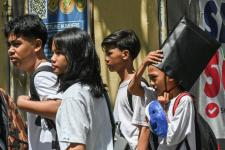
MANILA, Philippines — Nearly three in 10 Filipinos are between 10 and 24 years old, equivalent to roughly 34 million people. While that base is considered healthy for a nation, the fertility rate is already below replacement level, according to new United Nations population estimates.
The United Nations Population Fund's State of World Population 2026 report estimates the Philippine population at 117.7 million this year, with people aged 10 to 24 accounting for 29%.
The report notes country's total fertility rate at 1.9 children per woman, below the 2.1 births commonly considered the level needed for a population to replace itself from one generation to the next.
The Philippines then has both a large cohort of young people remains a major part of the population and lower fertility that gradually changing the age profile of generations that follow.
The Philippine share of people aged 10 to 24 is higher than both the global average of 24% and the Asia-Pacific average of 23%, according to the report.
Fertility, meanwhile, is lower than the global rate of 2.2 children per woman but slightly higher than the Asia-Pacific rate of 1.8.
The report estimates that 26% of Filipinos are under 15 years old, while 68% are between 15 and 64 and 6% are 65 or older.
"Both situations, high fertility and low fertility, will require sound, rights-based and forward-looking policies," the report said.
UNFPA's 2026 report suggest that demographic shifts affect youner people's employment, housing, education and economic security as well as their decisions about relationships, independence and whether and when to have children.
It said demographic outcomes ultimately reflect individual choices and whether people have the resources and opportunities to make those choices freely.
Governments would therefore have to adapt policies covering human capital, employment, migration, care systems, healthy ageing and social protection rather than focus narrowly on raising or lowering fertility, the UN agency said.
Fertility decline already visible
The UN estimate is consistent with the Philippines' most recent national demographic survey.
While the UNFPA's 2026 demographic table estimates Philippine fertility at 1.9 children per woman, newer national survey data show the decline has gone further. The Philippine Statistics Authority's 2025 survey puts the rate at 1.7, from 1.9 in 2022 and 2.7 in 2017.
The transition is also visible in the country's changing age structure.
The 2024 census showed that children under 15 made up 26.7% of the household population, down from 30.7% in 2020. People aged 65 and older, meanwhile, accounted for 6.6%, up from 5.4% four years earlier.
The working-age population, those between 15 and 64, increased to 66.7% of the household population from 63.9% in 2020.
Source: You do not have permission to view the full content of this post. Log in or register now.
Date posted: 2026-11-22T17:40:00+08:00