 PH
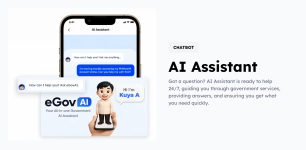
MANILA, Philippines – Days after its September 21, 2026 launch, the Philippine government’s AI assistant, Kuya A, incorrectly named US President Donald Trump as the Philippine president.
When challenged, it named former US President Joe Biden before giving the correct answer, Ferdinand Marcos Jr., the following morning.
Integrated into the eGovPH Super App, Kuya A helps users navigate government services, process documents, and access legal information. Its error raises concerns about how inaccurate answers could mislead citizens seeking government assistance.
What Kuya A does and why accuracy matters
Developed by the Department of Information and Communications Technology (DICT), the eGovPH Super App features Kuya A, an AI assistant that answers questions, extracts documents, identifies images, translates information, and provides legal and regulatory content. The platform also offers tools for tourism, agriculture, and health.
These features could make government services easier to access, but inaccurate guidance on legal, health, or application matters could have serious consequences.
Since Kuya A is part of an official government app, users may assume its answers are reliable even when they are wrong.
RELATED STORY: Microsoft, DepEd launch AI literacy program for 2,000 teachers
Rules require human oversight
The eGovAI terms and conditions warn that AI-generated responses may contain errors or incomplete information.
They also clarify that these responses do not automatically count as official government decisions, legal opinions, medical advice, or binding agency guidance.
The terms require human review before agencies use AI-generated content to make decisions, issue public communications, or take actions that affect people’s rights, benefits, safety, or access to services.
In June 2026, the DICT and Civil Service Commission also issued Joint Memorandum Circular No. 003, which sets guidelines for responsible AI use in government.
The guidelines cover accountability, transparency, human oversight, and data protection. They also allow people affected by AI-assisted decisions to challenge those decisions and seek human review or redress.
Government agencies remain responsible for how they use AI, while developers and vendors must also follow applicable rules.
However, these safeguards only work if people know how to report errors, request corrections, and get help from a human when AI provides incorrect information.
Where can citizens report errors?
Existing complaint channels may offer a way to report problems with government services. The Anti-Red Tape Authority (ARTA) handles complaints about red tape and violations of the Ease of Doing Business Law, while the 8888 Citizens’ Complaint Center receives complaints about government agencies.
However, neither channel specifically addresses errors made by AI assistants. Whether ARTA or 8888 can handle a complaint depends on the nature of the problem.
Users also need to know how to report incorrect answers directly in the app, whether the DICT tracks recurring errors, and where to find verified information before acting on guidance that could affect their benefits, applications, or deadlines.
The error involving Donald Trump and Ferdinand Marcos Jr. was easy to spot. But an incorrect filing deadline or documentary requirement may be harder to detect, especially for users who rely on the assistant because they do not know where to find reliable information.
Convenience must come with accountability
Kuya A could make public services easier to navigate by helping citizens find information beyond office hours and understand complex government requirements.
However, making information more accessible does not guarantee that it is accurate.
Disclaimers alone are not enough to protect users. The government must also provide clear ways to report errors, correct misinformation promptly, and connect users with human assistance when incorrect answers could affect their rights or access to services.
As eGovAI expands, the government should measure its success not only by how quickly it answers questions or how many services it offers, but also by how well it detects and corrects errors and assists people affected by them.
Ultimately, Kuya A’s value depends not just on how helpful its answers sound, but on whether the government has a clear process for taking responsibility when those answers are wrong.
RELATED STORY: AI integration: The role of AI in Filipino MSMEs and BPO sectors
Source: You do not have permission to view the full content of this post. Log in or register now.
Date posted: Thu, 12 Nov 2026 11:31:01 PST