 PH
PH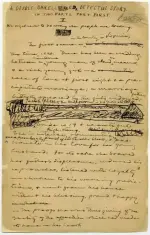
An author's handwritten manuscript isn't necessarily identical to the published book.
One fascinating example is a manuscript of Jude the Obscure in which Thomas Hardy marked changes specifically for its serial publication.
He later reversed many of those changes when preparing the book edition.
The surviving manuscript therefore records different stages of the same literary work.
It allows researchers to see how publication format could influence the text.
The handwritten corrections also provide evidence of the author's creative process and the history of the work's publication.
A manuscript can therefore preserve not just a story, but the story of how the story itself changed.
© Fitzwilliam Museum