 PH
PH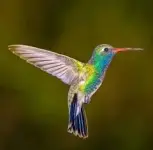
Humans have three types of cone cells used for color vision, but many birds have four.
That additional cone can make birds sensitive to ultraviolet wavelengths invisible to human eyes.
As a result, feathers, fruit, flowers, and even other birds can contain visual patterns that look completely different to them.
Two birds that appear nearly identical to us may have obvious visual differences to another bird.
There's effectively an entire part of the colorful world around us that our eyes simply don't display.
© Cornell Lab of Ornithology