 PH
PH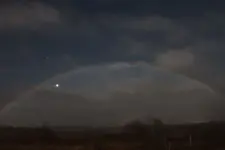
A rainbow produced by moonlight is called a moonbow or lunar rainbow. It requires bright moonlight, water droplets, and the correct geometry between the Moon, observer, and precipitation. Because moonlight is much dimmer than sunlight, moonbows often appear white or faint to human eyes even though photographs can reveal their colors.
They're much rarer to observe than ordinary daytime rainbows. The same basic physics is at work—the light source has simply changed. Rainbows don't necessarily disappear when the Sun does.
© NASA