 PH
PH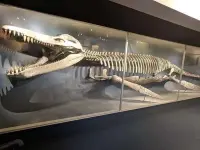
Ranker Logo
Weird History Logo
JOIN
Watchworthy
Weird History
Graveyard Shift
Total Nerd
Gaming
Unscripted
Lifestyle
Music
Sports
Watchworthy
Weird History
Graveyard Shift
Total Nerd
Gaming
Unscripted
Lifestyle
Music
Sports
Watchworthy
Weird History
Graveyard Shift
Total Nerd
Gaming
Unscripted
Lifestyle
Music
Sports
17
That's Just Science
Science
Science Facts That Made Us Feel Almost Too Smart
Chrissy Rose
Chrissy Rose
Updated May 15, 2025
115.7K views
13 items
Science Facts That Made Us Feel Almost Too Smart
5 of 17
That's Just Science
Next List
Ranked By
2.2K
voters
8.9K
votes
Voting Rules
Vote up the most eye-opening science facts.
There are plenty of science facts we learned as kids that went in one ear and right out the other. How many of us remember Newton's Laws of Motion, or all the elements of the periodic table? But that doesn't mean science can't be cool when we're adults.
The scientific world is full of fun facts, weird mysteries, and mind-blowing realities. For example, have you ever thought about how much those cotton-candy clouds actually weigh? Or, where does helium come from, and how is there a shortage? You might even be surprised to learn what the smartest bird is, or how amazingly long sharks have been around.
If you're looking to refill your repository of fascinating facts, this list will give you plenty to chew on. These tidbits will make you feel plenty smart, so be sure to keep them in your pocket next time you want to make your friends feel inferior.
Photo: Macro MonsterFlickrCC-BY-SA 2.0
Over 2.2K Ranker voters have come together to rank this list of Science Facts That Made Us Feel Almost Too Smart
Info Icon
HOW RANKINGS WORK
1
We're Running Out Of Helium
We're Running Out Of Helium
Photo: nathanmac87Wikimedia CommonsCC-BY 2.0
You may have tried to purchase helium balloons for a birthday party or baby ****** recently, and heard about a helium shortage. And you may have noticed that the cost of helium-filled balloons has increased dramatically. But this is not a supply-chain crisis we're talking about - the world is actually running out of helium.
The noble gas is completely nonrenewable, and although it is widely available within the greater universe, that's not the case here on Earth. The underground decay of elements such as uranium naturally produces helium. It takes millions of years to create helium, and because the gas is so light, it can easily evade gravity and leave the Earth's atmosphere for good.
Helium is important for more than just balloons; it lies behind the technology used in MRI machines and is used to launch rockets into space. Only three nations currently contain a helium supply: the US, Algeria, and Qatar. Until more countries turn their technology and resources to extracting and storing this valuable gas, the supply of helium will always be dangerously low.
Ranked #1 by 1,156 voters with a 92% upvote rate
1,156 votes
What do you think?
Startling science fact?
Ad ends in 24
Video Paused
2
Sharks Are Older Than Trees
Sharks Are Older Than Trees
Photo: Terry GossWikimedia CommonsCC BY-SA 3.0
The earliest known tree came into existence around 350 million years ago. Sharks, however, have been around for more than 400 million years. In their existence, they've survived at least four global extinctions.
One thing that's helped sharks survive so long is their ability to withstand certain diseases and infections. Sharks can also heal from injuries incredibly quickly.
Ranked #2 by 671 voters with an 85% upvote rate
671 votes
Startling science fact?
ADVERTISING
3
Human Bodies Glow
Human Bodies Glow
Photo: Anders.BachmannFlickrCC BY 2.0
We've all seen images, whether in movies or TV shows, of humans and other creatures glowing at night, thanks to infrared radiation. But while this imagery is captured due to the body heat we and other animals give off, it's different from the glow that humans emit in natural light. That's right - human bodies actually glow, emitting their own light naturally.
Of course, this occurs at very low levels, and is thus not visible to the ***** eye. A study conducted in Japan found that in a light-tight room, humans emitted light picked up by an extremely sensitive camera. The amount of light fluctuated with the time of day, likely reflecting the body's natural metabolic rhythm. Perhaps there's more truth than we realized to the concept of the "*******cy glow."
Ranked #3 by 585 voters with an 86% upvote rate
585 votes
Startling science fact?
4
The North Pole Is Actually Magnetic South
The North Pole Is Actually Magnetic South
Photo: Kencf0618Wikimedia CommonsCC-BY-SA 4.0
Buckle up for this one: The North Pole is actually south. What? The Earth has a geographic North Pole, which is of course where Santa Claus lives. But it also has a magnetic North Pole, thanks to the planet's magnetic field created by the iron core and movement in its outer parts. It is this magnetic North Pole that compasses point to when they point north.
Technically, though, the magnetic North Pole is actually the magnetic South Pole. In magnetic fields, opposites attract, so south is attracted to north and vice versa. Hence, the north pole of a compass (which is essentially a magnet) is attracted to the southern pole of Earth's magnetic field. Thus, when your compass points you north, you're really heading south, magnetically speaking.
Scientists know that the magnetic poles of the earth slowly shift over time. Eventually, the magnetic North and South Poles will completely flip. Then, compasses will point south even though they'll truly be pointing north.
Ranked #4 by 561 voters with an 86% upvote rate
561 votes
Startling science fact?
5
Whales Were Originally Land Animals
Whales Were Originally Land Animals
Photo: Kurt KaiserWikimedia CommonsCC-BY 1.0
Whales haven't always been the underwater behemoths we know them to be today. In fact, long ago - several million years ago, in fact - whales began to evolve on land. This all started about 10 million years after the extinction of the dinosaurs.
Fossils discovered in the last few decades have helped scientists unlock the secret evolution of whales, along with their porpoise and dolphin friends. The evolution was not a linear one, but rather a jagged line of aquatic animals that both swam and walked.
Discoveries of fossils in Alabama and Arkansas started to solve the puzzle in the 1800s. In fits and starts, scientists began to make sense of the growing collection of large bones. For instance, a shattered skull revealed an inner ear - something only whales are known to have. In the 1980s, scientists had a definitive connection between the land-dwelling creatures of old and the deep-sea cetaceans of today: the ear and tooth structure of a 53-million-year-old freshwater creature was nearly identical to that of modern-day whales.
Throughout the 1990s, more fossils turned up that confirmed the existence of an amphibious creature that was a cross between the ancient land-dwelling whale and the whales we know today. Now scientists believe they have enough information to point to Indohyus, a small land-dwelling mammal as the precursor to whales. So while today's whales have no legs, they used to have four.
(c) Ranker
