 PH
PHHindi siya fully airgapped network. I learned this from a dark web chinese forum (it's gone na). I will not be providing codes, explained only.
Diagram
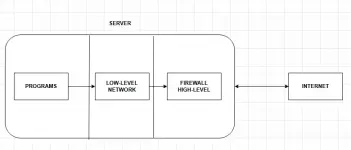
Based on the diagram above it's separated into 3 sections. Prorams, Low-Level Network, Firewall High-Level Network
Diagram
Based on the diagram above it's separated into 3 sections. Prorams, Low-Level Network, Firewall High-Level Network
- Programs - Ito yung mga program na gina-host mo or gina run sa server.
- Low-Level Network - Ito yung mga low-level network programs such as XDP or IPTables. What do you mean low-level? Because it executes instructions sa kernel or lowest-level ng server, meaning before pa man ma process or ma understand ang isang connection. Malaman na kaagad. It's very efficient but very complicated.
- Firewall High-Level - Ito yung mga high-level network programs like customized firewall built sa Python or something. Not efficient, easy.
- You first need to host whatever you want or something sa server in a non-root user, make sure to remove all unnecessary services at restrict yung user sa possible GTFO attacks. You do not have permission to view the full content of this post. Log in or register now.
- Install everything you need, setup everything you need.
- Make a high-level programming using Python, NodeJS or Rust and etc. It's purpose is to analyze the current network and classify them as existing, otherwise pag may packet na iba at non-existing it will send a notification sa webhook mo to notify ka.
- Using IPTables or UFW, restrict the network as much as possible. Such as blocking non-existing networks completely, blocking outbond ports na hindi ginagamit and so forth.
- You're done. I-tune mo lang pag may problem, adapt and improvise.