Yung iba, balls of steel... present at nag-present sila sa hearing...
'Influencers' agree: House disinfo hearing upholds free speech, social media needs regulation, Dominique Nicole Flores - Philstar.com, February 4, 2025 | 4:08pm
You do not have permission to view the full content of this post.
Log in or register now.
Snippet:
"“The reason that their freedom of speech is being curtailed cannot be used. You were invited here to E×ρréšš your views as well. Isn't this the proper exercise of freedom of E×ρréššion?” Rep. Robert Ace Barbers (Surigao del Norte, 2nd District) said in Filipino.
He asked political strategist Malou Tiquia, one of the invited social media influencers, whether she believed the hearing had breached their right to freedom of E×ρréššion and speech.
“The fact that I agreed to appear and honor your invitation, and I was given the chance to say what I want to say, I don’t think that is a curtailment of my right to E×ρréššion,” Tiquia said.
She also agreed with Barbers that legislation is needed to enforce discipline and create a regulatory framework for content on social media.
“To directly respond to Congressman Barbers, yes, for the simple reason that the decency of the space has been grossed so much. So, yes,” Tiquia said, adding that some statements online are actually slanderous and libelous.
Vlogger Marc Louie Gamboa also said in Filipino: “We should also look for ways to minimize or prohibit [disinformation] without curtailing everyone’s freedom of speech.”
Barbers also clarified that the hearing did not only invite the vloggers and social media users to the hearing. The Tri-Comm has also invited experts and members of the academe who have studied the proliferation of disinformation in the country.
The joining committee also invited representatives of major social media platforms like Facebook and TikTok, but they were not present. "
...
"What experts said
Some of those are Ellen Tordesillas, president of the fact-checking organization VERA Files; Rachel Khan, a journalism professor at the University of the Philippines College of Mass Communication; and Jonathan Ong, disinformation researcher.
Tordesillas explained that the responsibility of fact-checking should not fall solely on fact-checkers. She agreed that revisiting existing laws, such as the Cybercrime Prevention Act of 2012, is essential to establish a code of ethics or regulatory framework for online content.
Meanwhile, Ong stressed that different kinds of legislation should be considered, not just imprisonment and fines penalizing social media users.
He added that it can also be focused on “content corrections” or “administrative compliance measures” that bring firms to participate in transparency mechanisms.
Ong also said addressing disinformation needs to be “civil society-driven” and contextualized with the local situation. "
...
"Where were the other ‘influencers’?
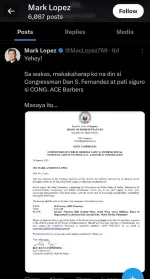
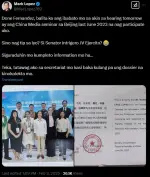
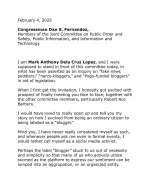
Some of the social media influencers absent had actively posted their comments online during the hearing. Several bloggers and vloggers also E×ρréššed their intention to file a petition for certiorari and prohibition before the Supreme Court.
A petition for certiorari is a legal remedy used to challenge a court, tribunal or government agency for acting without jurisdiction or committing grave abuse of power.
Meanwhile, a petition for prohibition, if granted by the Supreme Court, would halt the legislative inquiry.
According to former presidential spokesperson Harry Roque, the legal counsel of the vloggers, the petitioners include political commentators Ernesto “Jun” Abines, Mark Anthony Lopez and Sonshine Media Network International (SMNI) host Lorraine Badoy.
Badoy was convicted of indirect contempt for red-tagging a Manila Regional Trial Court (RTC) judge.
The Quezon City RTC also ruled her claims about broadcast journalist Atom Araullo and his mother being linked to communist groups as defamatory."
Laws on fake news may be used vs. activists, journalists, professors warn,
By LLANESCA T. PANTI, GMA Integrated News,
Published February 4, 2025 5:40pm
You do not have permission to view the full content of this post.
Log in or register now.
Snippet:
"Professors teaching media communications and journalism on Tuesday warned that passing laws on fake news might be used arbitrarily against critics and curtail freedom of E×ρréššion.
At a hearing of a joint congressional inquiry on the proliferation of fake news, Prof. Jonathan Ong said government regulation on social media content could bring more harm than good. Ong is a professor of global digital media at the University of Massachusetts.
“I just wanted to highlight research from other neighboring countries about the risks of top-down government legislation against fake news," Ong said.
"It’s important to recognize that many human rights organizations and international legal scholars have raised alarm about the global trend of anti-fake news laws being used as weaponized lawfare,” he added.
Prof. Rachel Khan said the Anti-Fake News Act of Malaysia and the Protection from Online Falsehood and Online and Manipulation Act of Singapore were an obstruction of civil liberties and media freedom.
...
Khan said there was "a need to balance the need to combat fake news with protecting fundamental rights is a complex challenge that requires extensive evaluation and flexibility and adjustment."
"This is not a black and white na issue. Kailangan po, the bottom line is still the protection of freedom of E×ρréššion, freedom of the press, especially the right of the people to information,” Khan said.
Khan, however, said that the Philippines could take a cue from Singapore's provision on media and information literacy involving various stakeholders, including governments, technology companies, civil society organizations, and the academe in developing and implementing strategies to educate the public.
“Our current media literacy courses in Grades 11 and 12 are only for one quarter. So that is not enough. It's not enough considering that media literacy is now as important as reading and writing and arithmetic," Khan said.
"We should teach media literacy as early as Grade 1,” she added, saying this had been the case in Finland and Taiwan.
Khan said the masterminds behind the peddling of falsehoods should be held accountable since they funded the disinformation machine.
“There has to be a way to penalize the masterminds rather than yung individual trolls kasi wala ho tayong mararating kung maghahabol tayo ng individuals rather than ‘yung nag-hire sa kanila or yung nagbabayad sa kanila,” Khan said.
Ong said legislation aimed at countering falsehood has four types:
- laws that provide for imprisonment for individuals spreading fake news, media organizations that publish false information, and social media companies and their executives who do not remove content deemed îllégâl from their platforms;
- laws that specify fines or other monetary penalties, targeting individuals, company executives, media organizations, or social media platforms;
- laws that provide for content controls or forced corrections, which entail publishers, social media platforms, internet service, providers, or users to remove the offending content or provide a mandatory correction; and
- laws that specified new administrative requirements, such as transparency requirements, media licensing regimes, data localization practices, or mandated press councils.
Ong said many experts have pointed out that laws versus fake news could be used inconsistently and arbitrarily "often used by incumbent politicians and governments to target activists, critics, journalists, and opposition parties."
"Top-down regulation can actually do more harm than good,” Ong said.
Ong said top-down government regulation could result in rubber-stamping local overregulation, embolden authoritarian regulators, and incentivize platforms to comply with illegitimate government requests.
Given these risks, Ong said that anti-falsehood and fake news should be led by various civil society organizations to prevent overreach.
“Kailangan po talagang suportahan at pondohan ang mga journalists, newsrooms, human rights agencies, and independent research centers for a civil society-driven technology and democracy space sa ating bansa. Hindi lang sapat na gayahin kung anu-anong methodology ang galing sa ibang bansa,” Ong said.
He also proposed legislation mandating big tech companies "to implement content corrections, or number two, administrative compliance measures for participating in transparency mechanisms with independent researchers." –NB, GMA Integrated News"
 PH
PH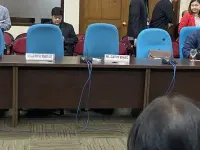
 maigi lang sa salita