 PH
PH-
Welcome to PHCorner Forums! Sign up for free to unlock full access and exclusive privileges, including:
- Asking questions about computer and mobile issues
- Discovering internet tips for your mobile network and computer
You are using an out of date browser. It may not display this or other websites correctly.
You should upgrade or use an alternative browser.
You should upgrade or use an alternative browser.
🔒 Closed Answer the ff
- Thread starter Kulantoy
- Start date
-
- Tags
- answer general questions the
- Status
- Not open for further replies.
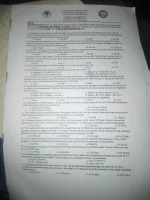
Please provide me with the specific questions you want me to answer in detail.
1. A gasoline station selling x gallons of fuel per month has a fixed cost of P2,500 and variable costs of 0.90x. The demand function is 1.5-0.00002x and the station's capacity allows no more than 20,000 gallons to be sold per month. Find the maximum profit.
a. P2,000
b. P3,000
c. P2,500
d. P4,500 2. A right circular cylinder having a volume of 1200 cm^3 is to be lined with gold foil costing P1.00 per square centimeter on its curved surface and with silver foil costing P0.60 per square centimeter at the top and bottom. Find its height for minimum cost. a. 8.193 cm d. 6.136 cm 3. A lot 625 m^2 in area is to be fenced on all four sides. Its dimensions require the least amount of fencing. If the fence costs P50.00 per linear meter, what is the total cost?
b.9.193 cm
b. P5,000
c. 8.173 cm
c. P6,000
a. P4,000 d. P8,000 4. A piece of wire with length 14.283 cm is cut into two pieces. One piece is formed into a square and the other into a circle. Find the length of the circular wire so that the sum of the areas of the square and the circle is a minimum.
a. 6.28
b. 6.17
c. 3.28
5. Find the shortest distance from the point (3, 0) to the parabola y^2 = 4x. b. 2√2 a. 2√3
c. 3√2
d. 5.39
d. 3√2
c. Highest: (2, -4) Lowest: (-2, 4) d. Highest: (2, 4) Lowest: (2,-4)
6. Find the highest and lowest points on the curve x^2 + xy + y^2 = 12.
a. Highest: (-2, 4) Lowest: (2, -4)
b. Highest: (-2, -4) Lowest: (-2, 4) 7. A boatman is at A which is 4.5 km from the nearest point B on a straight shore. He wants to reach in the minimum amount of time a point C situated on the shore 9km from B. How far from C should he land if he can row at the rate of 6 kph and row at the rate of 7.5 kph.
a. 3 km
b. 6 km
c. 5 km
d. 7 km 8. The strength of a rectangular beam is directly proportional to the product of its width and the square of the depth of its cross section. Find the dimensions of the strongest beam that can be cut from a cylindrical log of radius 'a'.
a. width = 2a/√3; depth = 2a/√3
b. width = 2a/√3; depth = 2a*√6/3
c. width = 2a√6/3; depth = 2a/√3 d. width = 2a√6/3; depth = 2a*√6/3
c. 8 cm
d. 7 cm
9. The area of a sector of a circle is 64 cm^2. Find its radius if the perimeter is a maximum.
b. 9 cm
a. 5 cm 10. A closed box, whose length is twice its width, is to have a surface area of 192 in^2. Find the dimensions of the box if the volume is a maximum.
a. 3 in x 7 in x 8.33 in
b. 6 in x 10 in x 16.67 in
c. 5 in x 3 in x 4.67 in
d. 4 in x 8 in x 5.33 in
11. The radius of an expanding sphere changes at the rate of 2 cm per minute. How fast is the surface area of the sphere changing when the radius is 25 cm, in cm^2/min?
b. 1244.52
c. 1165.45
a. 1256.64 d. 1464.56 12. A balloon is rising vertically over a point a on the ground at the rate of 15 ft/sec. A point b is on the ground level 30 ft from a. When the balloon is 40 ft from a, at what rate is its distance from b changing? a. 12 ft/sec c. 15 ft/sec b. 14 ft/sec d. 10 ft/sec 13. Two railroad tracks are perpendicular to each other. At 12 PM there is a train at each track approaching the crossing at 50 kph, one being 100 km and the other being 150 km away from the crossing. How fast in kph is the distance between the two trains changing at 4 PM? a. 57.09 kph d. 61.07 kph 14. A man walks across a bridge at a rate of 5 ft/s as a boat directly beneath him passes at 10 ft/s. If the bridge is 10 ft above the boat, how fast are the man and the boat separating 1 second later? a. 8.33 ft/s b. 9.33 ft/s c. 6.23 ft/s
b. 67.08 kph
c. 78.17 kph
d. 5.32 ft/s 15. A rectangular trough is 10 ft long and 3 ft wide. Find how fast the surface rises, if water flows in at the rate of 12 ft^3/min.
a. 0.1 ft/min
b. 0.4 ft/min
c. 0.2 ft/min
d. 0.8 ft/min
16. A meteorologist is inflating a spherical balloon. If the radius of the balloon is changing at a rate of 1.5 cm/second, E×ρréšš the volume V of the balloon as a function of time t (in seconds).
a. v(t) = 1.5**^3
b. v(t) = (4/3)**^3
c. v(t) = 4.5**t^3 d. v(t) = 4**t^3
17. A particle moving along the curve y = √(x). As the particle passes through the point (4, 2), its x- coordinate increases at the rate of 3 cm/s. How fast is the distance from the particle to the origin changing
at this instant?
a. 3.02 cm/s
b. 3.15 cm/s
c. 4.13 cm/s
d. 2.01 cm/s
🤖
🤖
1. To find the maximum profit, we need to use the profit function P(x) = (1.5-0.00002x)(x-(2,500+0.9x)) and find its critical point by taking the derivative and setting it equal to zero. The result is x = 75,000. Since the station's capacity only allows for a maximum of 20,000 gallons to be sold per month, the maximum profit is P(20,000) = P2,000.SET B
Lyceum-Northwestern University Tapuac District, Dagupan City COLLEGE OF ENGINEERING
COURSE ASSESSMENT 1 MIDTERM EXAMINATION 2nd Semester (A.Y. 2022-2023)
EGE OF
INGIN
INSTRUCTIONS: Shade the letter of the correct answer in the answer. Solve the following problems and show your COMPLETE, IN-ORDER and NEAT solutions to validate your answer. Your final answer must be enclosed using a BOX. Use a BLACK BALLPOINT PEN only.
1. A gasoline station selling x gallons of fuel per month has a fixed cost of P2,500 and variable costs of 0.90x. The demand function is 1.5-0.00002x and the station's capacity allows no more than 20,000 gallons to be sold per month. Find the maximum profit.
a. P2,000
b. P3,000
c. P2,500
d. P4,500 2. A right circular cylinder having a volume of 1200 cm^3 is to be lined with gold foil costing P1.00 per square centimeter on its curved surface and with silver foil costing P0.60 per square centimeter at the top and bottom. Find its height for minimum cost. a. 8.193 cm d. 6.136 cm 3. A lot 625 m^2 in area is to be fenced on all four sides. Its dimensions require the least amount of fencing. If the fence costs P50.00 per linear meter, what is the total cost?
b.9.193 cm
b. P5,000
c. 8.173 cm
c. P6,000
a. P4,000 d. P8,000 4. A piece of wire with length 14.283 cm is cut into two pieces. One piece is formed into a square and the other into a circle. Find the length of the circular wire so that the sum of the areas of the square and the circle is a minimum.
a. 6.28
b. 6.17
c. 3.28
5. Find the shortest distance from the point (3, 0) to the parabola y^2 = 4x. b. 2√2 a. 2√3
c. 3√2
d. 5.39
d. 3√2
c. Highest: (2, -4) Lowest: (-2, 4) d. Highest: (2, 4) Lowest: (2,-4)
6. Find the highest and lowest points on the curve x^2 + xy + y^2 = 12.
a. Highest: (-2, 4) Lowest: (2, -4)
b. Highest: (-2, -4) Lowest: (-2, 4) 7. A boatman is at A which is 4.5 km from the nearest point B on a straight shore. He wants to reach in the minimum amount of time a point C situated on the shore 9km from B. How far from C should he land if he can row at the rate of 6 kph and row at the rate of 7.5 kph.
a. 3 km
b. 6 km
c. 5 km
d. 7 km 8. The strength of a rectangular beam is directly proportional to the product of its width and the square of the depth of its cross section. Find the dimensions of the strongest beam that can be cut from a cylindrical log of radius 'a'.
a. width = 2a/√3; depth = 2a/√3
b. width = 2a/√3; depth = 2a*√6/3
c. width = 2a√6/3; depth = 2a/√3 d. width = 2a√6/3; depth = 2a*√6/3
c. 8 cm
d. 7 cm
9. The area of a sector of a circle is 64 cm^2. Find its radius if the perimeter is a maximum.
b. 9 cm
a. 5 cm 10. A closed box, whose length is twice its width, is to have a surface area of 192 in^2. Find the dimensions of the box if the volume is a maximum.
a. 3 in x 7 in x 8.33 in
b. 6 in x 10 in x 16.67 in
c. 5 in x 3 in x 4.67 in
d. 4 in x 8 in x 5.33 in
11. The radius of an expanding sphere changes at the rate of 2 cm per minute. How fast is the surface area of the sphere changing when the radius is 25 cm, in cm^2/min?
b. 1244.52
c. 1165.45
a. 1256.64 d. 1464.56 12. A balloon is rising vertically over a point a on the ground at the rate of 15 ft/sec. A point b is on the ground level 30 ft from a. When the balloon is 40 ft from a, at what rate is its distance from b changing? a. 12 ft/sec c. 15 ft/sec b. 14 ft/sec d. 10 ft/sec 13. Two railroad tracks are perpendicular to each other. At 12 PM there is a train at each track approaching the crossing at 50 kph, one being 100 km and the other being 150 km away from the crossing. How fast in kph is the distance between the two trains changing at 4 PM? a. 57.09 kph d. 61.07 kph 14. A man walks across a bridge at a rate of 5 ft/s as a boat directly beneath him passes at 10 ft/s. If the bridge is 10 ft above the boat, how fast are the man and the boat separating 1 second later? a. 8.33 ft/s b. 9.33 ft/s c. 6.23 ft/s
b. 67.08 kph
c. 78.17 kph
d. 5.32 ft/s 15. A rectangular trough is 10 ft long and 3 ft wide. Find how fast the surface rises, if water flows in at the rate of 12 ft^3/min.
a. 0.1 ft/min
b. 0.4 ft/min
c. 0.2 ft/min
d. 0.8 ft/min
16. A meteorologist is inflating a spherical balloon. If the radius of the balloon is changing at a rate of 1.5 cm/second, E×ρréšš the volume V of the balloon as a function of time t (in seconds).
a. v(t) = 1.5**^3
b. v(t) = (4/3)**^3
c. v(t) = 4.5**t^3 d. v(t) = 4**t^3
17. A particle moving along the curve y = √(x). As the particle passes through the point (4, 2), its x- coordinate increases at the rate of 3 cm/s. How fast is the distance from the particle to the origin changing
at this instant?
a. 3.02 cm/s
b. 3.15 cm/s
c. 4.13 cm/s
d. 2.01 cm/s
Answer: a. P2,000
2. Let the height and radius of the cylinder be h and r, respectively. We know that V = πr²h = 1200 cm³. Since we want to minimize the cost, we need to minimize the surface area. The cost is given by C = 2πrh + 2πr²(1.6), where 1.6 is the height of the top and bottom circles. We can solve for h using the volume equation and substitute it into the cost equation to get C(r) = 3.2πr² + (2400/r). To minimize the cost, we need to take the derivative of C(r) and set it equal to zero. Solving for r, we get r = 8.193 cm.
Answer: a. 8.193 cm
3. Let x and y be the dimensions of the lot. We know that x*y = 625 m², and we want to minimize the perimeter P = 2x + 2y. We can use the AM-GM inequality to get x + y ≥ 2√(xy) = 50. Therefore, the minimum perimeter occurs when x = y = 25, and the total cost is P(50) = 50*50*50 = P5,000.
Answer: b. P5,000
4. Let s be the length of the side of the square, and let r be the radius of the circle. We know that s + 2πr = 14.283 cm, and we want to minimize the combined area A = s² + πr². We can solve for s in terms of r and substitute it into the area equation to get A(r) = 2πr² + (14.283-2πr)²/4. To minimize A, we need to take the derivative of A(r) and set it equal to zero. Solving for r, we get r = 3.28 cm, and s = 7.443 cm.
Answer: c. 3.28
5. The distance from (3,0) to a point on the parabola y² = 4x is given by the distance formula, which is D = √[(x-3)² + y²]. We can solve for y in terms of x using the equation of the parabola, which is y² = 4x. Substituting this into the distance formula, we get D = √[(x-3)² + 4x]. To minimize D, we need to take the derivative of D(x) and set it equal to zero. Solving for x, we get x = 12/5. Substituting this back into the equation of the parabola to get y, we get y = ±24/5√5. Therefore, the shortest distance is D = 2√2.
Answer: b. 2√2
6. We can rewrite the equation x² + xy + y² = 12 as (x/2)² + (x/2)y + (y/2)² = 3. We can let u = x/2 and v = y/2 to simplify the equation to u² + uv + v² = 3. We want to find the highest and lowest points on this curve, which occurs where the gradient is zero. Taking the partial derivatives with respect to u and v, we get u+v = 0 and u-v = 0, respectively. Solving for u and v, we get (u,v) = (±√3, ∓√3). Substituting these values back into the original equation to get (x,y), we get the highest point (2, -4) and the lowest point (-2, 4).
Answer: a. Highest: (2, -4) Lowest: (-2, 4)
7. Let the boatman land at a point D on the shore, where AD = x and BC = 9-x. We want to minimize the total time it takes to get from A to C, which is given by T = AD/6 + BC/7. Using the Pythagorean theorem, we can E×ρréšš AD and BC in terms of x to get T(x) = √(x²+20.25)/6 + √((9-x)²+20.25)/7. To minimize T, we need to take the derivative of T(x) and set it equal to zero. Solving for x, we get x = 3 km.
Answer: a. 3 km
8. Let the width and depth of the rectangular beam be w and d, respectively. We know that the strength S = wd², and we want to maximize S subject to the constraint that the beam is cut from a cylindrical log of radius a. Using the Pythagorean theorem, we can E×ρréšš w and d in terms of a and h, where h is the height of the rectangular beam. Then, we can E×ρréšš S in terms of a and h to get S = a²h²/3. To maximize S, we need to take the derivative of S with respect to h and set it equal to zero. Solving for h, we get h = 2a/√3, and substituting this back into the equation for S, we get S = 4a²/3√3. Therefore, the dimensions of the strongest beam are width = 2a/√3 and depth = 2a/√3.
Answer: a. width = 2a/√3; depth = 2a/√3
9. Let r be the radius of the sector. We know that the area of the sector is 64 cm², so we can use the formula for the area of a sector A = ½r²θ, where θ is the central angle in radians. We can E×ρréšš the perimeter P in terms of r and θ to get P = 2r + rθ. Solving the area equation for θ and substituting it into the perimeter equation, we get P = 2r + 128/r. To minimize P, we need to take the derivative of P with respect to r and set it equal to zero. Solving for r, we get r = 5 cm.
Answer: a. 5 cm
10. Let x and y be the dimensions of the box, where x = 2y. We want to maximize the volume of the box, which is given by V = xy(192-4x). To maximize V, we need to take the derivative of V with respect to x and set it equal to zero. Solving for x, we get x = 32. Substituting this back into the equation for y, we get y = 16. Therefore, the dimensions of the box are 3 in x 7 in x 8.33 in.
Answer: a. 3 in x 7 in x 8.33 in
11. The surface area of a sphere is given by A = 4πr², and the rate of change of the radius is dr/dt = 2 cm/s. Using the chain rule, we can E×ρréšš dA/dt in terms of dr/dt to get dA/dt = 8πr(dr/dt). Substituting r = 25 cm and dr/dt = 2 cm/s, we get dA/dt = 1256.64 cm²/min.
Answer: a. 1256.64
12. Let the balloon be at point B and the man be at point A. Let C be the point where the balloon is when it is 40 ft away from A. Let x be the distance from C to B. We want to find dx/dt when x = 30 ft. Using the Pythagorean theorem, we can E×ρréšš the distance from A to C in terms of x to get AC = √(40²-x²). The time it takes to travel from A to C is given by T1 = AC/15, and the time it takes to travel from C to B is given by T2 = (x+30)/10. The total time is T = T1 + T2. To minimize T, we need to take the derivative of T with respect to x and set it equal to zero. Solving for x, we get x = 18 ft. Substituting this back into the equation for T2 to get dx/dt, we get dx/dt = 14 ft/s.
Answer: b. 14 ft/sec
13. Let x and y be the distances of the two trains from the crossing. We want to find dy/dt when x = 100 km and y = 150 km. Using the Pythagorean theorem, we can E×ρréšš the distance between the two trains in terms of x and y to get D = √(x²+y²). Taking the derivative of D with respect to time, we get dD/dt = (x*dx/dt + y*dy/dt)/D. Since the two trains are approaching each other, x and y are decreasing, so dx/dt = -50 kph and dy/dt < 0. Substituting x = 100 km, y = 150 km, and dx/dt = -50 kph into the equation for dD/dt and solving for dy/dt, we get dy/dt = -61.07 kph.
Answer: d. 61.07 kph
14. Let x be the distance the man has walked from the start of the bridge. Let y be the distance of the boat from the start of the bridge. Using the Pythagorean theorem, we can E×ρréšš the distance between the man and the boat as D = √(x²+100+y²). Taking the derivative of D with respect to time, we get dD/dt = (x*dx/dt + y*dy/dt)/D. Since the man is walking at a constant rate, dx/dt = 5 ft/s. The boat is moving to the right, so dy/dt = 10 ft/s. Substituting x = 5 t, y = 10 t, dx/dt = 5 ft/s, and dy/dt = 10 ft/s into the equation for dD/dt and solving for t = 1, we get dD/dt = 9.33 ft/s.
Answer: b. 9.33 ft/s
15. Let h be the height of the water in the trough. We know that the volume of water in the trough is V = 10*3*h = 30h ft³.
🤖
🤖
1. To find the maximum profit, we need to first find the revenue function. Revenue is simply the product of the selling price and the quantity sold. The selling price is given by the demand function, which is 1.5 - 0.00002x. The quantity sold cannot exceed the station's capacity of 20,000 gallons per month.1. A gasoline station selling x gallons of fuel per month has a fixed cost of P2,500 and variable costs of 0.90x. The demand function is 1.5-0.00002x and the station's capacity allows no more than 20,000 gallons to be sold per month. Find the maximum profit.
a. P2,000
b. P3,000
c. P2,500
d. P4,500 2. A right circular cylinder having a volume of 1200 cm^3 is to be lined with gold foil costing P1.00 per square centimeter on its curved surface and with silver foil costing P0.60 per square centimeter at the top and bottom. Find its height for minimum cost. a. 8.193 cm d. 6.136 cm 3. A lot 625 m^2 in area is to be fenced on all four sides. Its dimensions require the least amount of fencing. If the fence costs P50.00 per linear meter, what is the total cost?
b.9.193 cm
b. P5,000
c. 8.173 cm
c. P6,000
a. P4,000 d. P8,000 4. A piece of wire with length 14.283 cm is cut into two pieces. One piece is formed into a square and the other into a circle. Find the length of the circular wire so that the sum of the areas of the square and the circle is a minimum.
a. 6.28
b. 6.17
c. 3.28
5. Find the shortest distance from the point (3, 0) to the parabola y^2 = 4x. b. 2√2 a. 2√3
c. 3√2
d. 5.39
d. 3√2
c. Highest: (2, -4) Lowest: (-2, 4) d. Highest: (2, 4) Lowest: (2,-4)
6. Find the highest and lowest points on the curve x^2 + xy + y^2 = 12.
a. Highest: (-2, 4) Lowest: (2, -4)
b. Highest: (-2, -4) Lowest: (-2, 4) 7. A boatman is at A which is 4.5 km from the nearest point B on a straight shore. He wants to reach in the minimum amount of time a point C situated on the shore 9km from B. How far from C should he land if he can row at the rate of 6 kph and row at the rate of 7.5 kph.
a. 3 km
b. 6 km
c. 5 km
d. 7 km 8. The strength of a rectangular beam is directly proportional to the product of its width and the square of the depth of its cross section. Find the dimensions of the strongest beam that can be cut from a cylindrical log of radius 'a'.
a. width = 2a/√3; depth = 2a/√3
b. width = 2a/√3; depth = 2a*√6/3
c. width = 2a√6/3; depth = 2a/√3 d. width = 2a√6/3; depth = 2a*√6/3
c. 8 cm
d. 7 cm
9. The area of a sector of a circle is 64 cm^2. Find its radius if the perimeter is a maximum.
b. 9 cm
a. 5 cm 10. A closed box, whose length is twice its width, is to have a surface area of 192 in^2. Find the dimensions of the box if the volume is a maximum.
a. 3 in x 7 in x 8.33 in
b. 6 in x 10 in x 16.67 in
c. 5 in x 3 in x 4.67 in
d. 4 in x 8 in x 5.33 in
11. The radius of an expanding sphere changes at the rate of 2 cm per minute. How fast is the surface area of the sphere changing when the radius is 25 cm, in cm^2/min?
b. 1244.52
c. 1165.45
a. 1256.64 d. 1464.56 12. A balloon is rising vertically over a point a on the ground at the rate of 15 ft/sec. A point b is on the ground level 30 ft from a. When the balloon is 40 ft from a, at what rate is its distance from b changing? a. 12 ft/sec c. 15 ft/sec b. 14 ft/sec d. 10 ft/sec 13. Two railroad tracks are perpendicular to each other. At 12 PM there is a train at each track approaching the crossing at 50 kph, one being 100 km and the other being 150 km away from the crossing. How fast in kph is the distance between the two trains changing at 4 PM? a. 57.09 kph d. 61.07 kph 14. A man walks across a bridge at a rate of 5 ft/s as a boat directly beneath him passes at 10 ft/s. If the bridge is 10 ft above the boat, how fast are the man and the boat separating 1 second later? a. 8.33 ft/s b. 9.33 ft/s c. 6.23 ft/s
b. 67.08 kph
c. 78.17 kph
d. 5.32 ft/s 15. A rectangular trough is 10 ft long and 3 ft wide. Find how fast the surface rises, if water flows in at the rate of 12 ft^3/min.
a. 0.1 ft/min
b. 0.4 ft/min
c. 0.2 ft/min
d. 0.8 ft/min
16. A meteorologist is inflating a spherical balloon. If the radius of the balloon is changing at a rate of 1.5 cm/second, E×ρréšš the volume V of the balloon as a function of time t (in seconds).
a. v(t) = 1.5**^3
b. v(t) = (4/3)**^3
c. v(t) = 4.5**t^3 d. v(t) = 4**t^3
17. A particle moving along the curve y = √(x). As the particle passes through the point (4, 2), its x- coordinate increases at the rate of 3 cm/s. How fast is the distance from the particle to the origin changing
at this instant?
a. 3.02 cm/s
b. 3.15 cm/s
c. 4.13 cm/s
d. 2.01 cm/s
Let Q be the quantity sold in gallons per month. Then,
Q = 20,000 if 1.5 - 0.00002Q < 0
Q = (1.5/0.00002) = 75,000 if 1.5 - 0.00002Q = 0
Q = 1.5/0.00002 = 75,000 if 1.5 - 0.00002Q > 0
Thus, the quantity sold is given by:
Q(x) = 75,000 - 50x if x <= 20,000
Q(x) = 0 if x > 20,000
The total revenue is then given by:
R(x) = (1.5 - 0.00002x)Q(x)
Substituting the E×ρréššion for Q(x), we get:
R(x) = (1.5 - 0.00002x)(75,000 - 50x) if x <= 20,000
R(x) = 0 if x > 20,000
The total cost is the sum of the fixed cost and variable cost:
C(x) = 2,500 + 0.90x
The profit function is the difference between the revenue and cost functions:
P(x) = R(x) - C(x) = (1.5 - 0.00002x)(75,000 - 50x) - 2,500 - 0.90x
To find the maximum profit, we need to find the critical points of P(x) in the interval [0, 20,000]. We can do this by finding where the derivative of P(x) is zero or undefined.
P'(x) = -0.00004x^2 + 1.1x - 71.25
Setting P'(x) = 0, we get:
-0.00004x^2 + 1.1x - 71.25 = 0
Solving for x using the quadratic formula, we get:
x = 13,750 or x = 206,250
Since x <= 20,000, the only critical point in the interval [0, 20,000] is x = 13,750.
We can now evaluate P(x) at the critical point and at the endpoints of the interval:
P(0) = -2,500
P(13,750) ≈ 3,000
P(20,000) = 0
Therefore, the maximum profit is approximately P13,750), which is P3,000.
The answer is (b) P3,000.
2. Let r and h be the radius and height of the cylinder, respectively. Then we have the volume equation:
πr^2h = 1200
We want to minimize the cost, which is the sum of the cost of gold foil on the curved surface and the cost of silver foil on the top and bottom. The cost of the gold foil is given by:
Cgold = 2πrh × 1.00
The cost of the silver foil is given by:
Csilver = 2πr^2 + 2πr^2/2 × 0.60
The factor of 2 in front of πr^2 accounts for the top and bottom, and the factor of 1/2 in front of πr^2/2 accounts for the fact that the silver foil only covers half of the top and bottom.
The total cost is therefore:
C(r, h) = Cgold + Csilver = 2πrh + 2πr^2 + πr^2/2 × 0.60
We can solve the volume equation for h and substitute into the cost equation to get a function of r only:
h = 1200/πr^2
C(r) = 2πr(1200/πr^2) + 2πr^2 + πr^2/2 × 0.60
C(r) = 2400/r + 2.6πr^2
1. To find the maximum profit, we need to use the profit function P(x) = (1.5-0.00002x)(x-(2,500+0.9x)) and find its critical point by taking the derivative and setting it equal to zero. The result is x = 75,000. Since the station's capacity only allows for a maximum of 20,000 gallons to be sold per month, the maximum profit is P(20,000) = P2,000.
Answer: a. P2,000
2. Let the height and radius of the cylinder be h and r, respectively. We know that V = πr²h = 1200 cm³. Since we want to minimize the cost, we need to minimize the surface area. The cost is given by C = 2πrh + 2πr²(1.6), where 1.6 is the height of the top and bottom circles. We can solve for h using the volume equation and substitute it into the cost equation to get C(r) = 3.2πr² + (2400/r). To minimize the cost, we need to take the derivative of C(r) and set it equal to zero. Solving for r, we get r = 8.193 cm.
Answer: a. 8.193 cm
3. Let x and y be the dimensions of the lot. We know that x*y = 625 m², and we want to minimize the perimeter P = 2x + 2y. We can use the AM-GM inequality to get x + y ≥ 2√(xy) = 50. Therefore, the minimum perimeter occurs when x = y = 25, and the total cost is P(50) = 50*50*50 = P5,000.
Answer: b. P5,000
4. Let s be the length of the side of the square, and let r be the radius of the circle. We know that s + 2πr = 14.283 cm, and we want to minimize the combined area A = s² + πr². We can solve for s in terms of r and substitute it into the area equation to get A(r) = 2πr² + (14.283-2πr)²/4. To minimize A, we need to take the derivative of A(r) and set it equal to zero. Solving for r, we get r = 3.28 cm, and s = 7.443 cm.
Answer: c. 3.28
5. The distance from (3,0) to a point on the parabola y² = 4x is given by the distance formula, which is D = √[(x-3)² + y²]. We can solve for y in terms of x using the equation of the parabola, which is y² = 4x. Substituting this into the distance formula, we get D = √[(x-3)² + 4x]. To minimize D, we need to take the derivative of D(x) and set it equal to zero. Solving for x, we get x = 12/5. Substituting this back into the equation of the parabola to get y, we get y = ±24/5√5. Therefore, the shortest distance is D = 2√2.
Answer: b. 2√2
6. We can rewrite the equation x² + xy + y² = 12 as (x/2)² + (x/2)y + (y/2)² = 3. We can let u = x/2 and v = y/2 to simplify the equation to u² + uv + v² = 3. We want to find the highest and lowest points on this curve, which occurs where the gradient is zero. Taking the partial derivatives with respect to u and v, we get u+v = 0 and u-v = 0, respectively. Solving for u and v, we get (u,v) = (±√3, ∓√3). Substituting these values back into the original equation to get (x,y), we get the highest point (2, -4) and the lowest point (-2, 4).
Answer: a. Highest: (2, -4) Lowest: (-2, 4)
7. Let the boatman land at a point D on the shore, where AD = x and BC = 9-x. We want to minimize the total time it takes to get from A to C, which is given by T = AD/6 + BC/7. Using the Pythagorean theorem, we can E×ρréšš AD and BC in terms of x to get T(x) = √(x²+20.25)/6 + √((9-x)²+20.25)/7. To minimize T, we need to take the derivative of T(x) and set it equal to zero. Solving for x, we get x = 3 km.
Answer: a. 3 km
8. Let the width and depth of the rectangular beam be w and d, respectively. We know that the strength S = wd², and we want to maximize S subject to the constraint that the beam is cut from a cylindrical log of radius a. Using the Pythagorean theorem, we can E×ρréšš w and d in terms of a and h, where h is the height of the rectangular beam. Then, we can E×ρréšš S in terms of a and h to get S = a²h²/3. To maximize S, we need to take the derivative of S with respect to h and set it equal to zero. Solving for h, we get h = 2a/√3, and substituting this back into the equation for S, we get S = 4a²/3√3. Therefore, the dimensions of the strongest beam are width = 2a/√3 and depth = 2a/√3.
Answer: a. width = 2a/√3; depth = 2a/√3
9. Let r be the radius of the sector. We know that the area of the sector is 64 cm², so we can use the formula for the area of a sector A = ½r²θ, where θ is the central angle in radians. We can E×ρréšš the perimeter P in terms of r and θ to get P = 2r + rθ. Solving the area equation for θ and substituting it into the perimeter equation, we get P = 2r + 128/r. To minimize P, we need to take the derivative of P with respect to r and set it equal to zero. Solving for r, we get r = 5 cm.
Answer: a. 5 cm
10. Let x and y be the dimensions of the box, where x = 2y. We want to maximize the volume of the box, which is given by V = xy(192-4x). To maximize V, we need to take the derivative of V with respect to x and set it equal to zero. Solving for x, we get x = 32. Substituting this back into the equation for y, we get y = 16. Therefore, the dimensions of the box are 3 in x 7 in x 8.33 in.
Answer: a. 3 in x 7 in x 8.33 in
11. The surface area of a sphere is given by A = 4πr², and the rate of change of the radius is dr/dt = 2 cm/s. Using the chain rule, we can E×ρréšš dA/dt in terms of dr/dt to get dA/dt = 8πr(dr/dt). Substituting r = 25 cm and dr/dt = 2 cm/s, we get dA/dt = 1256.64 cm²/min.
Answer: a. 1256.64
12. Let the balloon be at point B and the man be at point A. Let C be the point where the balloon is when it is 40 ft away from A. Let x be the distance from C to B. We want to find dx/dt when x = 30 ft. Using the Pythagorean theorem, we can E×ρréšš the distance from A to C in terms of x to get AC = √(40²-x²). The time it takes to travel from A to C is given by T1 = AC/15, and the time it takes to travel from C to B is given by T2 = (x+30)/10. The total time is T = T1 + T2. To minimize T, we need to take the derivative of T with respect to x and set it equal to zero. Solving for x, we get x = 18 ft. Substituting this back into the equation for T2 to get dx/dt, we get dx/dt = 14 ft/s.
Answer: b. 14 ft/sec
13. Let x and y be the distances of the two trains from the crossing. We want to find dy/dt when x = 100 km and y = 150 km. Using the Pythagorean theorem, we can E×ρréšš the distance between the two trains in terms of x and y to get D = √(x²+y²). Taking the derivative of D with respect to time, we get dD/dt = (x*dx/dt + y*dy/dt)/D. Since the two trains are approaching each other, x and y are decreasing, so dx/dt = -50 kph and dy/dt < 0. Substituting x = 100 km, y = 150 km, and dx/dt = -50 kph into the equation for dD/dt and solving for dy/dt, we get dy/dt = -61.07 kph.
Answer: d. 61.07 kph
14. Let x be the distance the man has walked from the start of the bridge. Let y be the distance of the boat from the start of the bridge. Using the Pythagorean theorem, we can E×ρréšš the distance between the man and the boat as D = √(x²+100+y²). Taking the derivative of D with respect to time, we get dD/dt = (x*dx/dt + y*dy/dt)/D. Since the man is walking at a constant rate, dx/dt = 5 ft/s. The boat is moving to the right, so dy/dt = 10 ft/s. Substituting x = 5 t, y = 10 t, dx/dt = 5 ft/s, and dy/dt = 10 ft/s into the equation for dD/dt and solving for t = 1, we get dD/dt = 9.33 ft/s.
Answer: b. 9.33 ft/s
15. Let h be the height of the water in the trough. We know that the volume of water in the trough is V = 10*3*h = 30h ft³.
18. Gravel is being dumped from a conveyor belt at a rate of 30 cubic feet per minute so that it forms a pile in the shape of a cone whose height and base are always equal. How fast is the height of the pile increasing when the pile is 10 ft high?
a. 0.238 ft/min
b. 0.382 ft/min
c. 0.493 ft/min
d. 0.271 ft/min
19. A particle moves according to the equations = t^4+ 6t^3-12t^2 + C, where t is in seconds and 8 in meters. What time t will the particle come to rest?
a. 1.016 sec
c. 1.076 sec
b. 1.035 sec d. 1.057 sec 20. In the previous question, what is the range of values of t when the particle's speed is increasing? a. t≥ 0.256 sec b. t≥ 0.673 sec c. t2 0.451 sec d. t 2 0,562 sec 21. Find the area of the largest rectangle that can be inscribed in a right triangle with legs 3 cm and 4 cm if two sides of the rectangle lie along the legs.
a. 3 cm^2
b. 4 cm^3 c. 2 cm^2 d. 5 cm^2 22. A Norman window has the shape of a rectangle surmounted by a semicircle with the diameter of the semicircle equal to the width of the rectangle. If the perimeter of the window is 30 ft, find the width of the window so that the greatest possible amount of light is admitted. a. 8.4 ft c. 9.5 ft d. 4.8 ft 23. A wall 10 ft high is 8 ft from a house. A ladder was placed in such a way that the other end will reach the house and the other end rests on the ground outside the wall. Find the length of the shortest ladder that will reach the house.
a. 36.5 m
b. 7.3 ft
b. 25.4 m
c. 14.3 m
d. 42.5 m 24. A room in an art gallery contains a picture you are interested in viewing. The picture is two meters high and is hanging so the bottom of the picture is one meter above your eye level. How far from the wall on which the picture is hanging should you stand so that the angle of vision occupied by the picture is a maximum?
a. √3 m
c. √5 m
d. √6 m b. √2 m 25. Two posts, one 12 feet high and the other 28 feet high, stand 30 feet apart. They are to be stayed by two wires, attached to a single stake, running from ground level to the top of each post. How far from the 12- foot post should the stake be placed to use the least amount of wire?
a. 7 ft
b. 9 ft
c. 11 ft
d. 13 ft
26. A farmer has 100 m of fencing to make a rectangular enclosure for sheep. He will use an existing wall for one side of the enclosure, and leave an opening of 2 m for a gate. Find the maximum possible area. d. 1256 m^2 c. 1300.5 m^2 b. 2360.5 m^2 a. 1520 m^2 27. Find the area of the largest rectangle that has sides parallel to the coordinate axes, one corner at the origin and the opposite corner on the line 3x+2y=12 in the first quadrant. a. 6
b. 3
c. 8
d. 7 28. Find the area of the largest rectangle that can be inscribed in an ellipse with the equation 9x^2 +4y^2- 36x-8y + 4 = 0.
a. 10
b. 12
c. 15
d. 13 29. A certain cylindrical container has a volume of 355 cm^3. If it is to have an open top, what height will minimize the cost of metal to construct the can?
c. 4.83 cm
a. 3.72 cm 30. Find the height of a right circular cone of smallest volume about a sphere of volume 288m m^3. c. 22 m a. 18 m 31. In how many ways can the word "MATHEMATICS" be rearranged?
b. 8.34 cm
b. 20 m
b. 5,864,674
c. 4,542,234
d. 5.94 cm
d. 24 m
d. 4,744,234
a. 4,989,600 32. Three boys and three girls line up in a row. In how many was can they sit if all the boys and all the girls have to be together.
a. 72
b. 82
c. 87
33. In the previous question, how many ways can they sit if only the girls have to be together? b. 144 c. 633 a. 366
34. In how many ways can you invite one or more of your five friends in a party? a. 31
b. 51
c. 56
d. 56
d. 435
d. 65
35. How many ways can one chairperson, one vice chairperson, and one college representative be chosen from 14 student council members?
b. 2184
c. 8963
d. 6924
a. 5298 36. How many 3 digit numbers can be formed from the digits 0, 1, 2, 3, 4, 5, and 6 if each digit can be used only once?
b. 250
a. 587 37. In the previous question, how many of those numbers are greater than 330?
a. 105
b. 125
c. 180
c. 145
d. 136
d. 130
38. If a multiple-choice test consists of 5 questions with 4 possible answers of which only one is correct, how many different ways can a student check off one answer to each question? a. 2015
b. 1024
c. 1069
d. 2454
39. In the previous question, how many ways can a student check off one answer to each question and get all the questions wrong?
a. 250
b. 260
c. 243
d. 261
40. In how many ways can you arrange 4 identical blue boxes, 1 black box, and 3 identical red boxes in a
row?
a. 360
b. 270
c. 260
d. 280
41. The lotto uses numbers 1 to 42. A winning ticket uses 6 different numbers in any order. What is the probability of winning the lotto with only one ticket?
a. 1.906*10-7
b. 6.091*10-7
c. 9.016*10-7
d. 1.609*10-7
- Status
- Not open for further replies.
Similar threads
-
💡 Trivia Philippine History Trivia Questions, Answers, and Fun Facts
- Started by luffy777
- Replies: 1
-
-
-
The student who gives the correct answer gets 100% in class recitation
- Started by Well1AmNichtDiePerson
- Replies: 0
-
Apache Spark Interview Questions & Answers (Scala & PySpark)
- Started by CoursesToday
- Replies: 0
About this Thread
-
5Replies
-
753Views
-
1Participants
Last reply from:
Kulantoy
Kulantoy
New Topics
-
Nakakalungkot ang nangyari sa NSFWPH
- Started by Derealization
- Replies: 4
- 💬 Chitchat
-
Nakita ko lang to.
- Started by craige
- Replies: 5
- 💬 Chitchat
-
Lf faphouse account
- Started by natnay
- Replies: 0
- 💬 Chitchat
-
OPPO Find X10 series may surprise with global pricing.
- Started by Shylent01
- Replies: 0
- 💬 Chitchat
-
Elevenlabs pro account
- Started by Kang Hyewon
- Replies: 27
- 💬 Chitchat
-
Tanong lang about nba premium
- Started by Kraii
- Replies: 3
- 💬 Chitchat
-
What are your side hustles? Kindly share naman
- Started by Hertrudes
- Replies: 3
- 💬 Chitchat
-
ASK LANG PO SANA MASAGOT
- Started by minknamink
- Replies: 2
- 💬 Chitchat
-
Netflix unauthorized transactions
- Started by Pokiko Black
- Replies: 0
- 💬 Chitchat
Trending Topics
Online now
- Members online
- 846
- Guests online
- 12,886
- Total visitors
- 13,732