 PH
PH-
Welcome to PHCorner Forums! Sign up for free to unlock full access and exclusive privileges, including:
- Asking questions about computer and mobile issues
- Discovering internet tips for your mobile network and computer
You are using an out of date browser. It may not display this or other websites correctly.
You should upgrade or use an alternative browser.
You should upgrade or use an alternative browser.
🔒 Closed Logical operators
- Thread starter Aircon
- Start date
- Status
- Not open for further replies.
Solution
Java:
int x = 7;
boolean result = !x && x >= 3;
System.out.println(result);
The E×ρréššion "!x" evaluates to false because the logical NOT operator inverts the truth value of the E×ρréššion "x" (which is true since x = 7 is a non-zero integer). The E×ρréššion "x >= 3" evaluates to true since 7 is greater than or equal to 3. Therefore, the overall E×ρréššion "!x && x >= 3" evaluates to false && true, which results in a final value of false.
So the output of the above code would be "false", indicating that the E×ρréššion "!x && x >= 3" is false when x = 7.
PHC_Jayvee
nakatapos din sa research😂🤣
7 >= 3
mas malaki ba (or equal) si 7 kesa sa 3, oo syempre mas malaki si 7
mas malaki ba (or equal) si 7 kesa sa 3, oo syempre mas malaki si 7
VoidHunter
Elite
Java:
int x = 7;
boolean result = !x && x >= 3;
System.out.println(result);
The E×ρréššion "!x" evaluates to false because the logical NOT operator inverts the truth value of the E×ρréššion "x" (which is true since x = 7 is a non-zero integer). The E×ρréššion "x >= 3" evaluates to true since 7 is greater than or equal to 3. Therefore, the overall E×ρréššion "!x && x >= 3" evaluates to false && true, which results in a final value of false.
So the output of the above code would be "false", indicating that the E×ρréššion "!x && x >= 3" is false when x = 7.
nasa basic palang kasi kami paps pano siya icocode kapag ganitong langJava:int x = 7; boolean result = !x && x >= 3; System.out.println(result);
The E×ρréššion "!x" evaluates to false because the logical NOT operator inverts the truth value of the E×ρréššion "x" (which is true since x = 7 is a non-zero integer). The E×ρréššion "x >= 3" evaluates to true since 7 is greater than or equal to 3. Therefore, the overall E×ρréššion "!x && x >= 3" evaluates to false && true, which results in a final value of false.
So the output of the above code would be "false", indicating that the E×ρréššion "!x && x >= 3" is false when x = 7.
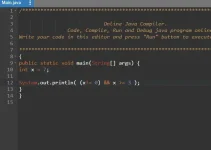
diko kasi siya macode ng tama pero alam kona yung sagot diko lang mapalabas
nageerror kasi sa compiler na gamit konasa basic palang kasi kami paps pano siya icocode kapag ganitong lang
Java:int x = 7; [/QUOTE] [QUOTE="CR1T CARUZ, post: 25394135, member: 1470322"] boolean result = !x && x >= 3; System.out.println(result);
The E×ρréššion "!x" evaluates to false because the logical NOT operator inverts the truth value of the E×ρréššion "x" (which is true since x = 7 is a non-zero integer). The E×ρréššion "x >= 3" evaluates to true since 7 is greater than or equal to 3. Therefore, the overall E×ρréššion "!x && x >= 3" evaluates to false && true, which results in a final value of false.
So the output of the above code would be "false", indicating that the E×ρréššion "!x && x >= 3" is false when x = 7.
VoidHunter
Elite
Kung (x != 0) yan. True ang magiging outputnasa basic palang kasi kami paps pano siya icocode kapag ganitong lang
View attachment 2534308
diko kasi siya macode ng tama pero alam kona yung sagot diko lang mapalabas
nageerror kasi sa compiler na gamit ko
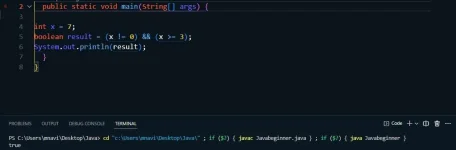
pano siya icocode paps without booleanKung (x != 0) yan. True ang magiging output
View attachment 2534330
VoidHunter
Elite
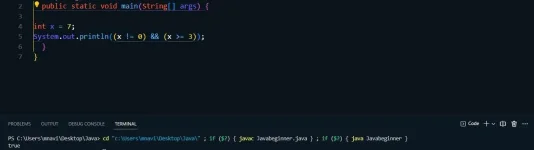
pano siya icocode paps without boolean
Ilipat mo lang yung condition sa baba
- Status
- Not open for further replies.
Similar threads
-
[ONGOING PROJECT] Print Shop Online Platform | for solo operators
- Started by Dark Chroma
- Replies: 4
About this Thread
-
6Replies
-
652Views
-
3Participants
Last reply from:
VoidHunter
VoidHunter
New Topics
-
Pa help po Premiere Pro text animation presets
- Started by TheJuan
- Replies: 0
- 💬 Chitchat
-
Simple lang panahon nuon
- Started by Egayghost
- Replies: 1
- 💬 Chitchat
-
Calling sa attention nung nag benta ng proton vpn na wala na paramdam
- Started by dbels
- Replies: 4
- 💬 Chitchat
-
Scammer Alert! Wag kayo makikipag transact sa account na to
- Started by SupremeAgent
- Replies: 20
- 💬 Chitchat
-
Hi, invitation code pls
- Started by tavderr
- Replies: 0
- 💬 Chitchat
-
GLOBE HG8145V5 EPON TO GPON
- Started by wanted12
- Replies: 0
- 💬 Chitchat
-
Who has MP Megapro Plus MP Melody Volume 81 Iso file?
- Started by Hot_dog0334
- Replies: 0
- 💬 Chitchat
-
Aple banana cake
- Started by fwzvi
- Replies: 0
- 💬 Chitchat
-
Kasama sa bahay na maraming gamit na di kailangan.
- Started by ferdzstrip
- Replies: 4
- 💬 Chitchat
-
Sync out of sync audio with video and enhancing audio
- Started by dbels
- Replies: 0
- 💬 Chitchat
Trending Topics
Online now
- Members online
- 670
- Guests online
- 7,306
- Total visitors
- 7,976