 PH
PH
J
Jeanh

When you pick up your prescription, at a minimum, ask:
What is this drug? What does it do? Why am I taking it? What are possible side effects? and How should I take it? Not only does this help you to use the drug correctly; it’s also a good way to double-check that you’re getting the right drug. Half the prescriptions taken in the U.S. each year are used improperly, and 96 percent of patients nationwide don’t ask questions about how to use their medications.

We're human…
And we make mistakes—about two million a year. Ask if we use a bar-code system to help keep us from pulling the wrong drug off the shelf or giving the wrong strength of the right drug.

Your pharmacist has spent more time studying drugs than even your doctor has.
Go ahead and call me doctor; I’m just not that kind of doctor. Since mid-2004, pharmacy students must pursue a doctorate in pharmacy (Pharm.D) in order to be licensed. Pharmacists licensed before then must have at least a Bachelor of Pharmacy and pass a series of exams.

All pharmacists are not created equal.
A less-qualified pharmacy technician may have actually filled your prescription. Currently, there is no national standard for their training and responsibilities.

People assume that if it’s over-the-counter, it’s safe.
According to Daniel Zlott, a pharmacist at the National Institutes of Health, this may not always be the case for you. “I’ve seen serious complications” with over-the-counter meds, he says.

An over-the-counter version of your medication might do the trick.
You may just need to take more ***** and forgo insurance reimbursement. But always talk to your pharmacist, and do the math.
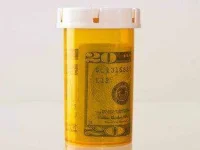
We'll save you money if we can.
“A good part of a pharmacist’s time is spent dealing with patients and their incomes,” says pharmacist Cindy Coffey. Part of that is suggesting generic or OTC alternatives. Or if a doctor has prescribed a newer drug with no generic alternative available, says Zlott, “I might call the doctor to suggest an older drug that’s equally effective.”
 Scott Olson/Getty Images
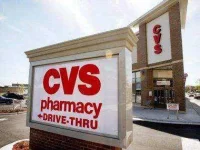
I’d think twice about using a drive-through pharmacy.
Working there distracts us—not a good thing when it comes to pharmaceuticals.
You do not have permission to view the full content of this post. Log in or register now.
The more I know you, the more I can help you.
“The better I know you as a patient—your health history, your family, and how busy your life is—the better I can tailor medications to fit your lifestyle,” says Zlott. “You may not want to take a drug three times a day, for example, and I’ll know that if I know you.”
You do not have permission to view the full content of this post. Log in or register now.John Moore/Getty Images
Generics are a close match for most brand names.
But I’d be careful with blood thinners and thyroid drugs, since small differences can have big effects.
Don't try to get anything past us.
Prescriptions for painkillers or sleeping aids always get extra scrutiny.
When in doubt, ask.
I can give you a generic refill that’s different from the one you started with. Online resources like cvs.com let you double-check your pill.
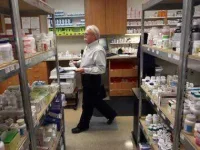
Use one pharmacy if you can.
There’s not some big computer database that tracks your drugs and flags interactions for pharmacists everywhere. If you start using a new pharmacy, make sure we know what you’re taking.
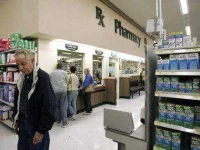
Here's how to avoid lines:
It gets busy Monday and Tuesday evenings, since many new prescriptions and refills come in after the weekend.
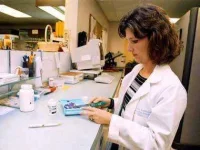
Look into the $4 generics.
Chains like Target, Kroger, and Wal-Mart offer them. And it can’t hurt to ask your pharmacy if it will match the price.

Yelling at me won't help.
If I can’t reach your doctor and/or insurance company to approve a refill, there’s nothing I can do about it. “It’s frustrating,” says Zlott, “but I’d be breaking the law in some states if I gave it to you.”

Pharmacists are required by law in most states to counsel patients and answer their questions.
If your pharmacist seems too busy to do talk with you, take your business someplace else.
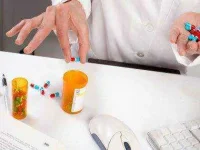
Pharmacists are filling more prescriptions than ever.
“Some pharmacies are so volume-driven that the pharmacist can’t look up all day,” says Coffey. There were a record 3.8 billion prescriptions filled in the U.S. in 2007—a 13 percent increase from 2003.

Sometimes we can't read the doctor's handwriting either.
E-prescribing can help, but as of 2006, fewer than 20 percent of prescriptions were being electronically transmitted.
 Casten Koall/Getty Images
I hate your insurance company as much as you do.
“Even if something’s working for you, the insurance company may insist you switch to something else,” says pharmacy owner Stuart Feldman. “I’m stuck in the middle trying to explain this to customers.”
 Mario Tama/Getty Images
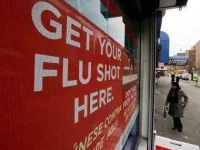
We can give flu shots in most states.
Ask us.

People take too many drugs.
Two out of every three patients who visit a doctor leave with at least one prescription for medication, according to the Institute for Safe Medication Practices. “Drugs are an easy solution,” says Feldman, “but there are other solutions.”
Sources: Dr. Daniel Zlott, oncology pharmacist, National Institutes of Health; Cindy Coffey, PharmD; Greg Collins, pharmacy supervisor, CVS/pharmacy, California; Stuart Feldman, owner, Cross River Pharmacy, New York
