 PH
PH-
Welcome to PHCorner Forums! Sign up for free to unlock full access and exclusive privileges, including:
- Asking questions about computer and mobile issues
- Discovering internet tips for your mobile network and computer
You are using an out of date browser. It may not display this or other websites correctly.
You should upgrade or use an alternative browser.
You should upgrade or use an alternative browser.
🎁 Giveaways FREE UNLIMITED UNLOCKS FOR Çℎḙḡḡ! COMMENT Çℎḙḡḡ LINK
- Thread starter fallenrised
- Start date
- Status
- Not open for further replies.
fallenrised
Eternal Poster
1. Capstone Project is a smart and effective requirement for enhancing and encouraging students to think to the worst critical situation, solve it and enhance their intellect. It is generally a assignment given to the students to culminate their intellectual experience and also their academic knowledge in particular and desired specialization.
It helps students to develop multiple skills within them like public speaking, confidence enhancement, Research skills etc that is why it is also known as multifacted project.
2. Collecting data from a local respondant who is illiterate can be significently acheived by the Ten Beads Method which uses local beads to represent quantities. Mr. Kaido would be one of those ten selected beads and as a researcher to ensure consistency in the data I have to take only one form of beads. Among them Mr. Kaido would have a good knowlege on their local culture and language which will help me in the data gathering.
3. On my opinion the major drawback of the online learning is lacking of practical knowledge:- The instructor focuses more on the Thory part rather than the Practical portion of the subject. Although this drawback of E-Learning is starting to be addressed and fixed by some of the more innovative online learning platforms, the problem has yet to disappear completely.
This drawback can be removed by Implementing hands-on student projects in conjunction with 1:1 mentorship are some of the most effective ways of developing practical skills in online students.
4. I would advice my classmate to focus on understanding the article and writing it on his own as copy and pasting the work will only help you in completing the task but you will not learn anything during this time and hece, When in future you are asked about this topic you will have nothing relating this on your mind.
5.Despite ongoing efforts to enhance the processes and techniques used in the development of IT projects at all stages, IT development projects continue to suffer problems in meeting user expectations, schedule, and budget. The project means an endeavor undertaken over a fixed period of time using information technology. The project includes all aspects of planning, design, implementation, project management, and training related to the endeavo
It helps students to develop multiple skills within them like public speaking, confidence enhancement, Research skills etc that is why it is also known as multifacted project.
2. Collecting data from a local respondant who is illiterate can be significently acheived by the Ten Beads Method which uses local beads to represent quantities. Mr. Kaido would be one of those ten selected beads and as a researcher to ensure consistency in the data I have to take only one form of beads. Among them Mr. Kaido would have a good knowlege on their local culture and language which will help me in the data gathering.
3. On my opinion the major drawback of the online learning is lacking of practical knowledge:- The instructor focuses more on the Thory part rather than the Practical portion of the subject. Although this drawback of E-Learning is starting to be addressed and fixed by some of the more innovative online learning platforms, the problem has yet to disappear completely.
This drawback can be removed by Implementing hands-on student projects in conjunction with 1:1 mentorship are some of the most effective ways of developing practical skills in online students.
4. I would advice my classmate to focus on understanding the article and writing it on his own as copy and pasting the work will only help you in completing the task but you will not learn anything during this time and hece, When in future you are asked about this topic you will have nothing relating this on your mind.
5.Despite ongoing efforts to enhance the processes and techniques used in the development of IT projects at all stages, IT development projects continue to suffer problems in meeting user expectations, schedule, and budget. The project means an endeavor undertaken over a fixed period of time using information technology. The project includes all aspects of planning, design, implementation, project management, and training related to the endeavo
fallenrised
Eternal Poster
fallenrised
Eternal Poster

fallenrised
Eternal Poster
fallenrised
Eternal Poster
fallenrised
Eternal Poster
fallenrised
Eternal Poster
fallenrised
Eternal Poster
fallenrised
Eternal Poster
fallenrised
Eternal Poster
fallenrised
Eternal Poster
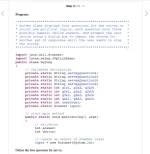
#include <iostream>
#include <iomanip>
#include <math.h>
using namespace std;
#define FEDERAL_WITHHOLDING 55.77
#define STATE_EXEMPTION 38.46
#define SOCIAL_SECURITY .0765
// Setting up all prototypes for the functions
double CalculateGrossPay( double, int );
double CalculateFederalTax( double, int );
double CalculateStateTax( double, int );
double CalculateSocialSecurity( double );
int ValidInt( string, int , int );
double ValidDouble( string, double, double );
void BarGraph( int );
int WeekDisplay ( int );
int main()
{
// Declaring all variables
char yesOrNo;
int hoursWorked,numExemptions,numWeeks=0, numWeekDisplay=1;
double wage,grossPay,federalTax,stateTax,sstate,netPay,totalGross=0,totalNet=0;
//Setting the precision
cout<<setprecision(2)<<fixed<<showpoint;
// Asking the user whether they want to calculate their weekly pay
cout << "Do you want to calculate your weekly pay? (Y/N) ";
cin >> yesOrNo;
// Setting up a while statement for when the user enters 'y' or 'Y'
while( yesOrNo == 'y' || yesOrNo == 'Y' )
{
// Setting up calling statements
hoursWorked = ValidInt("\nEnter the number of hours worked - (minimum: 0, maximum: 60) ",0,60);
wage = ValidDouble("Enter the hourly wage - (minimum: $0.00, maximum: $30.00) ",0.,30.);
numExemptions = ValidInt("Enter the number of exemptions - (minimum: 0, maximum: 5) ",0,5);
// Setting variables equal to the functions to be executed
grossPay = CalculateGrossPay( wage, hoursWorked );
federalTax = CalculateFederalTax( grossPay, numExemptions );
stateTax = CalculateStateTax( grossPay, numExemptions );
sstate = CalculateSocialSecurity( grossPay );
netPay = grossPay - ( sstate + federalTax + stateTax );
numWeekDisplay = WeekDisplay ( numWeekDisplay);
// Displaying the results
cout << "\nWeek " << numWeekDisplay << ":" << endl;
cout << "You worked " << hoursWorked << " hours at $" << wage << " per hour.\n";
cout << "Gross Pay: " << grossPay << endl;
cout << "Federal Tax: " << federalTax << endl;
cout << "State Tax: " << stateTax << endl;
cout << "Social Security: " << sstate << endl;
cout << "Net Pay: " << netPay << endl;
totalGross+=grossPay; // total gross pay = gross pay + total gross pay
totalNet+=netPay; // total net pay = net pay + total net pay
numWeeks++; // increase # of weeks every time user wants to calculate weekly pay
numWeekDisplay++;
// Ask the user whether they want to calculate weekly pay again
cout << "\nDo you want to calculate your weekly pay? (Y/N) ";
cin >> yesOrNo;
}
// If the user enters no, display this at the end
cout << "\nTotal Gross Pay: " << totalGross << endl;
cout << "Total Net Pay: " << totalNet << endl;
BarGraph( numWeeks );
cout << endl;
system ("pause");
return 0;
}
// Setting up all functions
/*****************************************************************************
double CalculateGrossPay( )
The purpose of this function is to calculate and return an employee's gross
pay for one week. It takes two arguments: a double representing the employee's
hourly wage and an integer representing the number of hours that the employee
worked for one week.
*****************************************************************************/
double CalculateGrossPay( double wage, int hoursWorked )
{
//Declaring variables
double grossPay;
// Setting up if-else statement
if( hoursWorked > 40)
{
// formula to be used if hours worked is over 40
grossPay = ( wage * 40) + ( wage * 1.5 * (hoursWorked - 40) );
}
else
{
// formulat to be used if hours worked is less than or equal to 40
grossPay=(wage* hoursWorked);
}
return grossPay;
}
/*****************************************************************************
double CalculateFederalTax( )
The purpose of this function is to calculate and return the federal income tax
to withhold from an employee. It takes two arguments: a double that represents
the employee's gross pay and an integer argument that represents the number of
exemptions claimed by the employee.
*****************************************************************************/
double CalculateFederalTax( double grossPay, int numExemptions )
{
// Declaring variables
double federal;
// Formula to be used to determine how much federal tax is taken out of pay
grossPay = grossPay - (FEDERAL_WITHHOLDING * numExemptions );
// Setting up if-else-if statement to be used
if( grossPay < 51 )
{
federal = 0;
}
else if( grossPay < 552 )
{
federal = 0.15 * grossPay;
}
else if( grossPay < 1196 )
{
federal = 75.15+( grossPay - 552 ) * 0.28;
}
else if( grossPay < 2662 )
{
federal = 255.47 + ( grossPay -1196 ) * 0.31;
}
else if(grossPay <5750)
{
federal = 709.93 + ( grossPay - 2662 ) * 0.36;
}
else
{
federal = 1821 + ( grossPay - 5750 ) * 0.396;
}
return federal;
}
/*****************************************************************************
double CalculateStateTax( )
The purpose of this function is to calculate and return the state income tax
to withhold from an employee. It takes two arguments: a double that represents
the employee's gross pay and an integer that represents the number of exemptions
claimed by the employee.
*****************************************************************************/
double CalculateStateTax( double grossPay, int numExemptions )
{
// Declaring variables
double state;
// Setting up if else statements
// if gross pay is less than or equal to state exemption * number of exemptions
if( grossPay <= STATE_EXEMPTION * numExemptions)
{
// state tax is 0
state = 0;
}
else
{
// state tax is calculated by the following formula
state = 0.03 * ( grossPay - (STATE_EXEMPTION * numExemptions));
}
return state;
}
/*****************************************************************************
double CalculateSocialSecurity( )
The purpose of this function is to calculate and return the amount of social
security to withhold from an employee. It takes one argument: a double that
represents the employee's gross pay.
*****************************************************************************/
double CalculateSocialSecurity( double grossPay )
{
// Declaring variables
double SS;
// Formula used to calculate social security tax
SS = SOCIAL_SECURITY * grossPay;
return SS;
}
/*****************************************************************************
int ValidInt( )
The purpose of this function is to get an integer from the user that is within
a certain range. It takes three arguments: a string that is used as a prompt
to the user to tell them what number they are entering, an integer that
represents the smallest integer that the user can enter, and an integer
that represents the largest integer that the user can enter. The second and
third arguments will be used to ensure that the user enters a valid value. If
an invalid value is entered, display an error message and prompt the user to
re-enter a value. This should be done repeatedly until the user enters a valid
integer. The function returns the valid integer.
*****************************************************************************/
int ValidInt( string prompt, int lowerBound, int upperBound )
{
// Declaring variables
double num;
cout << prompt << ": ";
cin >> num;
// while loop to be used if data entered is above or below the boundaries
while( num < lowerBound || num > upperBound)
{
// Display this "invalid statement" if data is out of the boundaries
cout << "Error: Entry out of range. Try again.\n";
cout << prompt << ": ";
cin >> num; // store the value entered into num
}
return num;
}
/*****************************************************************************
double ValidDouble( )
This function is exactly like ValidInt, except that it takes two doubles,
rather than integers.
*****************************************************************************/
double ValidDouble( string prompt, double lowerBound, double upperBound )
{
// Declaring variables
int num;
cout << prompt << ": ";
cin >> num;
// while loop to be used if data entered is above or below the boundaries
while ( num < lowerBound || num > upperBound )
{
// Display this "invalid statement" if data is out of the boundaries
cout << "Error: Entry out of range. Try again. \n";
cout << prompt << ": ";
cin >> num; // store the value entered into num
}
return num;
}
/*****************************************************************************
void BarGraph( )
The purpose of this function is to display a line of asterisks equal to the
number of weeks that weekly pay has been calculated. It takes one argument: an
integer that represents the number of weekly pay calculations that have been
performed. This function returns nothing.
*****************************************************************************/
void BarGraph( int numWeeks )
{
// Display this cout statement
cout << "\nTotal Number of Weeks: ";
// Used to create the bar graph for the number of weeks of pay that were calculated
for ( int i=0; i < numWeeks; i++ )
{
cout << "* ";
}
}
/*****************************************************************************
int WeekDisplay ()
The purpose of this function is to display the number of the weekly salary
that is being calculated and to have it increment by one each time the user
says yes.
*****************************************************************************/
int WeekDisplay (int numWeekDisplay)
{
for (int i=1; i < numWeekDisplay; i++ )
{
cout << numWeekDisplay;
}
return numWeekDisplay;
}
output
Do you want to calculate your weekly pay? (Y/N) y
Enter the number of hours worked - (minimum: 0, maximum: 60) : 45
Enter the hourly wage - (minimum: $0.00, maximum: $30.00) : 30
Enter the number of exemptions - (minimum: 0, maximum: 5) : 5
Week 1:
You worked 45 hours at $30.00 per hour.
Gross Pay: 1425.00
Federal Tax: 241.51
State Tax: 36.98
Social Security: 109.01
Net Pay: 1037.49
Do you want to calculate your weekly pay? (Y/N)
#include <iomanip>
#include <math.h>
using namespace std;
#define FEDERAL_WITHHOLDING 55.77
#define STATE_EXEMPTION 38.46
#define SOCIAL_SECURITY .0765
// Setting up all prototypes for the functions
double CalculateGrossPay( double, int );
double CalculateFederalTax( double, int );
double CalculateStateTax( double, int );
double CalculateSocialSecurity( double );
int ValidInt( string, int , int );
double ValidDouble( string, double, double );
void BarGraph( int );
int WeekDisplay ( int );
int main()
{
// Declaring all variables
char yesOrNo;
int hoursWorked,numExemptions,numWeeks=0, numWeekDisplay=1;
double wage,grossPay,federalTax,stateTax,sstate,netPay,totalGross=0,totalNet=0;
//Setting the precision
cout<<setprecision(2)<<fixed<<showpoint;
// Asking the user whether they want to calculate their weekly pay
cout << "Do you want to calculate your weekly pay? (Y/N) ";
cin >> yesOrNo;
// Setting up a while statement for when the user enters 'y' or 'Y'
while( yesOrNo == 'y' || yesOrNo == 'Y' )
{
// Setting up calling statements
hoursWorked = ValidInt("\nEnter the number of hours worked - (minimum: 0, maximum: 60) ",0,60);
wage = ValidDouble("Enter the hourly wage - (minimum: $0.00, maximum: $30.00) ",0.,30.);
numExemptions = ValidInt("Enter the number of exemptions - (minimum: 0, maximum: 5) ",0,5);
// Setting variables equal to the functions to be executed
grossPay = CalculateGrossPay( wage, hoursWorked );
federalTax = CalculateFederalTax( grossPay, numExemptions );
stateTax = CalculateStateTax( grossPay, numExemptions );
sstate = CalculateSocialSecurity( grossPay );
netPay = grossPay - ( sstate + federalTax + stateTax );
numWeekDisplay = WeekDisplay ( numWeekDisplay);
// Displaying the results
cout << "\nWeek " << numWeekDisplay << ":" << endl;
cout << "You worked " << hoursWorked << " hours at $" << wage << " per hour.\n";
cout << "Gross Pay: " << grossPay << endl;
cout << "Federal Tax: " << federalTax << endl;
cout << "State Tax: " << stateTax << endl;
cout << "Social Security: " << sstate << endl;
cout << "Net Pay: " << netPay << endl;
totalGross+=grossPay; // total gross pay = gross pay + total gross pay
totalNet+=netPay; // total net pay = net pay + total net pay
numWeeks++; // increase # of weeks every time user wants to calculate weekly pay
numWeekDisplay++;
// Ask the user whether they want to calculate weekly pay again
cout << "\nDo you want to calculate your weekly pay? (Y/N) ";
cin >> yesOrNo;
}
// If the user enters no, display this at the end
cout << "\nTotal Gross Pay: " << totalGross << endl;
cout << "Total Net Pay: " << totalNet << endl;
BarGraph( numWeeks );
cout << endl;
system ("pause");
return 0;
}
// Setting up all functions
/*****************************************************************************
double CalculateGrossPay( )
The purpose of this function is to calculate and return an employee's gross
pay for one week. It takes two arguments: a double representing the employee's
hourly wage and an integer representing the number of hours that the employee
worked for one week.
*****************************************************************************/
double CalculateGrossPay( double wage, int hoursWorked )
{
//Declaring variables
double grossPay;
// Setting up if-else statement
if( hoursWorked > 40)
{
// formula to be used if hours worked is over 40
grossPay = ( wage * 40) + ( wage * 1.5 * (hoursWorked - 40) );
}
else
{
// formulat to be used if hours worked is less than or equal to 40
grossPay=(wage* hoursWorked);
}
return grossPay;
}
/*****************************************************************************
double CalculateFederalTax( )
The purpose of this function is to calculate and return the federal income tax
to withhold from an employee. It takes two arguments: a double that represents
the employee's gross pay and an integer argument that represents the number of
exemptions claimed by the employee.
*****************************************************************************/
double CalculateFederalTax( double grossPay, int numExemptions )
{
// Declaring variables
double federal;
// Formula to be used to determine how much federal tax is taken out of pay
grossPay = grossPay - (FEDERAL_WITHHOLDING * numExemptions );
// Setting up if-else-if statement to be used
if( grossPay < 51 )
{
federal = 0;
}
else if( grossPay < 552 )
{
federal = 0.15 * grossPay;
}
else if( grossPay < 1196 )
{
federal = 75.15+( grossPay - 552 ) * 0.28;
}
else if( grossPay < 2662 )
{
federal = 255.47 + ( grossPay -1196 ) * 0.31;
}
else if(grossPay <5750)
{
federal = 709.93 + ( grossPay - 2662 ) * 0.36;
}
else
{
federal = 1821 + ( grossPay - 5750 ) * 0.396;
}
return federal;
}
/*****************************************************************************
double CalculateStateTax( )
The purpose of this function is to calculate and return the state income tax
to withhold from an employee. It takes two arguments: a double that represents
the employee's gross pay and an integer that represents the number of exemptions
claimed by the employee.
*****************************************************************************/
double CalculateStateTax( double grossPay, int numExemptions )
{
// Declaring variables
double state;
// Setting up if else statements
// if gross pay is less than or equal to state exemption * number of exemptions
if( grossPay <= STATE_EXEMPTION * numExemptions)
{
// state tax is 0
state = 0;
}
else
{
// state tax is calculated by the following formula
state = 0.03 * ( grossPay - (STATE_EXEMPTION * numExemptions));
}
return state;
}
/*****************************************************************************
double CalculateSocialSecurity( )
The purpose of this function is to calculate and return the amount of social
security to withhold from an employee. It takes one argument: a double that
represents the employee's gross pay.
*****************************************************************************/
double CalculateSocialSecurity( double grossPay )
{
// Declaring variables
double SS;
// Formula used to calculate social security tax
SS = SOCIAL_SECURITY * grossPay;
return SS;
}
/*****************************************************************************
int ValidInt( )
The purpose of this function is to get an integer from the user that is within
a certain range. It takes three arguments: a string that is used as a prompt
to the user to tell them what number they are entering, an integer that
represents the smallest integer that the user can enter, and an integer
that represents the largest integer that the user can enter. The second and
third arguments will be used to ensure that the user enters a valid value. If
an invalid value is entered, display an error message and prompt the user to
re-enter a value. This should be done repeatedly until the user enters a valid
integer. The function returns the valid integer.
*****************************************************************************/
int ValidInt( string prompt, int lowerBound, int upperBound )
{
// Declaring variables
double num;
cout << prompt << ": ";
cin >> num;
// while loop to be used if data entered is above or below the boundaries
while( num < lowerBound || num > upperBound)
{
// Display this "invalid statement" if data is out of the boundaries
cout << "Error: Entry out of range. Try again.\n";
cout << prompt << ": ";
cin >> num; // store the value entered into num
}
return num;
}
/*****************************************************************************
double ValidDouble( )
This function is exactly like ValidInt, except that it takes two doubles,
rather than integers.
*****************************************************************************/
double ValidDouble( string prompt, double lowerBound, double upperBound )
{
// Declaring variables
int num;
cout << prompt << ": ";
cin >> num;
// while loop to be used if data entered is above or below the boundaries
while ( num < lowerBound || num > upperBound )
{
// Display this "invalid statement" if data is out of the boundaries
cout << "Error: Entry out of range. Try again. \n";
cout << prompt << ": ";
cin >> num; // store the value entered into num
}
return num;
}
/*****************************************************************************
void BarGraph( )
The purpose of this function is to display a line of asterisks equal to the
number of weeks that weekly pay has been calculated. It takes one argument: an
integer that represents the number of weekly pay calculations that have been
performed. This function returns nothing.
*****************************************************************************/
void BarGraph( int numWeeks )
{
// Display this cout statement
cout << "\nTotal Number of Weeks: ";
// Used to create the bar graph for the number of weeks of pay that were calculated
for ( int i=0; i < numWeeks; i++ )
{
cout << "* ";
}
}
/*****************************************************************************
int WeekDisplay ()
The purpose of this function is to display the number of the weekly salary
that is being calculated and to have it increment by one each time the user
says yes.
*****************************************************************************/
int WeekDisplay (int numWeekDisplay)
{
for (int i=1; i < numWeekDisplay; i++ )
{
cout << numWeekDisplay;
}
return numWeekDisplay;
}
output
Do you want to calculate your weekly pay? (Y/N) y
Enter the number of hours worked - (minimum: 0, maximum: 60) : 45
Enter the hourly wage - (minimum: $0.00, maximum: $30.00) : 30
Enter the number of exemptions - (minimum: 0, maximum: 5) : 5
Week 1:
You worked 45 hours at $30.00 per hour.
Gross Pay: 1425.00
Federal Tax: 241.51
State Tax: 36.98
Social Security: 109.01
Net Pay: 1037.49
Do you want to calculate your weekly pay? (Y/N)
fallenrised
Eternal Poster

fallenrised
Eternal Poster
fallenrised
Eternal Poster
In this case, the top manager of ADM had gave a poor example to their employee. According to the president of ADM’s Corn Processing Division, ADM used to arrange secret price-fixing meetings for their commodities through fake agenda on the name of association. He had convinced successfully the other four company’s managers in engaging in price-fixing. As for MarkWhitacre, who was new in ADM company and was first time heard of price-fixing may believe that price-fixing is a common and harmless practice that is desired, condoned,accepted, and even encouraged by the organization. Besides, during time of the bad condition of the price fall of lysine, I believe that Mark have no choice but to follow Terry Wilson strategy to engage in price-fixing.
Mark Whitacre should be blamed because of moral responsibility and he broke downthe capitalist justice. Capitalist Justice is the justice that is distribute according tocontribution. For example, the more investment invests, the more return will get. The lysineproduction of ADM was generating profit but no because of the high investment. The profitof lysine generated by the Mark’s tactic that is price-fixing. This is no parallel with thecapitalist justice. The term moral responsibility is sometimes used to mean “moralobligation”. In philosophy, moral responsibility is the status of morally deserving praise,blame, reward, or punishment for an act or omission, in accordance with one's moralobligations. For example, Mark Whitacre is morally responsibility for what he did when hetrying to fix the lysine’s price
Several reasons are important for getting clear about what moral responsibilityinvolves. First, allow us to ensure that we do not mistakenly blame an innocent person. Next,help keep us from wrongly trying to rationalize our conduct. Lastly, to identify who shouldfix the wrong. For example, Mark is morally responsible for fixing the lysine’s price andtheft money from ADM, then he is the one who should sentence to 20 months in prison, plus9 years for s†éál money and forced to return the money he took. Being clear about what moralresponsibility involves will help us see our own responsibility more clearly and help us avoidrationalizations and self-deception.
Mark Whitacre should be blamed because of moral responsibility and he broke downthe capitalist justice. Capitalist Justice is the justice that is distribute according tocontribution. For example, the more investment invests, the more return will get. The lysineproduction of ADM was generating profit but no because of the high investment. The profitof lysine generated by the Mark’s tactic that is price-fixing. This is no parallel with thecapitalist justice. The term moral responsibility is sometimes used to mean “moralobligation”. In philosophy, moral responsibility is the status of morally deserving praise,blame, reward, or punishment for an act or omission, in accordance with one's moralobligations. For example, Mark Whitacre is morally responsibility for what he did when hetrying to fix the lysine’s price
Several reasons are important for getting clear about what moral responsibilityinvolves. First, allow us to ensure that we do not mistakenly blame an innocent person. Next,help keep us from wrongly trying to rationalize our conduct. Lastly, to identify who shouldfix the wrong. For example, Mark is morally responsible for fixing the lysine’s price andtheft money from ADM, then he is the one who should sentence to 20 months in prison, plus9 years for s†éál money and forced to return the money he took. Being clear about what moralresponsibility involves will help us see our own responsibility more clearly and help us avoidrationalizations and self-deception.
fallenrised
Eternal Poster
hi guys sorry for the late replies, I was inactive due to my internet connection and I finished some errands. I replied and gave answers to everyone. pls refer to the new updated link because I will be unwatching this thread and lock it.
New updated link: https://phcorner.org/threads/free-unlimited-Çℎḙḡḡ-unlocks-comment-link.964173/
one last thing, I am looking for other Çℎḙḡḡ users that are here in PHC, I would like to collaborate and build a coordinated Çℎḙḡḡ Unlock Service Thread , please directly message me in my inbox if you want to make a change.
Thank you and God Bless
New updated link: https://phcorner.org/threads/free-unlimited-Çℎḙḡḡ-unlocks-comment-link.964173/
one last thing, I am looking for other Çℎḙḡḡ users that are here in PHC, I would like to collaborate and build a coordinated Çℎḙḡḡ Unlock Service Thread , please directly message me in my inbox if you want to make a change.
Thank you and God Bless
- Status
- Not open for further replies.
About this Thread
-
55Replies
-
583Views
-
23Participants
Last reply from:
fallenrised
fallenrised
New Topics
-
Grammarly Pro | 1 WEEK #40
- Started by Beatriz9
- Replies: 2
- 🆓 Freemium Access
-
Spotify Premium Redemption Link x2 - 3 Months #7
- Started by JoyBoy_
- Replies: 3
- 🆓 Freemium Access
-
Netflix direct link for phone,tv,web 10/08/26 10:21am
- Started by kangog
- Replies: 1
- 🆓 Freemium Access
-
Ashampoo Backup PRO 26 | Lifetime
- Started by X L R 8
- Replies: 1
- 🆓 Freemium Access
-
Spotify Premium Redemption Link x2 - 3 Months #6
- Started by JoyBoy_
- Replies: 2
- 🆓 Freemium Access
-
AOMEI Backupper Professional | 1 Year
- Started by X L R 8
- Replies: 0
- 🆓 Freemium Access
-
Spotify Premium Redemption Link x2 - 3 Months #5
- Started by JoyBoy_
- Replies: 3
- 🆓 Freemium Access
-
Pasabit sa Free FB Boost Views
- Started by satora
- Replies: 0
- 🆓 Freemium Access
-
Spotify Premium Redemption Link x2 - 3 Months #4
- Started by JoyBoy_
- Replies: 4
- 🆓 Freemium Access
-
E×ρréšš VPN account 08/10/2026
- Started by yeuhoahuuco
- Replies: 5
- 🆓 Freemium Access
Trending Topics
-
-
C4NVA Education(use pro feature) Team Invite para sa lahat! join na habang may slot pa(300+ current)
- Chococakelover
Replies: 261 -
-
-
-
-
-
-
-
Online now
- Members online
- 1,305
- Guests online
- 3,446
- Total visitors
- 4,751