 PH
Read at your own risk ka ph. True story behind the famous Amityville Horror case.
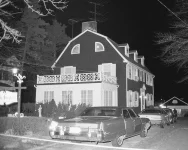
There were haunted houses before Amityville, of course, but no one place has made as deep an impression on American pop culture in the past half century or so as the notorious Long Island home, the site of a terrible murder and then the basis of scores of books and movies.

The swarming flies, the demonic pig, the ooze seeping through the walls and floorboards… the house once located at 112 Ocean Avenue in Amityville, Long Island has been a staple of Hollywood for decades. But although you’re probably aware that the supernatural film series is allegedly based on true events, there are plenty of creepy facts about the “Amityville Horror” case you may not know. The movies never tell the full story — and it turns out that the whole thing is even more complicated than most people think.
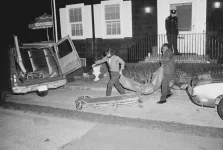
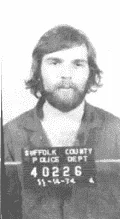
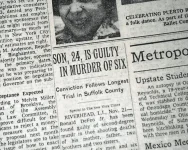
When we talk about the Amityville Horror case, we’re really talking about two cases: The mass murders committed by Ronald DeFeo, Jr. in November of 1974, and the experiences Kathleen and George Lutz claimed to have had after they moved into the house where those murders took place in December of 1975. On Nov. 13, 1974, the entire DeFeo family — save Ronald Jr. — were found at home having been murdered in their beds. Ronald, often known by the nickname Butch, was later arrested and tried for the murders; he was found guilty on Nov. 21, 1975. Just a month after the conviction, the Lutzes moved into the house, and, well… as they tell it, things didn’t exactly go as planned.
The Lutzes’ story is probably what most people think of when they hear the phrase “The Amityville Horror” — the tale of a Long Island family who thought they were moving into their dream house, only to have it quickly turn into a nightmare. It first arrived on the scene in Jay Anson’s 1977 book The Amityville Horror: A True Story before being made into a Hollywood hit released in 1979 starring James Brolin and Margot Kidder (and spawning an entire franchise in the process). These days, the haunted house story is largely believed to be a hoax, although for their part, George and Kathleen stuck to their guns about it throughout their entire lives. (The couple divorced in 1988; Kathleen died of emphysema in 2004 and George of heart disease in 2006.)
Still, though — it’s impossible to talk about the alleged haunted house without talking about the murder, and vice versa. They’re inextricably intertwined, and each is chilling in its own way. Here are some of the weirder aspects of both of these cases. Sometimes, truth really is stranger than fiction.
1. The DeFeos Were All Found In The Same Position
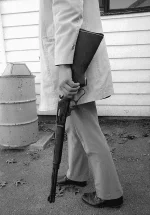
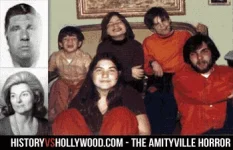
Husband and wife Ronald DeFeo, Sr. and Louise DeFeo had both been shot twice with a .35 caliber Marlin 336C *****; the four children, meanwhile — Dawn, Allison, Marc, and John Matthew — were each shot once. All six victims were found by police in their beds, lying on their stomachs. It’s estimated that the whole thing took a mere 15 minutes from start to finish.The identical positioning of the bodies is creepy enough in and of itself — it suggests that all of the victims were arranged that way —but there are more facts that make it all even creepier: The police determined that the ***** hadn’t been fitted with a silencer, so the gunshots should hypothetically have woken the DeFeos up; however, there was no sign of a struggle, but nor was there any evidence that sedatives had been used to knock the victims out or keep them quiet — all of which is incredibly weird. Additionally, the neighbors didn’t report any gunshot noises; all they heard was the family dog barking.
2. There Might Have Been A Second Killer Who Was Never Caught
But there also might not have been; the jury’s still out on this one. At the time, police and investigators considered the fact that more than one person may have been responsible for the murders; it was the only way they could make sense of some of the more puzzling aspects of the crime scene. The existence of a second culprit has never been proven, although a documentary filmmaker claimed in 2012 that he had found new evidence supporting the theory. In the meantime, many others still theorize about the possibility that a second killer was involved.
3. Ronald DeFeo, Jr.’s Story Has Changed Repeatedly In The Decades Since The Murders
DeFeo actually reported the murders himself, initially telling police that when he arrived home from work the evening of Nov. 13., he discovered that someone had broken into the house and killed every member of his family. When asked, he told detectives he thought the murders may have been carried out by Louis Falini, a mafia hit man.
The investigation, however, revealed that the murders had occurred in the morning — at which point DeFeo began saying that Falini and an accomplice had shown up at the house the morning of Nov. 13, put a gun to his head, and forced him to watch them kill his family. This story, however, also didn’t hold up to scrutiny, and eventually, DeFeo confessed, saying, “Once I started, I just couldn’t stop. It went so fast.”During his trial in November of 1975, DeFeo claimed that “voices” told him to commit the murders; additionally, a psychiatrist testifying for the defense said that DeFeo had a dissociative disorder, which meant that he would have experienced the murders as if he was outside his body or "watching" it happen, rather than experiencing them as he committed them himself. However, the psychiatrist testifying for the prosecution successfully argued that DeFeo actually had antisocial personality disorder, which meant he would have been perfectly aware of what he was doing; he just had no regard for what was right or wrong. DeFeo was found guilty of six counts of second-degree murder and sentenced to six consecutive life sentences.His story has changed a few more times since then, too. According to one interview he gave in 1986, his sister Dawn killed their father, after which their mother killed Dawn and the other children before turning the gun on herself; when DeFeo filed a 440 motion in 1990, however, he claimed that Dawn shot the majority of the DeFeos before he himself killed Dawn; and he maintains that his lawyer, William Weber, pressured him into the insanity defense they pushed at his trial. Regardless, his requests for parole have all been denied.
4. Ronald DeFeo, Jr. Is Not A Serial Killer
He’s a mass murderer. The FBI definition of a serial murder is “the unlawful killing of two or more victims by the same offender(s), in separate events” — but the DeFeo murders occurred during the same event, not separate ones. A mass murder, meanwhile, is typically described as “a number of murders (four or more) occurring during the same incident, with no distinctive time period between the murders.” That’s what happened on Nov. 13, 1974.
5. The DeFeos’ Furniture Was Reportedly Still In The House When The Lutzes Moved In
According to the first chapter of Anson’s book, the furniture that had been in the house when Ronald DeFeo, Jr. committed the murders reportedly came with the house when the Lutzes bought it. It wasn’t included in the $80,000 offer they made; an additional $400 was a comparatively small price to pay for it, though, so the Lutzes sprang for it. According to some sources, it was still in the exact same places it had been the night of the murders.
People who are interested in the case like to talk about the furniture a lot; head here to check out some of the conversations.
6. The Lutzes Lived In The House For Less Than A Month
They only lasted 28 days. On Jan. 14, 1976, George, Kathleen (often called "Kathy"), their three kids (Kathy’s from a previous marriage), and the family dog, Harry, left the house, never to return. According to an interview George Lutz gave to Ghost Village in 2005 — one of his last major interviews before his death in 2006 — they didn’t realize at the time that when they headed out the door, they would never come back; “We didn’t get up to leave that morning, you need to understand that,” Lutz said. “This was our house, we lived there.”
7. The Famous “Demonic Boy” Photograph Is From The Amityville Investigation
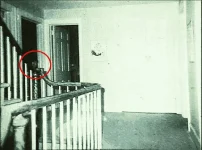
Google “demonic boy photograph,” and this is the image that pops up. It’s iconic, even if you don’t know what it’s from and regardless as to whether you believe in ghosts or demons — if you’re at all curious about this kind of stuff, odds are you’ll have seen the photo before. It was taken during an investigation by paranormal investigators Ed and Lorraine Warren (yes, thatEd and Lorraine Warren) several weeks after the Lutzes left the house. It seems to show a small boy with glowing eyes in the doorway to the left of the frame, even though there were no children in the house at the time.Now, it’s worth noting that “ghost photos” are easily faked; indeed, spirit photography has been within the purview of con artists since its beginnings in early 1860s, when it was discovered that a ghostly effect could be achieved with a simple in-camera technique called double exposure. You don’t need Photoshop to convincingly fake a ghost photo.
Additional Photos:
There were haunted houses before Amityville, of course, but no one place has made as deep an impression on American pop culture in the past half century or so as the notorious Long Island home, the site of a terrible murder and then the basis of scores of books and movies.
The swarming flies, the demonic pig, the ooze seeping through the walls and floorboards… the house once located at 112 Ocean Avenue in Amityville, Long Island has been a staple of Hollywood for decades. But although you’re probably aware that the supernatural film series is allegedly based on true events, there are plenty of creepy facts about the “Amityville Horror” case you may not know. The movies never tell the full story — and it turns out that the whole thing is even more complicated than most people think.
When we talk about the Amityville Horror case, we’re really talking about two cases: The mass murders committed by Ronald DeFeo, Jr. in November of 1974, and the experiences Kathleen and George Lutz claimed to have had after they moved into the house where those murders took place in December of 1975. On Nov. 13, 1974, the entire DeFeo family — save Ronald Jr. — were found at home having been murdered in their beds. Ronald, often known by the nickname Butch, was later arrested and tried for the murders; he was found guilty on Nov. 21, 1975. Just a month after the conviction, the Lutzes moved into the house, and, well… as they tell it, things didn’t exactly go as planned.
The Lutzes’ story is probably what most people think of when they hear the phrase “The Amityville Horror” — the tale of a Long Island family who thought they were moving into their dream house, only to have it quickly turn into a nightmare. It first arrived on the scene in Jay Anson’s 1977 book The Amityville Horror: A True Story before being made into a Hollywood hit released in 1979 starring James Brolin and Margot Kidder (and spawning an entire franchise in the process). These days, the haunted house story is largely believed to be a hoax, although for their part, George and Kathleen stuck to their guns about it throughout their entire lives. (The couple divorced in 1988; Kathleen died of emphysema in 2004 and George of heart disease in 2006.)
Still, though — it’s impossible to talk about the alleged haunted house without talking about the murder, and vice versa. They’re inextricably intertwined, and each is chilling in its own way. Here are some of the weirder aspects of both of these cases. Sometimes, truth really is stranger than fiction.
1. The DeFeos Were All Found In The Same Position
Husband and wife Ronald DeFeo, Sr. and Louise DeFeo had both been shot twice with a .35 caliber Marlin 336C *****; the four children, meanwhile — Dawn, Allison, Marc, and John Matthew — were each shot once. All six victims were found by police in their beds, lying on their stomachs. It’s estimated that the whole thing took a mere 15 minutes from start to finish.The identical positioning of the bodies is creepy enough in and of itself — it suggests that all of the victims were arranged that way —but there are more facts that make it all even creepier: The police determined that the ***** hadn’t been fitted with a silencer, so the gunshots should hypothetically have woken the DeFeos up; however, there was no sign of a struggle, but nor was there any evidence that sedatives had been used to knock the victims out or keep them quiet — all of which is incredibly weird. Additionally, the neighbors didn’t report any gunshot noises; all they heard was the family dog barking.
2. There Might Have Been A Second Killer Who Was Never Caught
But there also might not have been; the jury’s still out on this one. At the time, police and investigators considered the fact that more than one person may have been responsible for the murders; it was the only way they could make sense of some of the more puzzling aspects of the crime scene. The existence of a second culprit has never been proven, although a documentary filmmaker claimed in 2012 that he had found new evidence supporting the theory. In the meantime, many others still theorize about the possibility that a second killer was involved.
3. Ronald DeFeo, Jr.’s Story Has Changed Repeatedly In The Decades Since The Murders
DeFeo actually reported the murders himself, initially telling police that when he arrived home from work the evening of Nov. 13., he discovered that someone had broken into the house and killed every member of his family. When asked, he told detectives he thought the murders may have been carried out by Louis Falini, a mafia hit man.
The investigation, however, revealed that the murders had occurred in the morning — at which point DeFeo began saying that Falini and an accomplice had shown up at the house the morning of Nov. 13, put a gun to his head, and forced him to watch them kill his family. This story, however, also didn’t hold up to scrutiny, and eventually, DeFeo confessed, saying, “Once I started, I just couldn’t stop. It went so fast.”During his trial in November of 1975, DeFeo claimed that “voices” told him to commit the murders; additionally, a psychiatrist testifying for the defense said that DeFeo had a dissociative disorder, which meant that he would have experienced the murders as if he was outside his body or "watching" it happen, rather than experiencing them as he committed them himself. However, the psychiatrist testifying for the prosecution successfully argued that DeFeo actually had antisocial personality disorder, which meant he would have been perfectly aware of what he was doing; he just had no regard for what was right or wrong. DeFeo was found guilty of six counts of second-degree murder and sentenced to six consecutive life sentences.His story has changed a few more times since then, too. According to one interview he gave in 1986, his sister Dawn killed their father, after which their mother killed Dawn and the other children before turning the gun on herself; when DeFeo filed a 440 motion in 1990, however, he claimed that Dawn shot the majority of the DeFeos before he himself killed Dawn; and he maintains that his lawyer, William Weber, pressured him into the insanity defense they pushed at his trial. Regardless, his requests for parole have all been denied.
4. Ronald DeFeo, Jr. Is Not A Serial Killer
He’s a mass murderer. The FBI definition of a serial murder is “the unlawful killing of two or more victims by the same offender(s), in separate events” — but the DeFeo murders occurred during the same event, not separate ones. A mass murder, meanwhile, is typically described as “a number of murders (four or more) occurring during the same incident, with no distinctive time period between the murders.” That’s what happened on Nov. 13, 1974.
5. The DeFeos’ Furniture Was Reportedly Still In The House When The Lutzes Moved In
According to the first chapter of Anson’s book, the furniture that had been in the house when Ronald DeFeo, Jr. committed the murders reportedly came with the house when the Lutzes bought it. It wasn’t included in the $80,000 offer they made; an additional $400 was a comparatively small price to pay for it, though, so the Lutzes sprang for it. According to some sources, it was still in the exact same places it had been the night of the murders.
People who are interested in the case like to talk about the furniture a lot; head here to check out some of the conversations.
6. The Lutzes Lived In The House For Less Than A Month
They only lasted 28 days. On Jan. 14, 1976, George, Kathleen (often called "Kathy"), their three kids (Kathy’s from a previous marriage), and the family dog, Harry, left the house, never to return. According to an interview George Lutz gave to Ghost Village in 2005 — one of his last major interviews before his death in 2006 — they didn’t realize at the time that when they headed out the door, they would never come back; “We didn’t get up to leave that morning, you need to understand that,” Lutz said. “This was our house, we lived there.”
7. The Famous “Demonic Boy” Photograph Is From The Amityville Investigation
Google “demonic boy photograph,” and this is the image that pops up. It’s iconic, even if you don’t know what it’s from and regardless as to whether you believe in ghosts or demons — if you’re at all curious about this kind of stuff, odds are you’ll have seen the photo before. It was taken during an investigation by paranormal investigators Ed and Lorraine Warren (yes, thatEd and Lorraine Warren) several weeks after the Lutzes left the house. It seems to show a small boy with glowing eyes in the doorway to the left of the frame, even though there were no children in the house at the time.Now, it’s worth noting that “ghost photos” are easily faked; indeed, spirit photography has been within the purview of con artists since its beginnings in early 1860s, when it was discovered that a ghostly effect could be achieved with a simple in-camera technique called double exposure. You don’t need Photoshop to convincingly fake a ghost photo.
Additional Photos:
