 PH
PH-
Welcome to PHCorner Forums! Sign up for free to unlock full access and exclusive privileges, including:
- Asking questions about computer and mobile issues
- Discovering internet tips for your mobile network and computer
You are using an out of date browser. It may not display this or other websites correctly.
You should upgrade or use an alternative browser.
You should upgrade or use an alternative browser.
❓ Help EXPERT SA MATHEMATICS TRANSLATION
- Thread starter Erzie
- Start date
- Status
- Not open for further replies.
kuromomochi
Eternal Poster
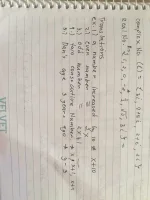
Correct me if I'm wrong, but I think number 7 should be:ay sorry may mali, edited ko na..hahah
7. let x = hundreds digit; y = tens digit; z = ones digit
N = 100x + 10y + z
X = y/2 ; y = 2z ; z=z
N = 100x + 10y + z
N = 100(y/2) + 10(2z) + z
Kung per separate digit lang talaga yung hihingin, pwede yung [(c+2)/2][c+2][c].
Pero hinahanap kasi three-digit number. So technically, dapat sum siya ng product of each digit sa place value nila.

SpectaculairE
Forum Guru
Ahhh ganun pala yunCorrect me if I'm wrong, but I think number 7 should be:
7. let x = hundreds digit; y = tens digit; z = ones digit
N = 100x + 10y + z
X = y/2 ; y = 2z ; z=z
N = 100x + 10y + z
N = 100(y/2) + 10(2z) + z
Kung per separate digit lang talaga yung hihingin, pwede yung [(c+2)/2][c+2][c].
Pero hinahanap kasi three-digit number. So technically, dapat sum siya ng product of each digit sa place value nila.
 nalilito ako
kuromomochi
Eternal Poster
Baka di ka nakinig sa teacher mo nung tinuro yanAhhh ganun pala yun
SpectaculairE
Forum Guru
Nako, tinuro yata yan noong absent ako ehBaka di ka nakinig sa teacher mo nung tinuro yan
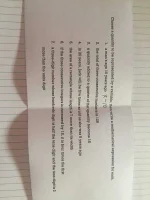
in my opinion, problem #7 is a defective problem or should i say incomplete . . . una, hindi puwedeng maging odd number & 8 ang ones/unit digit . . . ikalawa, tens digit should not be an odd number & 0 . . . at ikatlo, hundreds digit should not be 0,8 & 6 and should not be an odd number except 3 . . .
in short, the only possible answers are:
120
242
364
486
***note that a "digit" is any whole number from 0-9
in short, the only possible answers are:
120
242
364
486
***note that a "digit" is any whole number from 0-9
hehe... good idea po pero kasi nakalagay "a three digit number"which means isang buong three didit number lng sya. Kumbaga singular sya dahil sa word na "a". Pero kung wala yong word na "a" talagang sum sya ng three numbers.Correct me if I'm wrong, but I think number 7 should be:
7. let x = hundreds digit; y = tens digit; z = ones digit
N = 100x + 10y + z
X = y/2 ; y = 2z ; z=z
N = 100x + 10y + z
N = 100(y/2) + 10(2z) + z
Kung per separate digit lang talaga yung hihingin, pwede yung [(c+2)/2][c+2][c].
Pero hinahanap kasi three-digit number. So technically, dapat sum siya ng product of each digit sa place value nila.
kuromomochi
Eternal Poster
Yun nga po. "A three digit number" yung nakalagay. So dapat ang sagot na lalabas is "a number with three digits".hehe... good idea po pero kasi nakalagay "a three digit number"which means isang buong three didit number lng sya. Kumbaga singular sya dahil sa word na "a". Pero kung wala yong word na "a" talagang sum sya ng three numbers.
What I was saying is SUM of the PRODUCT of EACH DIGIT on their corresponding PLACE VALUE, not sum of the three numbers.
Kasi if we were to put yung mathematical E×ρréššion into actual computation, ganto lalabas na sagot:Let c = 2
=[(c+2)/2][c+2][c]
=[(2+2)/2][2+2][2]
=[2][4][2]
=16
If using my equation:
Let x = hundreds digit; y = tens digit; z = ones digit
Let z = 2
X = y/2 ; y = 2z ; z=z
= 100x + 10y + z
= 100(y/2) + 10(2z) + z
= 100(2z/2) + 10(2z) + z
= 100 [(2)(2)/2] + 10(2)(2) + 2
= 200 + 40 + 2
= 242
Hence, this E×ρréššion is correct.
I get your point on this one, but this is not acceptable for the mathematical E×ρréššion required in question #7.*note: sa abstract algebra di lahat ng parenthesis or other symbol meaning multiplication. I use [ ] only to separate the digits.
You cannot use the square bracket symbol merely just to separate the digits. Pwede yan, yes, for abstract algebra. But even in abstract algebra, square brackets are mostly used to define elements in a set, and you still need to use comma in between.
Given that the requirement is a mathematical E×ρréššion, answer must be an E×ρréššion that can be evaluated into something.
Using your E×ρréššion for #7 is hindi pwede, because applying this into calculation, lalabas na imumultiply sila. Based on his assignment, sa tingin ko naman hindi to abstract algebra.
Let's just stick to the basics.
SpectaculairE
Forum Guru
Hence, this E×ρréššion is correct.
Let's just stick to the basics.

Senpai, ikaw na !
Yun nga po. "A three digit number" yung nakalagay. So dapat ang sagot na lalabas is "a number with three digits".
What I was saying is SUM of the PRODUCT of EACH DIGIT on their corresponding PLACE VALUE, not sum of the three numbers.
Let c = 2
=[(c+2)/2][c+2][c]
=[(2+2)/2][2+2][2]
=[2][4][2]
=16
If using my equation:
Let x = hundreds digit; y = tens digit; z = ones digit
Let z = 2
X = y/2 ; y = 2z ; z=z
= 100x + 10y + z
= 100(y/2) + 10(2z) + z
= 100(2z/2) + 10(2z) + z
= 100 [(2)(2)/2] + 10(2)(2) + 2
= 200 + 40 + 2
= 242
Hence, this E×ρréššion is correct.
I get your point on this one, but this is not acceptable for the mathematical E×ρréššion required in question #7.
You cannot use the square bracket symbol merely just to separate the digits. Pwede yan, yes, for abstract algebra. But even in abstract algebra, square brackets are mostly used to define elements in a set, and you still need to use comma in between.
Given that the requirement is a mathematical E×ρréššion, answer must be an E×ρréššion that can be evaluated into something.
Using your E×ρréššion for #7 is hindi pwede, because applying this into calculation, lalabas na imumultiply sila. Based on his assignment, sa tingin ko naman hindi to abstract algebra.
Let's just stick to the basics.
makikisabat ako ha hehe . . . yung values sa equation mo dapat sinimplify mo pa na instead x=y/2, y=2z, z=z
bakit hindi na lang x=z, y=2z, z=z para "z" na lang ang common variable nila atsaka nga pala dapat y=2+z at hindi y=2z
pero mali pa rin ang equation mo dahil subukan mong magsubstitute ng any single digit number dyan except 2 . . . mali ang kalalabasan niyan
kuromomochi
Eternal Poster
makikisabat ako ha hehe . . . yung values sa equation mo dapat sinimplify mo pa na instead x=y/2, y=2z, z=z
bakit hindi na lang x=z, y=2z, z=z para "z" na lang ang common variable nila atsaka nga pala dapat y=2+z at hindi y=2z
pero mali pa rin ang equation mo dahil subukan mong magsubstitute ng any single digit number dyan except 2 . . . mali ang kalalabasan niyan
Uy I missed that out. Thanks sa correction. Value of y must be z+2 nga.in my opinion, problem #7 is a defective problem or should i say incomplete . . . una, hindi puwedeng maging odd number & 8 ang ones/unit digit . . . ikalawa, tens digit should not be an odd number & 0 . . . at ikatlo, hundreds digit should not be 0,8 & 6 and should not be an odd number except 3 . . .
in short, the only possible answers are:
120
242
364
486
***note that a "digit" is any whole number from 0-9
I think tama yung sinabi mong defective yung question. I tried to substitute the numbers pero di lahat nagcocomply. Baka need niya to i-raise sa teacher niya. Hahaha!
Also, di ko na sinimplify kasi baka malito si ts. Nagset naman ako ng conditions, up to him kung gusto niya isimplify yung E×ρréššion.
And if iseset ko ng x=z, di masasatisfy yung condition na "hundreds digit is half the tens digit". Baka hanapin nung teacher. kuromomochi
Eternal Poster
HAHAHAHAHAHA miss you all! SpectaculairE skysolstice xdmeruchan wala na si kuehado senpai huhuhu di ko matag
Senpai, ikaw na !

skysolstice
Forum Veteran
Anong kaguluhan toHAHAHAHAHAHA miss you all! SpectaculairE skysolstice xdmeruchan wala na si kuehado senpai huhuhu di ko matag
kuromomochi
Eternal Poster
Di ko rin alam eh. Basta alam ko graduate na ako eh. Bakit ba ako nagsasagot ng assignment ng iba.Anong kaguluhan to

xdmeruchan
Forum Veteran
Wala ko dyan, wala kong kasalanan, inosente ako!HAHAHAHAHAHA miss you all! SpectaculairE skysolstice xdmeruchan wala na si kuehado senpai huhuhu di ko matag
kuromomochi
Eternal Poster
Huhuhu ang hirap na mag-isip ng mababaw kapag masyadong advance na napag-aralan.
kuromomochi
Eternal Poster
True! Hahahaha kahit sa board exam kahit pwede mo isagot E, wag mong isasagot.i think the problem is defective . . . even in the board exams, there are defective problems and so, considered as bonus/es . . . kaya dapat bonus na ng prof ni ts to

- Status
- Not open for further replies.
About this Thread
-
47Replies
-
1KViews
-
14Participants
Last reply from:
nirv47a
nirv47a
New Topics
-
Henlo mga babycakes ko!!!
- Started by jiwookimna
- Replies: 0
- 💬 Chitchat
-
Pa help po Premiere Pro text animation presets
- Started by TheJuan
- Replies: 0
- 💬 Chitchat
-
Simple lang panahon nuon
- Started by Egayghost
- Replies: 1
- 💬 Chitchat
-
Calling sa attention nung nag benta ng proton vpn na wala na paramdam
- Started by dbels
- Replies: 4
- 💬 Chitchat
-
Scammer Alert! Wag kayo makikipag transact sa account na to
- Started by SupremeAgent
- Replies: 20
- 💬 Chitchat
-
Hi, invitation code pls
- Started by tavderr
- Replies: 0
- 💬 Chitchat
-
GLOBE HG8145V5 EPON TO GPON
- Started by wanted12
- Replies: 0
- 💬 Chitchat
-
Who has MP Megapro Plus MP Melody Volume 81 Iso file?
- Started by Hot_dog0334
- Replies: 0
- 💬 Chitchat
-
Aple banana cake
- Started by fwzvi
- Replies: 0
- 💬 Chitchat
-
Kasama sa bahay na maraming gamit na di kailangan.
- Started by ferdzstrip
- Replies: 4
- 💬 Chitchat
Trending Topics
Online now
- Members online
- 344
- Guests online
- 6,803
- Total visitors
- 7,147