 PH
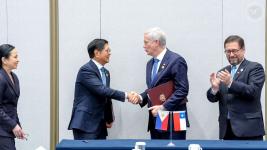
MANILA, Philippines — President Marcos yesterday witnessed the signing of a landmark free trade deal with Chile and met with fellow leaders on the sidelines of the 33rd Asia-Pacific Economic Cooperation (APEC) Economic Leaders’ Meeting in Shenzhen, China.
The Philippines-Chile Comprehensive Economic Partnership Agreement (CEPA), Manila’s first bilateral free trade agreement with a Latin American country, was signed during the bilateral meeting of Marcos with Chilean President José Antonio Kast Rist.
“The landmark agreement opens new opportunities for Philippine goods and services in the Latin American market and strengthens cooperation in investment, technology exchange, value chains, and sustainable practices,” the Presidential Communications Office said in a statement.
In a Facebook post, Marcos E×ρréššed optimism that the Philippines and Chile have much to gain from closer cooperation across the Pacific.
“In my meeting with President José Antonio Kast, we explored opportunities to expand trade following the conclusion of the Comprehensive Economic Partnership Agreement, strengthen cooperation in critical minerals and energy, and deepen our maritime ties,” the President said.
Marcos said he and Kast also tackled the Philippines’ interest in joining the Comprehensive and Progressive Agreement for Trans-Pacific Partnership, which is expected to open new markets and opportunities for Filipino businesses.
Marcos also had meetings with his counterpart from New Zealand last Wednesday and fellow leaders from Vietnam, Mexico and Peru yesterday.
The Philippine leader met with New Zealand Prime Minister Christopher Luxon to reaffirm the longstanding friendship between their countries, according to the PCO. They two leaders also emphasized their commitment to continue their cooperation for the benefit of their constituents.
Luxon undertook an official visit to the Philippines from April 18 to 19, 2024 to strengthen New Zealand’s relations with the Philippines. During the visit, Marcos and Luxon instructed their foreign ministers and other officials to put in place a roadmap to guide the establishment of a comprehensive partnership and reiterated their commitment to sustain cooperation in maritime security, trade and other key areas.
Marcos also had an engagement with Vietnamese President Tô Lâm to advance cooperation in maritime affairs and food security.
“President Marcos also conveyed the Philippines’ full support for Viet Nam’s hosting of APEC in 2027, reaffirming both countries’ commitment to regional cooperation and shared prosperity,” the PCO said.
In a Facebook post, Marcos reported that he met with Mexican President Claudia Sheinbaum, noting that their two countries share a special bond dating back more than four centuries to the Manila-Acapulco galleon trade that linked their peoples across the Pacific.
“We look forward to building on this longstanding friendship and strengthening our cooperation in trade, investment, and cultural exchange,” Marcos said.
Marcos also had a bilateral meeting with newly elected Peruvian President Keiko Fujimori to reaffirm their countries’ commitment to further strengthen bilateral ties and advance cooperation in areas of mutual interest.
During the meeting, Marcos congratulated Fujimori on her election and welcomed the reopening of the Peruvian Embassy in Manila and the appointment of Peru’s first resident ambassador to the Philippines in two decades.
“Both leaders discussed expanding bilateral trade through the imminent establishment of the Philippines-Peru Joint Trade Commission and exploring cooperation in environmental protection and disaster risk reduction and management, particularly in light of the looming Super El Niño phenomenon expected to affect both countries,” the PCO said.
During the APEC Leaders’ Meeting, Marcos emphasized the Philippines’ support for a rules-based multilateral trading system, according to Radio Television Malacañang (RTVM). The President also highlighted the conclusion of the Association of Southeast Asian Nations Digital Economy Framework Agreement under the Philippines chairmanship of the regional bloc.
Marcos also pushed for the digital transformation of micro, small and medium enterprises through artificial intelligence, stronger cooperation on the sustainable blue economy and collective action against îllégâl, unreported and unregulated fishing.
“He emphasized that APEC cooperation must deliver tangible benefits to the people through more jobs, better access to healthcare, preparation for demographic change and a growing silver economy,” RTVM said in a YouTube post. - Alexis Romero
Trade Secretary Cristina Roque, meanwhile, revealed Marcos’ witnessing the signing of the Philippines-Chile Comprehensive Economic Partnership Agreement (CEPA) during his bilateral meeting with Chilean President José Antonio Kast Rist.
“The world is our market and Filipino businesses are ready to compete. The Philippines-Chile CEPA opens new doors for our exporters, strengthens our manufacturing sector and advances our goal of creating better jobs and greater opportunities for every Filipino,” Roque said.
“The landmark agreement opens new opportunities for Philippine goods and services in the Latin American market and strengthens cooperation in investment, technology exchange, value chains, and sustainable practices,” the PCO said in a statement.
Under the agreement, almost all Philippine exports to Chile will enjoy duty-free treatment, benefiting a wide range of export products, including electronics, machinery, desiccated coconut, carrageenan, processed tuna and other value-added agricultural and manufactured goods.
The agreement will also help the Philippines diversify sources of supply, strengthen supply chains and improve access to critical industrial inputs.
In a Facebook post, Marcos E×ρréššed optimism that the Philippines and Chile have much to gain from closer cooperation across the Pacific.
“In my meeting with President José Antonio Kast, we explored opportunities to expand trade following the conclusion of the Comprehensive Economic Partnership Agreement, strengthen cooperation in critical minerals and energy, and deepen our maritime ties,” the President said.
Marcos said he and Kast also tackled the Philippines’ interest in joining the Comprehensive and Progressive Agreement for Trans-Pacific Partnership, which is expected to open new markets and opportunities for Filipino businesses.
During the APEC Leaders’ Meeting, Marcos emphasized the Philippines’ support for a rules-based multilateral trading system, according to Radio Television Malacañang. The President also highlighted the conclusion of the Association of Southeast Asian Nations Digital Economy Framework Agreement under the Philippines chairship of the regional bloc.
President Marcos met with his counterparts from Vietnam, New Zealand, Peru and Mexico and witnessed the signing of a free trade agreement with Chile – Manila’s first with a Latin American country – on the sidelines of the 33rd Asia- Pacific Economic Cooperation (APEC) Economic Leaders’ Meeting yesterday.
After his arrival in Shenzhen, China, Marcos had a meeting with New Zealand Prime Minister Christopher Luxon during which they reaffirmed their countries’ longstanding friendship, according to the Presidential Communications Office (PCO).
Luxon was in the Philippines from April 18 to 19, 2024 for an official visit aimed at strengthening New Zealand’s relations with the Philippines. During the visit, the two leaders instructed their officials to put in place a roadmap to serve as guide for the establishment of a comprehensive partnership.
Marcos also met with Vietnamese President Tô Lâm to advance cooperation in maritime affairs and food security.
“President Marcos also conveyed the Philippines’ full support for Viet Nam’s hosting of APEC in 2027, reaffirming both countries’ commitment to regional cooperation and shared prosperity,” the PCO said.
Marcos reported that he met with Mexican President Claudia Sheinbaum, noting the country’s special bond with Mexico dating back more than four centuries to the Manila-Acapulco galleon trade.
“We look forward to building on this longstanding friendship and strengthening our cooperation in trade, investment, and cultural exchange,” Marcos said.
Marcos also had a bilateral meeting with newly elected Peruvian President Keiko Fujimori to reaffirm their countries’ commitment to further strengthen bilateral ties and advance cooperation in areas of mutual interest.
During the meeting, Marcos congratulated Fujimori on her election and welcomed the reopening of the Peruvian embassy in Manila and the appointment of Peru’s first resident ambassador to the Philippines in two decades.
“Both leaders discussed expanding bilateral trade through the imminent establishment of the Philippines-Peru Joint Trade Commission and exploring cooperation in environmental protection and disaster risk reduction and management, particularly in light of the looming Super El Niño phenomenon expected to affect both countries,” the PCO said.
Source: You do not have permission to view the full content of this post. Log in or register now.
Date posted: 2026-11-20T00:00:00+08:00