 PH
What Xiaomi’s factories reveal about its future
MANILA, Philippines – It is interesting to arrive at a company hub best known for making smartphones and find cars waiting to greet you.
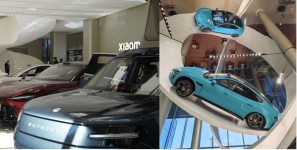
At Xiaomi’s global headquarters in Beijing, the latest smartphones and other devices occupy prominent display spaces, while electric vehicles point to the company’s growth beyond its original identity.
Outside, autumn trees line the walkways, and employees move between buildings in an environment that feels more like a university than the HQ of a global tech giant. That’s why they call it The Xiaomi Campus.
It is a relatively short introduction to a much larger operation. But even from the first few stops, Xiaomi wants visitors to see more than the products it sells.
The company has been expanding what it makes and, more importantly, what it can develop independently.
In 2019, Xiaomi entered the Fortune Global 500 at No. 468, becoming the youngest company to appear on the list that year. Seven years later, it ranked No. 232, its highest position since its debut. Behind that progress are years of investment in engineering, technology, and manufacturing capabilities that now underpin a broader business.
During a recent familiarization trip to China, Inquirer Tech visited Xiaomi’s headquarters and several of its facilities in Beijing. While smartphones remain central to its business, the company’s efforts to develop technologies that could support a wider range of products were equally apparent.
RELATED STORY: Xiaomi 18 Pro boasts rear screen for easy selfies
Behind the ranking
Founded in 2010, Xiaomi built its early reputation on well-designed smartphones at accessible prices. The proposition helped it establish a following in a competitive market, including the Philippines, where its devices have become familiar to consumers.
But the technology industry rarely rewards companies for standing still. Xiaomi’s response has involved sustained investment in research and development of its own heavily patented processes and machinery.
In the first half of 2026, the company spent RMB 18.2 billion on R&D, a 25.6% increase from the same period in 2025. As of June 30, 47.2% of its workforce was involved in R&D, while its worldwide portfolio had exceeded 47,000.
Some of that work is reflected in technologies such as HyperOS, its operating system; MiMo, its artificial intelligence model; and XRING, its in-house chip development program. The latter produced the XRING O1, Xiaomi’s first self-developed flagship 3-nanometer chip, in 2025.
As Xiaomi moves into categories with different technological requirements, developing its own technologies gives the company greater control over how its products are designed and optimized.
We saw how this approach carries through to its wider product lineup during our visit to the Xiaomi Campus.
The Human × Car × Home ecosystem up close
One of our first stops was the AIoT showroom, where Xiaomi’s connected-device strategy, built around its Human × Car × Home concept, became easier to understand.
The concept takes on the AIoT market with an increasingly broad roster of products, bringing electric vehicles (in markets where they are available) into the same ecosystem as personal electronics and home appliances. Instead of looking at a phone, appliance, or vehicle as an individual product, we get a sense of how Xiaomi wants them to work together for everyday life.
As of June 30, 2026, Xiaomi reported more than 1.16 billion connected IoT devices on its platform, excluding smartphones and tablets, which makes for a very considerable scale.
What comes after the SU7?
Among the more interesting electric vehicles on display was the Xiaomi SkyNomad N90, whose interior seemed to answer the question, “What else could a car cabin be used for?”
Instead of keeping every seat in the conventional forward-facing arrangement, the SkyNomad features a flat-floor cabin and extended seat rails that allow different seating configurations. The front seats can rotate 180 degrees to face the second row, creating a face-to-face arrangement.
The interior can also accommodate a movable table and sliding center console, making it easier to reconfigure the space. When parked, the cabin can function more like a small lounge or workspace than a conventional vehicle interior.
Coming from different backgrounds and with different travel needs, we each had our own take on the vehicle. Its flexibility, however, was easy to appreciate, particularly for families who could make use of the adaptable layout on longer journeys.
Inside Xiaomi’s smartphone factory
The first thing to understand about Xiaomi’s Smart Factory in Changping is that the smartphones coming off its production lines are only the final part of a longer process.
The facility, located on the northern edge of Beijing, has 11 production lines and an annual manufacturing capacity of more than 10 million units. Much of the work is coordinated through a platform developed by Xiaomi, which monitors production, tracks quality, and responds to changes on the factory floor.
When materials run low, for instance, the system can arrange for supplies to be replenished before production is interrupted. It is a level of coordination that becomes easier to appreciate when you consider how many components and individual processes have to come together to produce a single smartphone.
The factory reports an overall automation rate of 81%. Yet the presence of so many automated systems does not mean people have disappeared from the process. Employees still handle inspections and make quality assessments that machines cannot fully replace.
The leap from phones to cars
While it may seem that way, Xiaomi’s move into the automotive industry isn’t as disconnected from its existing business as it might first appear. It’s a ramped-up proposition, but the company’s approach to bringing hardware, software, manufacturing, and technology together is still very much present. Only this time, it’s taking that connected experience out onto the road.
We saw this firsthand at Xiaomi’s EV factory in Beijing’s Yizhuang district, now a popular ticketed attraction among locals and tourists. Spanning more than 700,000 square meters, the facility has an automation rate of over 90%, with robots handling many of the key production tasks, particularly in the body shop.
One notable feature is Xiaomi’s self-developed large die-casting system, which combines multiple components into a single structure. This reduces the number of individual parts and welding points to help streamline production.
The facility also has its own 2.5-kilometer test track, featuring 18 different road conditions where vehicles undergo testing before delivery. We got to experience the track ourselves, this time from the passenger seat of a Xiaomi SU7 Ultra.
With a trained driver behind the wheel, there wasn’t much time to take in the surroundings once the car started moving. Its three motors deliver a combined 1,548 PS, enough to send it from 0 to 100 km/h in 1.98 seconds. Before setting off, the driver had just one question: “Are you ready?” It was a fairly reasonable question, as we soon found out.
The long game
Xiaomi’s ambitions may be taking shape in China, but the company already has an established presence closer to home. In the Philippines, it ranked second in smartphone shipments in the second quarter of 2026, capturing 22% of the market, according to Omdia.
The next development to watch is the anticipated arrival of the Xiaomi 18 Pro Max in the Philippines. Its entry would give the company another opportunity to compete in the premium smartphone segment, where consumers have no shortage of alternatives.
Still, not everything we saw in Beijing necessarily has a place in the Philippine market, at least not immediately. Xiaomi’s plans for a European automotive expansion in 2027, for instance, offer no indication of when its vehicles might reach Southeast Asia.
Electric vehicles, for one, are becoming a familiar sight on Philippine roads, from EDSA to the business districts of BGC and Makati. The Xiaomi SU7 and YU7 have already made headway in China. Bringing either model here, however, would raise practical considerations around pricing, charging infrastructure, and after-sales support, alongside the challenge of competing with established automakers already making their own push into electric mobility.
Foldables present another opportunity. Xiaomi’s next-generation devices, including the anticipated MIX Fold 5 (or Xiaomi 18 Fold, should that become its final market name), would enter a segment still working toward wider adoption. Apple’s anticipated entry could make the category even more competitive. Xiaomi would need to show why its take on the format is worth considering, particularly for consumers weighing the cost of a foldable against the familiarity and practicality of a conventional flagship.
The trip was not meant to answer which parts of Xiaomi’s wider portfolio would make sense here. What we came away with was a better understanding of the business taking shape beyond the consumer electronics brand most people already know.
For now, it is worth watching how far Xiaomi intends to take the business it has been building, and which parts of that ambition Filipino consumers might eventually get to experience.
RELATED STORY: Why affordable smartphones matter to a mobile-first PH economy
Source: You do not have permission to view the full content of this post. Log in or register now.
Date posted: Sun, 15 Nov 2026 17:36:50 PST