 PH
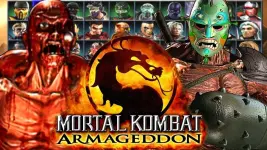
Mortal Kombat: Armageddon is a 2006 fighting video game developed and published by Midway. It is the seventh main installment in the Mortal Kombat franchise, and a sequel to 2004's Mortal Kombat: Deception. The PlayStation 2 and Xbox versions were released in October 2006, with a Wii version released on May 29, 2007 in North America. The Xbox version was not released in PAL territories.
Chronologically, it is the final chapter of the original Mortal Kombat storyline, featuring virtually all the characters from previous games. In the traditional Arcade mode, players select one of them and fight against a selection of the other fighters with the goal of defeating a fire elemental being called Blaze, thus determining the fate of the series' universe.
The gameplay retains many of the same elements as previous Mortal Kombat titles: Deadly Alliance and Mortal Kombat: Deception, including the various fighting styles of the characters. Instead of the prescribed Fatalities of previous games, players can now create their own Fatality from a series of bloody attacks. They can also create a custom character using the "Kreate-A-Fighter" mode. The game also includes the Konquest mode based on an adventure game featured in its predecessor, now casting the player as an Edenian warrior named Taven, who must defeat his brother Daegon. The Konquest mode now also features beat 'em up elements. Succeeding the "Puzzle Kombat" and "Chess Kombat" minigames from its predecessor is "Motor Kombat," a miniature racing game influenced by Mario Kart.
The game was well-received, mainly due to the large number of playable characters, Konquest mode, and the "Motor Kombat" minigame. However, critics criticized the use of the same graphics engine as the two previous games, as well as the similar play styles between the characters. The reaction to the game's "Custom Fatality" feature was also mixed.
Mortal Kombat: Armageddon is the final game in the series for sixth-generation consoles and the first for seventh-generation consoles with its release on the Wii. The next game in the series, the crossover title Mortal Kombat vs. DC Universe, was released exclusively for seventh-generation consoles. The main storyline of the series was later revisited in the 2011 Mortal Kombat reboot, the first production of the newly formed NetherRealm Studios.
You do not have permission to view the full content of this post. Log in or register now.