 PH
PH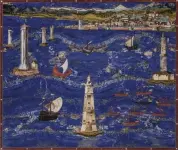
Certain pigments were extraordinarily expensive because obtaining them required rare materials and complicated trade routes.
Ultramarine, traditionally made from lapis lazuli, was particularly valuable in European painting.
The finest source material came from regions far from Europe, making the pigment expensive to obtain.
Because of its cost, its use could be carefully controlled.
In some historical paintings, an expensive blue wasn't simply a color choice—it could represent a significant financial investment.
Artists and patrons sometimes reserved precious pigments for particularly important parts of a composition.
A tiny ρá†ch of blue could therefore represent far more money and effort than its size suggests.
© National Gallery of Art