 PH
PH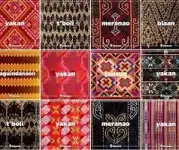
Patterns in textiles can communicate information beyond decoration.
Depending on the culture and tradition, repeated shapes and colors can represent status, identity, history, beliefs, geography, or important events.
Because textile patterns can be transmitted from one generation to another, they can preserve cultural knowledge without relying on written words.
The same motif can also have different meanings in different communities.
This makes textile art more than a decorative craft.
A woven or embroidered object can simultaneously function as clothing, artwork, historical record, and communication system.
A pattern that looks purely geometric to an outsider may contain information that is obvious to someone familiar with the tradition.
© Smithsonian Center for Folklife and Cultural Heritage