 PH
PH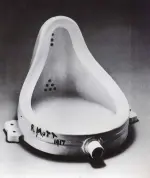
In 1917, an object signed “R. Mutt” was submitted to an art exhibition in New York.
The object was a commercially manufactured porcelain urinal turned on its side and titled Fountain.
It became associated with artist Marcel Duchamp and his concept of the readymade.
Readymades were ordinary manufactured objects—such as bicycle wheels, snow shovels, and urinals—that were repositioned as artworks through an artist's selection and presentation.
The idea challenged the assumption that an artist had to physically craft an object for it to qualify as art.
The original Fountain was lost, although authorized replicas were produced later.
What initially looked like a provocative joke ultimately became one of the most influential ideas in modern art.
It shifted the question from “How was this made?” toward the much stranger question: “What makes something art?”
© Museum of Modern Art (MoMA)