 PH
PH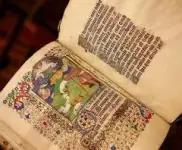
Before inexpensive paper became widespread in Europe, many books were written on parchment.
Parchment was generally produced from prepared animal skins, commonly those of sheep, goats, or calves.
Especially fine material made from calfskin is often called vellum.
Producing a large manuscript could therefore require a substantial quantity of animal skin.
The skins had to be soaked, stretched, scraped, dried, and carefully prepared before scribes could write on them.
This made books extremely labor- and resource-intensive objects.
Add the work of scribes, illuminators, decorators, and binders, and a luxurious manuscript could represent an enormous investment.
For a medieval reader, a beautifully produced book wasn't merely information—it was a valuable physical object.
©The British Library