 PH
PH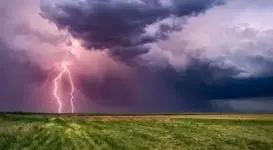
A lightning channel rapidly heats the surrounding air to an extraordinarily high temperature. The heated air expands explosively and creates a pressure wave that travels outward as sound. That sound is thunder. Because light travels vastly faster than sound through the atmosphere, lightning is seen before its thunder arrives. The longer the delay, the farther away the lightning generally is. Thunder isn't a separate event after lightning—it's the atmosphere reacting to the lightning itself.
© NOAA