 PH
PH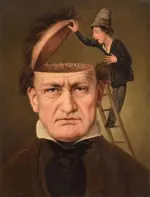
To people who have an inner monologue, it may be surprising to learn that not everyone does. And, if you don't have one, you might not even realize an inner voice exists.
Psychologist Russell Hurlburt admits there's an inherent challenge to studying the voices inside people's heads - or a lack thereof. His research has found that "Most people think that they think in words, but many people are mistaken about that." Visualizing one's self in a situation is more common for many humans - essentially thinking in images instead of words.
Writing things down is also essential for individuals who don't have an inner voice, but some people claim there's very little thought at all in many instances. That said, many people think in multiple ways and have several inner voices going simultaneously.
While Hurlburt found that his subjects only talked to themselves about 25% of the time, investigation into how that inner conversation takes place has revealed additional findings. A 2015 study concluded that "internal interlocutors" fell into four categories (faithful friend, ambivalent parent, proud rival, and helpless child), while a subsequent 2019 study indicated that inner dialogues were derived from "self-reflection, self-observation, cognition, and... accompanying activities."
(c) Ranker
 laging may inner monologue kaya parang baliw