 PH
PHDiego Mendoza
Elite
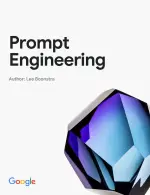
This whitepaper by Lee Boonstra provides a comprehensive guide to prompt engineering for large language models (LLMs) like Gemini. It covers essential techniques such as zero-shot, few-shot, system/role/contextual prompting, Chain of Thought (CoT), Tree of Thoughts (ToT), and ReAct (Reason & Act). The document also explores best practices like using structured outputs (e.g., JSON), controlling model configurations (temperature, top-K, top-P), and documenting prompt iterations.
Key takeaways:
Ideal for developers and non-technical users alike, this guide emphasizes iterative testing and documentation to refine prompts effectively.
For more details, check out the full whitepaper here:
You do not have permission to view the full content of this post. Log in or register now.
Happy prompting!
Key takeaways:
- Techniques: Use step-by-step reasoning (CoT), role assignment, or external tools (ReAct) for complex tasks.
- Best Practices: Be specific in prompts, prefer instructions over constraints, and experiment with formats/styles.
- Challenges: Avoid repetition loops, hallucinations, and token limits by tuning configurations.
- Automation: Tools like Automatic Prompt Engineering (APE) can streamline prompt creation.
Ideal for developers and non-technical users alike, this guide emphasizes iterative testing and documentation to refine prompts effectively.
For more details, check out the full whitepaper here:
You do not have permission to view the full content of this post. Log in or register now.
Happy prompting!

