PH
PH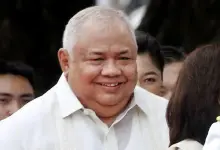
During Rodrigo Duterte's first appearance before the International Criminal Court (ICC) on March 14, 2025, several key events unfolded. This initial hearing took place via video link from a detention center near The Hague, Netherlands, where Duterte was held following his arrest in Manila and transfer to ICC custody. The purpose of the hearing was to formally identify Duterte, inform him of the charges against him—specifically murder as a crime against humanity related to his "war on drugs" campaign—and outline his rights under the Rome Statute. The hearing was presided over by Judge Iulia Antoanella Motoc, with Duterte’s lawyer, Salvador Medialdea, present in the courtroom.
What Happened During the First Appearance
- Duterte’s Participation: The 79-year-old former Philippine president appeared frail, wearing a blue suit and tie, and spoke briefly to confirm his name (Rodrigo Roa Duterte) and date of birth (March 28, 1945). Due to his long journey from the Philippines and the time difference, Judge Motoc allowed him to participate remotely from the detention center rather than appearing in person in the courtroom.
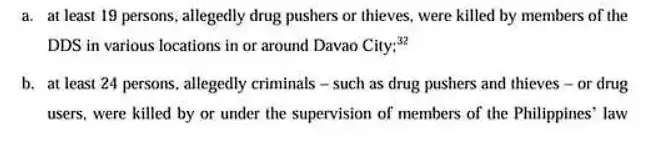
- Charges and Rights: Duterte was formally notified of the allegations against him, which involve crimes against humanity, specifically murder, allegedly committed between November 1, 2011, and March 16, 2019, during his tenure as mayor of Davao City and later as president of the Philippines. These charges stem from his brutal anti-drug campaign, which human rights groups estimate resulted in up to 30,000 deaths. He was also informed of his rights as a defendant under the ICC’s legal framework.
- Medialdea’s Statements: Salvador Medialdea, Duterte’s defense attorney and former executive secretary, made a significant statement during the hearing. He claimed that Duterte had been “abducted” from the Philippines and that his arrest and transfer to The Hague constituted “pure and simple kidnapping” or “extrajudicial rendition.” Medialdea further argued that Duterte was too ill to participate meaningfully, citing “debilitating medical issues,” and suggested that his client’s health prevented him from contributing beyond identifying himself.
- Court’s Response: Judge Motoc addressed Medialdea’s claims directly. She noted that a court-appointed doctor had examined Duterte upon his arrival at the detention center and found him “fully mentally aware and fit” to participate, contradicting the assertion of debilitating illness. She dismissed the request to postpone the hearing based on health concerns and affirmed that the proceedings would continue as scheduled.
- Next Steps: At the end of the hearing, Judge Motoc set September 23, 2025, as the date for the confirmation of charges hearing. This pre-trial phase will allow prosecutors to present evidence, and Duterte and his legal team will have the opportunity to challenge it, determining whether the case proceeds to a full trial, which could begin in early 2026 if approved.
What the Presiding Judge Said
Judge Iulia Antoanella Motoc made several key statements during the hearing:
- On Duterte’s Participation: “As Mr. Duterte made a long journey involving a considerable time difference, the chamber authorized Mr. Duterte to follow the hearing at a distance.” This reflects the court’s accommodation of his physical condition post-travel while ensuring the hearing proceeded.
- On Health Claims: Addressing Medialdea’s assertion of Duterte’s poor health, Motoc said, “The court’s doctor was of the opinion that he was fully mentally aware and fit.” She emphasized that the court had taken Duterte’s health into account by allowing virtual attendance and indicated that further health-related concerns could be raised later in the process.
- On Legal Process: Responding to Medialdea’s abduction claims, she stated, “There will be a full procedure that will unfurl leading up to the confirmation of charges that will enable Mr. Duterte to raise all the matters that you have just raised.” This reassured that Duterte’s defense would have ample opportunity to contest the arrest and jurisdictional issues in subsequent proceedings, maintaining the court’s procedural integrity.
- On Scheduling: Motoc concluded by setting the next hearing: “The confirmation of charges hearing is set for September 23,” signaling the court’s intent to move forward efficiently.
Salvador Medialdea’s Claims and Reaction to the Judge’s Correction
Salvador Medialdea claimed that Duterte’s arrest in Manila and transfer to The Hague were unlawful, describing it as “pure and simple kidnapping” and an “extrajudicial rendition.” He argued that Duterte was “summarily transported” from his country, denied legal recourse in the Philippines, and subjected to political score-settling. Additionally, he asserted that Duterte’s health was too poor for him to engage in the hearing, stating, “Other than to identify himself, he is not able to contribute to this hearing” due to “debilitating medical issues.”
When Judge Motoc corrected him by citing the court doctor’s assessment—that Duterte was mentally aware and fit—Medialdea did not directly retract his claims but shifted focus. He continued to emphasize the alleged illegality of Duterte’s transfer, calling the ICC a “troubled legal institution” desperate for a high-profile case and accusing Philippine President Ferdinand Marcos Jr. of colluding to “neutralize and choke” Duterte’s legacy. Although the judge’s correction undermined his health argument, Medialdea persisted with the narrative of an unjust arrest, suggesting that these issues would be contested further in the legal process Motoc had outlined. His statements appeared aimed at both the court and a broader audience, possibly to rally support among Duterte’s base in the Philippines.