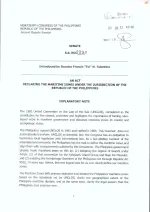
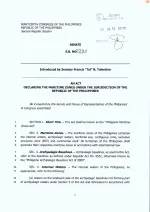
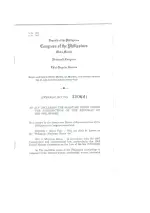
The West Philippine Sea is still not internationally recognized enough to appear on maps, or to be referenced in navigation charts. It was only named by the Philippine government as West Philippine Sea in 2011 by an act of legislation, but has not gathered enough support to be included in global or regional maps.
Does it mean we don't have rights to it? No.
It covers our entire EEZ (Exclusive Economic Zone). And although China (or any other nation) can freely pass through it, the Philippines has exclusive economic developmental rights to it and should have the power to arrest foreign vessels attempting to exploit the natural resources in the area.
Is it part of our territory? Do we have sovereignty over it? No we do not. We have sovereign rights to exploit its resources, but it is not part of our territory. According to NOAA, only the Territorial Sea, which is 12 nm away from the nearest coast is part of our territory. Therefore, while we have sovereign rights to the EEZ, we do not have sovereignty.
You kept referencing international law but it seems you have an apparent lack of familiarity of how seas are named and renamed in international law.
The United Nations Conferences on the Standardization of Geographical Names have passed several resolutions on standardizing names of geographical features, such as seas.
If states have different names, it is recommended that "the geographical names authorities of the nations concerned attempt
to reach agreement on these conflicting names or applications"
(p. 108,
You do not have permission to view the full content of this post.
Log in or register now..
The International Hydrographic Organization names and charts seas. There is NO "West Philippine Sea" in the official names and charts of seas in the world. It is only the "South China Sea."
Here are the official names and geographical coordinates of seas:
You do not have permission to view the full content of this post.
Log in or register now.
𝐘𝐨𝐮𝐫 𝐩𝐨𝐢𝐧𝐭: 𝐈𝐇𝐎 𝐝𝐨𝐞𝐬 𝐧𝐨𝐭 𝐢𝐧𝐟𝐫𝐢𝐧𝐠𝐞 𝐨𝐧 𝐭𝐡𝐞 𝐫𝐢𝐠𝐡𝐭𝐬 𝐨𝐟 𝐜𝐨𝐮𝐧𝐭𝐫𝐢𝐞𝐬 𝐭𝐨 𝐧𝐚𝐦𝐞 𝐭𝐡𝐞𝐢𝐫 𝐬𝐞𝐚𝐬. 𝐈𝐭 𝐢𝐬 𝐚 𝐧𝐚𝐭𝐢𝐨𝐧𝐚𝐥 𝐩𝐫𝐞𝐫𝐨𝐠𝐚𝐭𝐢𝐯𝐞 𝐭𝐨 𝐧𝐚𝐦𝐞 𝐨𝐮𝐫 𝐨𝐰𝐧 𝐬𝐞𝐚 𝐚𝐫𝐞𝐚𝐬 𝐢𝐧 𝐨𝐮𝐫 𝐨𝐰𝐧 𝐦𝐚𝐩𝐬. 𝐈𝐇𝐎 𝐡𝐚𝐬 𝐧𝐨𝐭𝐡𝐢𝐧𝐠 𝐭𝐨 𝐝𝐨 𝐰𝐢𝐭𝐡 𝐭𝐡𝐞 𝐚𝐥𝐥𝐨𝐜𝐚𝐭𝐢𝐨𝐧 𝐨𝐟 𝐣𝐮𝐫𝐢𝐬𝐝𝐢𝐜𝐭𝐢𝐨𝐧 𝐮𝐧𝐝𝐞𝐫 𝐢𝐧𝐭𝐞𝐫𝐧𝐚𝐭𝐢𝐨𝐧𝐚𝐥 𝐥𝐚𝐰. 𝐈𝐭 𝐢𝐬 𝐧𝐨𝐭 𝐚 𝐣𝐮𝐝𝐢𝐜𝐢𝐚𝐥 𝐨𝐫 𝐚𝐝𝐦𝐢𝐧 𝐛𝐨𝐝𝐲 𝐰𝐡𝐨𝐬𝐞 𝐚𝐜𝐭𝐢𝐨𝐧𝐬 𝐡𝐚𝐯𝐞 𝐥𝐞𝐠𝐚𝐥 𝐢𝐦𝐩𝐥𝐢𝐜𝐚𝐭𝐢𝐨𝐧𝐬 𝐨𝐧 𝐭𝐡𝐞 𝐫𝐢𝐠𝐡𝐭𝐬 𝐨𝐟 𝐒𝐭𝐚𝐭𝐞𝐬.
𝐘𝐨𝐮𝐫 𝐩𝐨𝐢𝐧𝐭: 𝐨𝐮𝐫 𝐞𝐧𝐭𝐢𝐭𝐥𝐞𝐦𝐞𝐧𝐭 𝐭𝐨 𝐭𝐡𝐞 𝐄𝐄𝐙 𝐚𝐧𝐝 𝐜𝐨𝐧𝐭𝐢𝐧𝐞𝐧𝐭𝐚𝐥 𝐬𝐡𝐞𝐥𝐟 𝐢𝐬 𝐛𝐚𝐬𝐞𝐝 𝐨𝐧 𝐢𝐧𝐭𝐞𝐫𝐧𝐚𝐭𝐢𝐨𝐧𝐚𝐥 𝐥𝐚𝐰 𝐬𝐩𝐞𝐜𝐢𝐟𝐢𝐜𝐚𝐥𝐥𝐲 𝐔𝐍𝐂𝐋𝐎𝐒.
I will address both of them at the same time. Jurisdiction and rights are entirely a different animal, and UNCLOS is not the only relevant international law source in determining them.
There is a doctrine in international law called "intertemporal doctrine," it is a generally accepted principles of international law derived from the Latin maxim of ""Tempus regit actum" (time governs the act). It means that the legal validity of an action is determined by the law that was in place when the action took place.
In relation to disputes, the intertemporal rule demands that the legality of an act be judged by the law in force at the time the act occurs, while also taking into account any change in the law over time.
That means, the South China Sea disputes cannot be judged in accordance only to UNCLOS but in the relevant laws in effect at the time the claims were made. And sadly speaking, Professor Cielo Magno, the Philippines is a latecomer to this dispute, which originated from the disputes of China, France, then Japan, then Vietnam, then later on the Philippines, Malaysia, and Brunei.
China does not claim rights and jurisdiction from the outer limits of the so-called nine-dash line inwards BUT from the South China Sea islands OUTWARDS...the dash lines are simply theoretical lines of where those rights end FROM THE LAND FEATURES of the South China Sea. Since you appear to have some knowledge of international law, you should know the difference.
The inconvenient truth about the 2016 South China Sea Arbitration decision that our government is not talking about, and many of our senators do not understand are the CAVEATS of the decision, which also emphasized.
Ayon mismo sa argument ni Professor Sands, isa sa mga lawyers ng Pilipinas, ang mga claims ng Pilipinas sa South China Sea arbitration ay “made entirely without prejudice to China’s territorial assertions, or indeed the territorial assertions of any other state.” Ito ay matatagpuan sa Sentences 17-21, Page 98 ng 𝑻𝒓𝒂𝒏𝒔𝒄𝒓𝒊𝒑𝒕 𝒏𝒈 𝑫𝒂𝒚 1 - 𝑯𝒆𝒂𝒓𝒊𝒏𝒈 𝒐𝒏 𝑱𝒖𝒓𝒊𝒔𝒅𝒊𝒄𝒕𝒊𝒐𝒏 𝒂𝒏𝒅 𝑨𝒅𝒎𝒊𝒔𝒔𝒊𝒃𝒊𝒍𝒊𝒕𝒚, 7 July 2015 na mababasa sa
You do not have permission to view the full content of this post.
Log in or register now..
Ginagamit ng lawyers ang salitang “without prejudice” upang i-assure ang parties sa dispute na hindi ma-weaken ang kanilang mga positions.
Samakatuwid, ang gustong ipahiwatig ng lawyer ng Pilipinas ay ito: ang claims ng Pilipinas sa South China Sea Arbitration ay hindi para i-weaken ang “territorial assertions” ng China at ng other States.
Kaya nga sa Paragraph 153 ng 𝑨𝒘𝒂𝒓𝒅 𝒐𝒏 𝑱𝒖𝒓𝒊𝒔𝒅𝒊𝒄𝒕𝒊𝒐𝒏 𝒂𝒏𝒅 𝑨𝒅𝒎𝒊𝒔𝒔𝒊𝒃𝒊𝒍𝒊𝒕𝒚 (20 October 2015), sinabi ng Arbitral Tribunal na “The Philippines has not asked the Tribunal to rule on sovereignty and, indeed, has E×ρréššly and repeatedly requested that the Tribunal refrain from so doing.”
At sa decision nila, walang intention ang Arbitration Decision to “advance nor detracts from either Party’s claim to land sovereignty in the South China Sea.”
Nilinaw pa yan ng Arbitral Tribunal sa Paragraph 272 ng 𝑨𝒘𝒂𝒓𝒅 𝒐𝒏 𝑴𝒆𝒓𝒊𝒕 (12 July 2016):
“…because the Tribunal considers the question of historic rights with respect to maritime areas to be entirely distinct from that of historic rights to land, the Tribunal considers it opportune to note that certain claims remain unaffected by this decision. In particular, the Tribunal emphasises that nothing in this Award should be understood to comment in any way on China’s historic claim to the islands of the South China Sea.” Ang desisyon din ng Tribunal na hindi compatible ang “nine-dash line” sa UNCLOS, ay hindi rin ni-limit ang abilidad ng China na mag-claim ng maritime zones “in accordance with the Convention, on the basis of such islands.”
Anong ibig sabihin nito? Hindi pu-pwedeng sabihin ng Pilipinas na na-weaken ng South China Sea Arbitral ruling ang sovereignty claims ng China at ng ibang claimants dahil nga, ayon na rin sa ating lawyer na si Professor Sands, the Philippine claims are “made entirely 𝒘𝒊𝒕𝒉𝒐𝒖𝒕 𝒑𝒓𝒆𝒋𝒖𝒅𝒊𝒄𝒆 𝒕𝒐 𝑪𝒉𝒊𝒏𝒂’𝒔 𝒕𝒆𝒓𝒓𝒊𝒕𝒐𝒓𝒊𝒂𝒍 𝒂𝒔𝒔𝒆𝒓𝒕𝒊𝒐𝒏𝒔, or indeed the territorial assertions of any other state” (emphasis mine).
I assume that you know these, since you appear to be knowledgeable about this matter?
Your rights in accordance to UNCLOS would have to be balanced with all these relevant sources of international law. You should be aware of that, since you appear to be knowledgeable about international law. This was not done during the 2016 South China Sea Arbitration Tribunal at all. That's why this dispute is not yet finally decided despite the triumphalist attitude of some Filipinos. That means: the law in effect at the time China made claims, which was DECADES PRIOR TO THE PHILIPPINES, would have to be considered in the final resolution of this dispute. And that would certainly implicate the 1951 San Francisco Treaty, which settled the war against Japan, and which ambiguously determined to which the Spratly's would have to be handed to. The Philippines was a signatory to that treaty (which is a source of international law), and the Philippines did NOT make any claim at all regarding the islands in the South China Sea. It was only Marcos Sr that the Philippines made that claim in 1971 as a reaction to the oil crisis. This surprised the international community because the Philippines is NOT an original claimant. This is a documented fact which you could read in the declassified document of the CIA on the South China Sea claims:
You do not have permission to view the full content of this post.
Log in or register now.
As you kept referring to "international law," you must be aware by now of The United Nations Conferences on the Standardization of Geographical Names have passed several resolutions on standardizing names of geographical features, such as seas.
If states have different names, it is recommended that "the geographical names authorities of the nations concerned attempt
to reach agreement on these conflicting names or applications"
(p. 108,
You do not have permission to view the full content of this post.
Log in or register now.).
The International Hydrographic Organization names and charts seas. There is NO "West Philippine Sea" in the official names and charts of seas in the world. It is only the "South China Sea."
Here are the official names and geographical coordinates of seas:
You do not have permission to view the full content of this post.
Log in or register now.
And yes, that 1953 document is the document that we currently use in terms of naming seas and oceans. Your wink emoji does not diminish this fact; it only betrays your lack of knowledge about "international law" to which you kept referring.
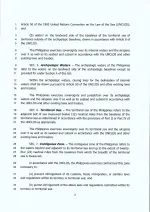
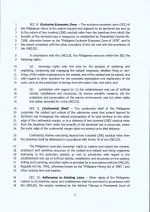
In fact, Section 4 of Administrative Order No. 27 (2012) of the PNoy administration that named the "West Philippine Sea" specifically mandated "the Department of Foreign Affairs (DFA) in consultation with NAMRIA and other appropriate government agencies, shall deposit, at the appropriate time, a copy of this Order enclosing the official map reflecting the West Philippines Sea with the Secretary-General of the United Nations and notify accordingly relevant international organizations, such as the International Hydrographic Organization and the United Nations Conference on the Standardization of Geographical Names."
The purpose of which is to rename that portion of the South China Sea as "West Philippine Sea." Nope, didn't happen. You must be aware of that now.
The "West Philippine Sea" existed in official administrative order since 2012 and through repeated conjuring of that term. But as far as international names of seas are concerned, it does not exist.
There is no "West Philippine Sea" separate from the South China Sea.
The Aquino Administration's invention of the West Philippine Sea created a FALSE impression among the minds of Filipinos that there are pockets of water that could be separated legally, geographically, and ecologically in the South China Sea. By renaming a huge portion of the South China Sea as the West Philippine Sea, the Aquino Administration created a notion that there are areas that can just be the South China Sea, while some of it can just be the West Philippine Sea.
That the West Philippine Sea refers only to the maritime areas the Philippines claims has no relevance at all in the Arbitration Tribunal because those maritime areas are in the South China Sea. It's after all called the "South China Sea Arbitration” by the Arbitral Tribunal in The Hague under then registry of the Permanent Court of Arbitration (PCA) and NOT the "West Philippine Sea Arbitration.”
If the arbitration decision is only about the "area of the maritime claims of the Philippines, then it should have just been named as “The West Philippine Sea Arbitration.” It wasn't.
The fictitious disentanglement of the "West Philippine Sea” from the “South China Sea” has a huge implication on how the Philippines would think about its rights and duties in its EEZ.
The South China Sea is a “semi-enclosed sea.” Under UNCLOS, semi-enclosed seas are governed by a special provision.
The EEZ rights, duties, and jurisdiction that are listed in Article 56 of the UNCLOS is a provision governing general matters. This applies in seas, in their general form.
Article 123 of UNCLOS is a provision that governs a specific form of sea — enclosed and semi-enclosed seas. And an important legal doctrine in interpreting law is 𝒍𝒆𝒙 𝒔𝒑𝒆𝒄𝒊𝒂𝒍𝒊𝒔 𝒅𝒆𝒓𝒐𝒈𝒂𝒕 𝒍𝒆𝒈𝒊 𝒈𝒆𝒏𝒆𝒓𝒂𝒍𝒊𝒔, which means that a specific rule prevails over a general rule.
Article 123 of UNCLOS obliges States bordering a semi-enclosed sea, such as the South China Sea, to "cooperate with each other in the exercise of their rights and in the performance of their duties under the Convention.”
Further, it obliges States to “endeavour… to coordinate the management, conservation, exploration, and exploitation of the living resources of the sea; to coordinate the implementation of their rights and duties with respect to the protection and preservation of the marine environment; to coordinate their scientific research policies and undertake where appropriate joint programmes of scientific research in the area…”
Thus, in an enclosed or semi-enclosed sea, Article 123 imposes a duty to cooperate with the other Coastal States in the exercise of its rights and duties. And that 𝒍𝒆𝒙 𝒔𝒑𝒆𝒄𝒊𝒂𝒍𝒊𝒔 imposes limits on the exercise of the rights and duties of the littoral states of the South China Sea.
In conclusion, while nations have the prerogative to name maritime areas within their jurisdiction for domestic purposes, international law requires a more nuanced and cooperative approach, particularly in semi-enclosed seas like the South China Sea. The historical context of claims, combined with specific legal requirements for semi-enclosed seas, suggests that unilateral actions - whether in naming or resource management - may not align with international legal obligations.
 PH
PH