Duterte Legacy

1000002869.webp


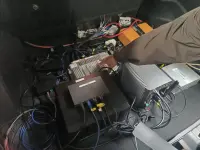
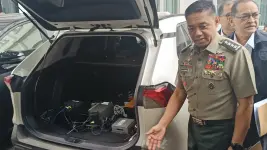
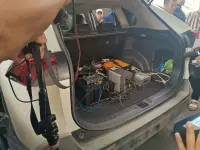
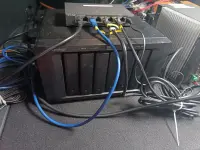
The vehicle and equipment used by the arrested alleged Chinese spies to scan the topography, pictures and 3D models of EDCA sites and military camps. According to the NBI, the vehicle was discovered through "intelligence sources."
1000002870.webp
1000002871.webp
1000002872.webp
 
Perspective of history in today's geopolitics and local politics that affect the Philippines and its people in terms of national security.

Noon pa man bago pa maging colonial ng Espanya ang Pilipinas o bago pa maging o tawagin Pilipinas ang Pilipinas ay maraming bansa na ang attracted sa Pilipinas at sa mga islang nasasakupan nito dahil sa istratehikong lokasyon nito sa tuntunin ng pangmilitar at pangnegosyo, pangkomersyo o pangangalakal.

Paki basa na lang at puntahan ang mga links ng website ng mga artikulo at post sa reddit thread para sa mga interesado. Pero kung sa tingin mo ay hassle and inconvenient then skip and ignore.

Ngunit mainam na bigyan pagkakataon kung ano ang perspektibo ng historia sa malawakang o pangkalahatang pulitika at lokal na politika na nakakaapekto ngayon sa bansang Pilipinas at sa mga mamamayan nito sa tuntunin ng pambansang seguridad.

Wars and Rumours of Wars: Japanese Plans to Invade the Philippines, 1593–1637
You do not have permission to view the full content of this post. Log in or register now.

Commonwealth Act No. 616, June 04, 1941,
AN ACT TO PUNISH ESPIONAGE AND OTHER OFFENSES AGAINST THE NATIONAL SECURITY.

You do not have permission to view the full content of this post. Log in or register now.

Japanese invasion on PH 77 years ago recalled, By Ben Cal, Published December 8, 2018, 4:18 pm
You do not have permission to view the full content of this post. Log in or register now.
Snippet from the article:
"Before the invasion, thousands of Japanese fifth columns or spies came to the Philippines as “traders” or even street sweepers. But when war broke out, these Japanese spies immediately wore their military uniforms to the great surprise of the Filipino people."​

Japanese spies in Pulang Araw, months before the 1941 invasion. How accurate?

Snippet from the post:
"It's overexaggerated.
There had been talks in the past about "Japanese spies" and surely not without reason to think some espionage occurred but really a lot of these were from post-war (since most of the allegations came AFTER the war) xenophobia and trauma.
There was only one known Japanese spy in the US who took pictures and sent military movements (he was a military attache to the Japanese consulate in Honolulu). Another well known spy was a British former military celebrity who infiltrated Hollywood (because California is where they had a lot of the aircraft developments and naval assets for the Pacific fleet at the time) either did the spying himself or ρáíd unknowing janitors, workers to take pics for him or get him data he needed which he passed on to the Japanese military.", commented by You do not have permission to view the full content of this post. Log in or register now.

Takeo Yoshikawa
You do not have permission to view the full content of this post. Log in or register now.
Snippet:
"A spy in Hawaii
Because of his expertise on the U.S. Navy, Yoshikawa was sent to Hawaii posing as a vice-consul named Tadashi Morimura (森村 正 Morimura Tadashi),
arriving on March 27, 1941, with Nagao Kita (喜多 長雄 Kita Nagao), the new Japanese Consul-General, aboard the liner Nitta Maru.
[1] He rented a second-story apartment that overlooked Pearl Harbor and would often wander around the island of Oahu, taking notes on fleet movements and security measures.
[3] He rented small airplanes at John Rodgers Airport and flew around, observing U.S. installations;
he also dove under the harbor using a hollow reed as a breathing device.
[4] He gathered information by taking the Navy's own harbor tugboat and listening to local gossip.
He worked closely with German Abwehr agent Bernard Kuehn,
[5] as well as another former Etajima graduate, Kokichi Seki (関 興吉 Seki Kō'kichi), an untrained spy who served as the consulate's treasurer."​

Frederick Rutland
You do not have permission to view the full content of this post. Log in or register now.
Snippet:
"Post-First World War and espionage
After he left the RAF, Rutland moved to Japan where he was employed helping the Imperial Japanese Navy learn about naval aviation.
In 1928, he moved back to the UK. A representative of the Japanese Navy met Rutland in London and recruited him to be an agent in Los Angeles.
[16] Rutland started a cover business in Los Angeles and another in Honolulu.
[17] Later intercepts of Japanese communications showed that Tokyo had ρáíd Rutland to set up a "small agency in Hawaii".
He had subsequently provided technical details which helped the Japanese design aircraft carriers,
[18] in the years before the attack on Pearl Harbor.
[19] This was discovered when Japan's cyphers were broken.[20]"​

The Asia-Pacific War in the Davao Settler Zone, December 1941, By MARIA CYNTHIA B. BARRIGA
You do not have permission to view the full content of this post. Log in or register now.
Snippet:
"ABSTRACT. As a Filipino-Japanese settler zone before and during the Asia-Pacific War,
Davao offers a case of how conflicts affect frontiers where people of warring countries
had coexisted. This paper presents a local history of the war in Davao, a province in
southern Philippines. Of the three and a half years of the Asia-Pacific War, it zooms in​
on the Japanese bombing and military invasion from 8–31 December 1941. Archival and​
oral sources in Filipino, Japanese, and English languages were examined to identify​
common exigencies and to search for patterns of how the residents responded to those.​
The paper finds that the proximity of Filipino and Japanese populations caused panic,
chaos, and a domino of violence. At the outbreak of the war on 8 December, Filipino
suspicions against the Japanese residents burst into open animosity, which led to
indiscriminate murders and the incarceration of the Japanese populace. On 20​
December, some of the Japanese residents released by the invading Japanese military used
their positions as mediators to seek vengeance against Filipinos who had abused them.
In this monthlong chaos, Filipino and Japanese residents survived through prewar
linkages that transcended their nationality. From 8–20 December, the Japanese
residents survived Filipino hostility and internment with the help from non-Japanese
family and friends outside the camps. From 20–31 December, many Filipinos were
cushioned from the Japanese invasion by Japanese family, friends, employers, and
employees. Besides nationality, kinship and prewar networks based on locality and​
livelihood influenced Davao residents’ experiences of the war. "​

World War II and the Japanese in the Prewar Philippines, By LYDIA N. YU-JOSE
You do not have permission to view the full content of this post. Log in or register now.
Snippet:
"This paper will describe Japanese economic expansion in the Philippines in the decades
before World War II and what happened to the Japanese during the war in the Philippines.
It will show the interweaving relationship between Japanese interests and Philippine
independence. To do this, it will first describe the role of the Philippines in Japan's
"nanshin-ron" (southward expansion) and pan-Asianism."​

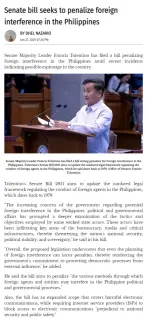
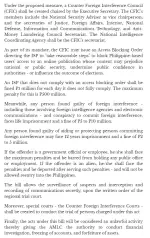
House bill penalizing espionage in times of peace filed, By Filane Mikee Cervantes, Published October 21, 2024, 10:20 pm
You do not have permission to view the full content of this post. Log in or register now.
Snippet from the article:
"Rodriguez highlighted the case involving dismissed Bamban, Tarlac Mayor Alice Guo alleged to be a Chinese spy, although she has denied the accusations.​
He further noted that the filing of the two bills was prompted by Defense Secretary Gilberto Teodoro Jr.'s call for amendments to the country’s espionage law.​
What is important now is that we penalize espionage during times of peace because the espionage law in the Philippines is only effective during times of war,” Teodoro said in a recent interview. “This is also a call to action to our lawmakers to amend the espionage law so that the government can properly respond and address this issue.”​
In his explanatory notes, Rodriguez underscored the need to review and update the outdated espionage laws to "address evolving global security threats, technological advancements, and the changing nature of espionage activities".​
The country faces numerous threats from foreign intelligence services, terrorist organizations, and cybercriminals,” Rodriguez said. “By enhancing penalties and updating definitions to align with contemporary security challenges, the legislation aims to bolster the Philippines’ ability to preserve and protect its national security interests.”​
The penalties outlined under HB 10983 include prison correctional, which ranges from six months and one day to six years, for any person who, “without authority, enters a warship, fort, or naval or military establishment or reservation to obtain any information, plans, photographs, or other data of a confidential nature relative to the defense of the Philippine archipelago.”"​

NSC asks Congress to strengthen anti-espionage law
Michael Punongbayan - The Philippine Star January 22, 2025 | 12:00am
You do not have permission to view the full content of this post. Log in or register now.
Snippet from the article:
"On Monday, the NBI announced that it had filed complaints of violation of Cybercrime Prevention Act of 2012 against the Chinese and the two Filipinos."​

...​

"Deng was identified as a graduate of the People’s Liberation Army (PLA) University of Science and Technology.
Low Profile​
AFP spokesperson Col. Francel Margareth Padilla said that being married to a Filipina and engaged in businesses in the country, Deng was able to maintain a low profile and blend easily among the locals.​
“The same businesses are also being used as fronts to receive large amounts of funds to enable his illicit activities,” Padilla said.​
“This is part of the challenges of the job and so that’s where we see the effectiveness of our intelligence operatives. For this particular individual, he was already here in the Philippines for a period of around over 10 years, married to a Filipina,” Padilla said.​
“So that would really pose a challenge but what’s important to note here is that our intelligence operatives were able to do their job accordingly,” she said at a press briefing yesterday.​
When arrested, Deng was in possession of spying equipment that he had allegedly been using while inside military and police camps and other vital installations.
The AFP declined to provide more details about Deng as investigation is ongoing.​
In December 2024 alone, Padilla said Deng traveled around the Luzon mainland gathering intelligence data on military installations, ports, energy and communication facilities and even malls."​
Republic Act No. 10175
AN ACT DEFINING CYBERCRIME, PROVIDING FOR THE PREVENTION, INVESTIGATION, SUPPRESSION AND THE IMPOSITION OF PENALTIES THEREFOR AND FOR OTHER PURPOSES

You do not have permission to view the full content of this post. Log in or register now.

United front (China)
You do not have permission to view the full content of this post. Log in or register now.

Chinese intelligence activity abroad
You do not have permission to view the full content of this post. Log in or register now.

Prosecution of Daniel Duggan
You do not have permission to view the full content of this post. Log in or register now.
Snippet:
"Daniel Edmund Duggan was a member of the United States Marine Corps where he became a fighter and instructor pilot during his service.
[4] He spent 13 years in the Marine Corps until 2002, when he left with the rank of major.
[4] From 2005 to 2014, he lived in Australia where he founded Top Gun Tasmania, a business that offered clients joy flights on military jet trainers.​
[4] During this time he also became an Australian citizen.[5]​
In 2014 he moved to Beijing where he worked as an aviation consultant, selling Top Gun Tasmania in the process.
[6][5] While he was in Beijing, Duggan shared an address with Chinese businessman Su Bin who, according to two sources interviewed by Reuters,
Duggan worked with.
[7] Both men worked for a South African flight school called the Test Flying Academy of South Africa (TFASA).​
[8] According to an aviation source, Bin arranged for Chinese Peoples Liberation Army pilots to undertake TFASA training courses while Duggan trained Chinese pilots for TFASA.
[8] The address that Duggan and Bin shared appeared on the U.S. Entity List in August 2014 and in 2016,​
Bin was jailed in the US for his role in a häçking case that involved the theft of US military aircraft designs.
[7][9][10] In 2016 Duggan renounced his U.S. citizenship, backdated to 2012, at the U.S. embassy in Beijing. [11]​
Since 2017 Duggan had been general manager of AVIBIZ Limited,​
a comprehensive consultancy company with a focus on the Chinese aviation industry until its dissolution in 2020.​
[5][6] Duggan continued to work in China prior to his return to and arrest in Australia.[12]"​

FROM POLICY TO STRATEGY: The Quest for a Real National Security Strategy in the Philippines
By ANANDA DEVI DOMINGO-ALMASE
You do not have permission to view the full content of this post. Log in or register now.

National Security Policy 2023-2028
You do not have permission to view the full content of this post. Log in or register now.
Snippet:
"The Philippines’ national security landscape continues to shift and transform,​
prompting us to constantly rethink, re-assess, and re-examine our strategies in​
securing our country’s survival, progress, and resilience. In the face of these​
complexities and developments, it is necessary for us to have a coherent and​
comprehensive plan that will effectively address emerging threats to our national​
security and fulfill our long-term development goals.", FERDINAND R. MARCOS JR., THE PRESIDENT OF THE PHILIPPINES, August 2023​
 
POV ng Taiwan news sa 5 More Chinese Spy Suspects Caught in the Philippines

You do not have permission to view the full content of this post. Log in or register now.
5 More Chinese Spy Suspects.webp


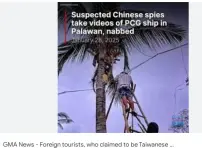
Suspected Chinese Spies Take Video of PCG Ship in Palawan.webp


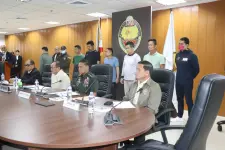
Chinese Spies caught in Palawan.webp

Suspected Chinese Spies caught in Palawan, Paula Valero, January 30, 2025
You do not have permission to view the full content of this post. Log in or register now.
Snippet:
"A local official said on Thursday that, among the five Chinese nationals that were arrested in Palawan and Manila for alleged espionage were posing as tourists.
Provincial Board Member Ryan Maminta said that the alleged spies set up CCTV cameras facing the sea in Palawan.
Yun po ang impormasyon na nakarating sa amin: na may mga aktibidad sila katulad ng pagkuha ng videos at hindi lang yun, paglalagay ng CCTV camera sa mga lugar. Tapos ang kanilang mga posing ay mga turista — hindi nga Chinese tourists — kundi Taiwanese tourist dito sa aming lalawigan,” he reported.​
One of the Chinese nationals was caught filming Philippine Coast Guard ships, according to the National Bureau of Investigation.
Assistant Director General Jonathan Malaya of the National Security Council stated that authorities are investigating whether the suspects have any connection to a Chinese software engineer recently arrested for allegedly spying on Philippine military and police camps.​
The Chinese engineer, Deng Yuanqing, along with his two Filipino drivers, were detained last week as part of counter-espionage operations that started last month, according to National Bureau of Investigation (NBI) chief Jaime Santiago during a press briefing.
He suspected that Deng was connected with a Chinese University that was controlled by the People’s Liberation Army and took part in a team that was sent to “conduct espionage in our teritory.”​
Jeremy Lotoc, the NBI’s cybercrime chief, stated that Deng had regularly visited “key infrastructure, including military camps, local government offices, power plants, police stations, and even shopping malls.”
They were basically collecting data and they have this remote application which transmits outside the country in real time data that they collected in our country,” Lotoc said."​

5 Suspected Chinese Nationals Involved in Espionage.webp

Government Urged: Beef Up Intel Versus China Spies, Marc Jayson Cayabyab, February 2, 2025
You do not have permission to view the full content of this post. Log in or register now.
Snippet:
"A senator commended the NBI for its successful operations against the suspected spies, but added that Philippine law enforcers should expand their intelligence network.​
The Philippines should brace for the worst and expect more intense espionage activities by Chinese spies amid an escalating conflict with China over the West Philippine Sea, Sen. Sherwin Gatchalian warned Saturday, Feb. 1.​
In an interview with radio dwIZ, Gatchalian said it was no longer surprising that Chinese sleeper agents were arrested by authorities at a time when the Philippines was upping the ante in asserting its sovereign rights in the South China Sea and defying the bullying and hostile acts of China Coast Guard vessels in the country’s territorial waters.
He echoed the concern of President Marcos, who said he was “very disturbed” about the reported arrests by the National Bureau of Investigation (NBI) of six suspected Chinese sleeper agents.​
Deng Yuanqing and his two Filipino cohorts were arrested on Jan. 17 in Makati in possession of alleged espionage equipment for mapping and transmitting data on military camps and infrastructure.
Deng’s accomplices – Cai Shaohuang, Wang Yong Yi, Wu Chin Ren, Wu Cheng Ting and Cheng Hai Tao – were arrested days later on charges of gathering information on the rotation and resupply missions of the Philippine Coast Guard (PCG) in Palawan, where they allegedly set up surveillance cameras and posed as tourists to map naval detachments and coast guard stations.
This is alarming. Chinese spies have been doing this in our country for quite some time, complete with equipment for their operations here. This is something we should expect. Let’s be prepared,” Gatchalian said.​
He commended the NBI for its successful operations against the suspected spies, but added that Philippine law enforcers should expand their intelligence network.
“I commend the NBI for catching the spies in the act, but we should widen further our intelligence capability. I really think there are more spies out there,” the senator said.​
The Senate uncovered extensive Chinese espionage, infiltration and propaganda activities during its investigation on the now banned Philippine offshore gaming operator (POGO) hubs, which served as fronts of syndicates for criminal operations, particularly human trafficking.
During the POGO hearings, National Intelligence Coordinating Agency (NICA) deputy director general Francisco Acedillo said the Chinese spy network has long been entrenched in the economic and political landscape of the Philippines.
The most high-profile official accused of being a spy is dismissed mayor Alice Guo, tagged as having links to the raided Bamban, Tarlac POGO hub and accused of being a communist spy by ******** tycoon and self-confessed agent She Zhijiang.
Acedillo said Guo is an “agent of influence” who used her position for the benefit of China.
Gatchalian, who was active in the Senate POGO investigations, said Chinese spies slipped past authorities when they pretended to work for POGOs, which proliferated during the previous administration.
“Now that POGOs are banned, the entry of spies can also be prevented, and foreign agents will find a more difficult time to get in and threaten our national security,” Gatchalian said.​
Bureau of Immigration (BI) Commissioner Joel Anthony Viado said the arrested Chinese spies have “regular immigration statuses in the Philippines.” He said this “added to the suspicion that they have embedded themselves in society.”
While he did not specifically identify the “foreign nationals” as Chinese, Viado said they were those recently arrested by the NBI and the Armed Forces of the Philippines.​
Viado said the BI would “work closely with the NBI to determine if there are individuals who assisted the suspects in their supposed îllégâl activities.”​
Should we confirm that there are individuals – whether Filipinos or foreign nationals – that hid or assisted these alleged spies, we will file cases against them for harboring îllégâl aliens, in violation of section 46 of the Philippine immigration act of 1940,” he said.
– With additional reports from Ghio Ong and Daphne Galvez"​
 
POV ng Taiwan news sa 5 More Chinese Spy Suspects Caught in the Philippines

You do not have permission to view the full content of this post. Log in or register now.
View attachment 3518057

View attachment 3518068


View attachment 3518080
Suspected Chinese Spies caught in Palawan, Paula Valero, January 30, 2025
You do not have permission to view the full content of this post. Log in or register now.
Snippet:
"A local official said on Thursday that, among the five Chinese nationals that were arrested in Palawan and Manila for alleged espionage were posing as tourists.
Provincial Board Member Ryan Maminta said that the alleged spies set up CCTV cameras facing the sea in Palawan.
Yun po ang impormasyon na nakarating sa amin: na may mga aktibidad sila katulad ng pagkuha ng videos at hindi lang yun, paglalagay ng CCTV camera sa mga lugar. Tapos ang kanilang mga posing ay mga turista — hindi nga Chinese tourists — kundi Taiwanese tourist dito sa aming lalawigan,” he reported.​
One of the Chinese nationals was caught filming Philippine Coast Guard ships, according to the National Bureau of Investigation.
Assistant Director General Jonathan Malaya of the National Security Council stated that authorities are investigating whether the suspects have any connection to a Chinese software engineer recently arrested for allegedly spying on Philippine military and police camps.​
The Chinese engineer, Deng Yuanqing, along with his two Filipino drivers, were detained last week as part of counter-espionage operations that started last month, according to National Bureau of Investigation (NBI) chief Jaime Santiago during a press briefing.
He suspected that Deng was connected with a Chinese University that was controlled by the People’s Liberation Army and took part in a team that was sent to “conduct espionage in our teritory.”​
Jeremy Lotoc, the NBI’s cybercrime chief, stated that Deng had regularly visited “key infrastructure, including military camps, local government offices, power plants, police stations, and even shopping malls.”
They were basically collecting data and they have this remote application which transmits outside the country in real time data that they collected in our country,” Lotoc said."​

View attachment 3518082
Government Urged: Beef Up Intel Versus China Spies, Marc Jayson Cayabyab, February 2, 2025
You do not have permission to view the full content of this post. Log in or register now.
Snippet:
"A senator commended the NBI for its successful operations against the suspected spies, but added that Philippine law enforcers should expand their intelligence network.​
The Philippines should brace for the worst and expect more intense espionage activities by Chinese spies amid an escalating conflict with China over the West Philippine Sea, Sen. Sherwin Gatchalian warned Saturday, Feb. 1.​
In an interview with radio dwIZ, Gatchalian said it was no longer surprising that Chinese sleeper agents were arrested by authorities at a time when the Philippines was upping the ante in asserting its sovereign rights in the South China Sea and defying the bullying and hostile acts of China Coast Guard vessels in the country’s territorial waters.
He echoed the concern of President Marcos, who said he was “very disturbed” about the reported arrests by the National Bureau of Investigation (NBI) of six suspected Chinese sleeper agents.​
Deng Yuanqing and his two Filipino cohorts were arrested on Jan. 17 in Makati in possession of alleged espionage equipment for mapping and transmitting data on military camps and infrastructure.
Deng’s accomplices – Cai Shaohuang, Wang Yong Yi, Wu Chin Ren, Wu Cheng Ting and Cheng Hai Tao – were arrested days later on charges of gathering information on the rotation and resupply missions of the Philippine Coast Guard (PCG) in Palawan, where they allegedly set up surveillance cameras and posed as tourists to map naval detachments and coast guard stations.
This is alarming. Chinese spies have been doing this in our country for quite some time, complete with equipment for their operations here. This is something we should expect. Let’s be prepared,” Gatchalian said.​
He commended the NBI for its successful operations against the suspected spies, but added that Philippine law enforcers should expand their intelligence network.
“I commend the NBI for catching the spies in the act, but we should widen further our intelligence capability. I really think there are more spies out there,” the senator said.​
The Senate uncovered extensive Chinese espionage, infiltration and propaganda activities during its investigation on the now banned Philippine offshore gaming operator (POGO) hubs, which served as fronts of syndicates for criminal operations, particularly human trafficking.
During the POGO hearings, National Intelligence Coordinating Agency (NICA) deputy director general Francisco Acedillo said the Chinese spy network has long been entrenched in the economic and political landscape of the Philippines.
The most high-profile official accused of being a spy is dismissed mayor Alice Guo, tagged as having links to the raided Bamban, Tarlac POGO hub and accused of being a communist spy by ******** tycoon and self-confessed agent She Zhijiang.
Acedillo said Guo is an “agent of influence” who used her position for the benefit of China.
Gatchalian, who was active in the Senate POGO investigations, said Chinese spies slipped past authorities when they pretended to work for POGOs, which proliferated during the previous administration.
“Now that POGOs are banned, the entry of spies can also be prevented, and foreign agents will find a more difficult time to get in and threaten our national security,” Gatchalian said.​
Bureau of Immigration (BI) Commissioner Joel Anthony Viado said the arrested Chinese spies have “regular immigration statuses in the Philippines.” He said this “added to the suspicion that they have embedded themselves in society.”
While he did not specifically identify the “foreign nationals” as Chinese, Viado said they were those recently arrested by the NBI and the Armed Forces of the Philippines.​
Viado said the BI would “work closely with the NBI to determine if there are individuals who assisted the suspects in their supposed îllégâl activities.”​
Should we confirm that there are individuals – whether Filipinos or foreign nationals – that hid or assisted these alleged spies, we will file cases against them for harboring îllégâl aliens, in violation of section 46 of the Philippine immigration act of 1940,” he said.​
– With additional reports from Ghio Ong and Daphne Galvez"​
puro lang suspected kawawa naman
 
Anong puro lang suspect , eh naaktohan nga na nagkakabit ng mga cctv sa isang resort na nakatapat sa pantalan ng philippine coast guard doon sa palawan?
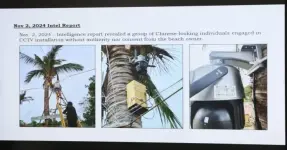
lol di naman na-aktuhan kundi they just saw the CCTVs and not the installation mismo at nakarating lang sa kanila, hindi first hand info kundi chismis from external sources
 
5 more Chinese ‘spies’ nabbed, By: Gillian Villanueva - Philippine Daily Inquirer / 05:38 AM January 31, 2025
You do not have permission to view the full content of this post. Log in or register now.
Snippet:
"MANILA, Philippines — The National Bureau of Investigation has arrested five more suspected Chinese spies who were allegedly monitoring Philippine Coast Guard (PCG) and Philippine Navy activities in Palawan, including the resupply of troops in the West Philippine Sea (WPS).
Based on the NBI’s surveillance and accounts of witnesses, NBI Director Jaime Santiago told a news conference on Thursday that the group had set up high-resolution solar-powered cameras pointed at the waters off Palawan where PCG ships must pass in going to and coming from the WPS.
That may be why, if you have noticed before our resupply ships can deliver food and supplies in the WPS, there are already [China Coast Guard] ships waiting for them,” Santiago said.​
Armed Forces of the Philippines chief Gen. Romeo Brawner Jr. said that based on the NBI’s record of the group’s activities, the rotation and resupply (Rore) missions may have been compromised as early as 2023.
Santiago and Brawner were referring to the Rore missions for troops at Ayungin (Second Thomas) Shoal west of Palawan, which the China Coast Guard had been blocking, sometimes violently, before Manila and Beijing reached an agreement last year to prevent future confrontations.
Working with Deng
At the press conference, the NBI presented the five suspected spies who were identified as Cai Shaohuang, 52; Wang Yong Yi, 52; Wu Jun Ren, 62; Wu Chengting, 38; and Chen Haitao, 36. They were arrested separately on Jan. 24 and Jan. 25 and are facing charges of violating Commonwealth Act No. 616, the 1941 antiespionage law, in relation to Republic Act No. 10175, or the Cybercrime Prevention Act of 2012.
The NBI said the five men had been working with Deng Yuanqing, 39, the alleged Chinese spy who was arrested on Jan. 17 in Makati City along with two Filipino cohorts.
Deng and the two Filipinos were caught operating a device that allegedly mapped critical infrastructures of the country, including military sites and power installations.
The NBI arrested Chen and Wu Chengting on Jan. 24 at Terminal 3 of Ninoy Aquino International Airport following their morning flight from Palawan.​
The NBI said it received an intelligence report in November 2024 that Chen and Wu had been taking drone shots of ports, and PCG and Navy ships in Palawan.
According to Santiago, the two men returned to Manila to meet up with Wang and Wu Jun Ren, who were arrested in Intramuros and Binondo, respectively, later on the same day. They were supposed to receive the surveillance data or intelligence report from Chen and Wu before they were arrested, he said.​
The following day, the NBI arrested Cai, who served as the group’s “field commander,” in Dumaguete City, Negros Oriental province, the NBI chief said.​
Monitored sites
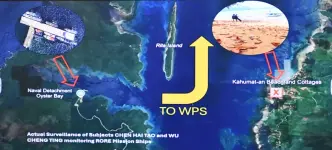
Among the areas in Palawan that were monitored by the suspects were a naval detachment at Oyster Bay in Puerto Princesa, where ships heading to the WPS sailed from, and at Kahumat-an Beach, which faces the waters where these vessels would be passing through.
Santiago said the group also monitored coast guard stations, the Antonio Bautista Air Base, the Del Pilar Class PS 16 naval base, and Navy dockyards.
According to NBI Cybercrime Division chief Jeremy Lotoc, the suspects were able to gather information by posing as “harmless members” of legitimate organizations, such as the Qiaoxing Volunteer Group of the Philippines and the Philippine China Association for the Promotion of Peace and Friendship Inc.
They would establish contact with individuals who have access to valuable information without revealing their real identity,” Lotoc said, adding that the suspects used multiple identification (ID) cards with different names.​
As members of these organizations, the suspects would then conduct activities, such as medical missions, sometimes with local politicians or government officials, that would allow them access to beaches and other strategic areas where they could set up surveillance cameras.
As early as 2023, this group was monitored in Kahamut-an Beach in Barangay Buenavista,” Lotoc said. “They tried to rent a portion of that beach and tried to install that kind of CCTV on that beach because, as you can see right in front of that area, that is the only place where ships can pass through.
Later in 2024, the group also tried to lease a portion of Sun Seas Beach Resort at Barangay Buliluyan, in Bataraza, Palawan, to install another CCTV camera without the owner’s consent. Lotoc said Barangay Buliluyan is within the vicinity of a site used under the Enhanced Defense Cooperation Agreement between the Philippines and the United States, and PCG vessels coming from WPS missions can also be monitored from the area.
Data collection’​
In other words, the group is undoubtedly engaged and continuously engaging in data collection and disclosure of that data to outsiders. Those data affect the national defense, definitely to the injury of the Philippines,” Lotoc said.​
Aside from Palawan, Lotoc said the suspects also operated from a high-rise cöndöminium in Metro Manila and had set up cameras powerful enough to monitor PCG ships entering and leaving Manila Bay.​
By monitoring these areas in Metro Manila and Palawan, the group can track the routes, even the personnel, in the Rore missions in the WPS, according to Brawner.
Well of course, they can see when Coast Guard ships leave and come back. So, they can monitor the number of Coast Guard ships that are in the West Philippine Sea at any one time. They can check the pattern,” he said.​
They can see when these ships enter Manila Bay, how many days it will stay. They are able to find out all the details of the resupply missions. And all of these details can be used for their planning purposes for whatever operations that they want to do in the future,” he said.​
According to Bureau of Immigration spokesperson Dana Sandoval, the five men have been staying in the Philippines before 2023 and had been traveling to China.
When we checked their records, we can say that they have embedded themselves in our society,” she said. “Some of them have been working here with a working visa, some of them have wives who are Filipinos. The earliest record we have on them was in 2002.”​
Santiago refuted claims by Deng’s Filipino wife, Noemi, that her husband was not a graduate of the People’s Liberation Army (PLA) University of Science and Technology (UST) in Nanjing, China, which the NBI earlier disclosed.
She insisted that he was only a road surveyor working for a company, which she was unable to identify, involved in the manufacturing of self-driving cars.
They say that Deng Yuanqing is just an ordinary surveyor working for a company that manufactures autonomous cars. What company is it? Why can’t they name the company?” Santiago said.​
‘Military grade’
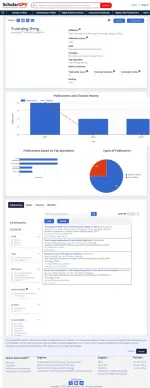
He cited an entry in the website ScholarGPS—You do not have permission to view the full content of this post. Log in or register now. purportedly identifies Deng as a graduate of PLA UST, specializing in “control engineering.”
He also objected to claims by Chinese-Filipino civic leader Teresita Ang See that the equipment seized from Deng was just a commercial device available online.​
Santiago said what could be bought from online shops such as Shopee and Lazada were commercial-grade devices.But what we got from them, specifically the Lidar, what we call Light Detection and Ranging … that was military-grade,” he said.​
The Chinese Embassy in Manila had protested against the spy tag on Deng and urged the government not to make “baseless” allegations. It has not yet issued any statement on the latest arrests."​

5 more Chinese ‘spies’ nabbed, BY GILLIAN N. VILLANUEVA, JANUARY 31, 2025
You do not have permission to view the full content of this post. Log in or register now.
20241102-Intel Report.webp


You do not have permission to view the full content of this post. Log in or register now.
scholargps.com_scholars_83391632866114_yuanqing-deng.webp


5 more Chinese spies arrested; Suspects used CCTVs, drones, By Pot Chavez, January 31, 2025, 12:25 am
You do not have permission to view the full content of this post. Log in or register now.
Snippet:
"Security officials said Thursday they arrested five more Chinese spies, following the detention of another Chinese national and two of his Filipino cohorts for espionage this month.
Two of the suspects were arrested at the NAIA Terminal 3, while the others were nabbed in Pasay City, Dumaguete City, and Intramuros, Manila.​
National Bureau of Investigation director Jaime Santiago told a news conference the men used a drone to document goings-on at a naval detachment, coast guard ships, an air base, a naval base, and a dockyard in Palawan province, the closest major landmass to the Spratlys.
The suspects also used advanced technologies such as Global Navigation Satellite System (GNSS) Real-time Kinematics (RTK).
This group, based on our surveillance confession of our witnesses, was monitoring Palawan. They placed a high-resolution solar-powered camera focusing on our seas where our ships are travelling to and from the West Philippine Sea,” Santiago said.​
Among the areas the group was monitoring were the Naval Detachment Oyster Bay, a Coast Guard Station, the Antonio Bautista Air Base, the Del Pilar Class PS-16 Naval Base, and the backyard of Philippine Navy, Santiago said.​
We consider them very dangerous to national security because of course, if this falls into other hands, this could be very dangerous for our personnel in the base and also those on board our ships,” Armed Forces chief Gen. Romeo Brawner added.​
Some of the arrested Chinese nationals posed as Taiwan tourists in Palawan, provincial board member Ryan Maminta told TeleRadyo Serbisyo.​
That’s the information we got – they took videos and set up CCTV cameras in the area. They posed as Taiwanese tourists in our province,” Maminta said.​
The NBI said the suspected spies posed as buyers of marine products in Barangay Buenavista in Puerto Princesa City.
The arrest came after authorities nabbed Chinese software engineer Deng Yuanqing and his Filipino associates Ronel Jojo Balundo Besa and Jayson Amado Fernandez for reportedly spying on military and police camps—allegations that were dismissed by the Chinese embassy in Manila.
NBI cybercrime unit chief Jeremy Lotoc said Thursday an unnamed “foreign national” was giving orders to Deng.
Some of the suspects have been living in the Philippines since 2002 and did not have any criminal records, Immigration bureau spokeswoman Dana Sandoval said.​
Beijing claims most of the strategic South China Sea despite an international ruling that its assertion has no legal basis.
The Chinese embassy in Manila did not immediately respond to requests for comment on the fresh arrests. With AFP"​

Actual surveillance of subjects monitoring RORE Mission Ships
snoops-in-palawan-chinese-spy-2.webp


Light Detection and Ranging (LiDAR) on top of the car
spy car lidar.webp


Report: Chinese lidar technology poses national security threat, Suzanne Smalley, December 3rd, 2024
You do not have permission to view the full content of this post. Log in or register now.
Snippet:
"A new report from a prominent think tank rings alarm bells over China’s plans to use advanced remote sensing technology as a means of breaching networks and infiltrating critical infrastructure to spy on Americans and the U.S. military.
Known as light detection and ranging (lidar), the technology harnesses laser pulses to build precise, three-dimensional maps of environments it is deployed in.
By measuring how long it takes the pulses to travel back to sensors, the technology can create exceptionally detailed and accurate spatial data which outstrips what has historically been available, according to a report from the Foundation for Defense of Democracies, a nonprofit research organization.
Lidar, now used globally in a wide variety of civilian and military use cases, “stands at the center of Beijing’s bid for technological superiority,” the report says, warning that Chinese companies are taking control of the global lidar market, with Chinese-made sensors now used widely in the U.S. as “essential nodes” within public safety, transportation and utility systems.
China-produced lidar’s presence in the U.S. production chain creates a clear opportunity for espionage and sabotage by “potentially enabling Beijing to access sensitive U.S. data or disrupt critical operations,” according to the report, which likens the potential for lidar abuse to the ways in which China has exploited Huawei’s communications technology.​
Congress has been paying attention.​
In May, Rep. Elissa Slotkin (D-MI) introduced legislation which would bar the Department of Defense from buying Chinese-made lidar.​
In September, the chairman of the House China Select Committee announced proposed legislation banning the Department of Transportation from buying equipment that contains China-made lidar technology.​
The U.S. must increase lidar production domestically and nurture efforts to do so in allied countries, according to the report. It also should enforce tough cybersecurity standards for lidar technology to ensure its use in civilian and military networks is secure, the report said.​
Calling lidar a “critical” technology, the report offers a silver lining. Many American and other Western firms are capable of manufacturing the technology, allowing the U.S. to walk away from China-produced options.​
But the U.S. must act now, the report authors contend.​
LiDAR’s role in tomorrow’s autonomous systems makes it a strategic vulnerability today,” the report says.​
LiDAR isn’t just about mapping roads — it’s about mapping vulnerabilities… Combined with China’s playbook from Volt Typhoon, the risks of sabotage and operational control are chillingly clear,” the report adds, referring to a Beijing-linked häçking operation into critical U.S. systems.​
The threat is especially serious for the automotive sector, the report says, citing a recent Estonian Foreign Intelligence Service bulletin asserting that a Chinese lidar manufacturer planned to transmit data culled from Estonian cars back to China.
An unnamed Chinese company was reportedly developing lidar systems for self-driving cars in Estonia that would “scan the local environment and transmit this information to Beijing,” the report says.​
Although data collected for autonomous driving is typically deleted if non-essential, this Chinese firm intended to transfer all environmental data to a China-based database, raising concerns about the potential exploitation of this technology for Chinese intelligence purposes, such as mapping foreign infrastructure, identifying sensitive locations, or tracking patterns of movement.”"​
 
5 more Chinese ‘spies’ nabbed, By: Gillian Villanueva - Philippine Daily Inquirer / 05:38 AM January 31, 2025
You do not have permission to view the full content of this post. Log in or register now.
Snippet:
"MANILA, Philippines — The National Bureau of Investigation has arrested five more suspected Chinese spies who were allegedly monitoring Philippine Coast Guard (PCG) and Philippine Navy activities in Palawan, including the resupply of troops in the West Philippine Sea (WPS).
Based on the NBI’s surveillance and accounts of witnesses, NBI Director Jaime Santiago told a news conference on Thursday that the group had set up high-resolution solar-powered cameras pointed at the waters off Palawan where PCG ships must pass in going to and coming from the WPS.
That may be why, if you have noticed before our resupply ships can deliver food and supplies in the WPS, there are already [China Coast Guard] ships waiting for them,” Santiago said.​
Armed Forces of the Philippines chief Gen. Romeo Brawner Jr. said that based on the NBI’s record of the group’s activities, the rotation and resupply (Rore) missions may have been compromised as early as 2023.
Santiago and Brawner were referring to the Rore missions for troops at Ayungin (Second Thomas) Shoal west of Palawan, which the China Coast Guard had been blocking, sometimes violently, before Manila and Beijing reached an agreement last year to prevent future confrontations.
Working with Deng
At the press conference, the NBI presented the five suspected spies who were identified as Cai Shaohuang, 52; Wang Yong Yi, 52; Wu Jun Ren, 62; Wu Chengting, 38; and Chen Haitao, 36. They were arrested separately on Jan. 24 and Jan. 25 and are facing charges of violating Commonwealth Act No. 616, the 1941 antiespionage law, in relation to Republic Act No. 10175, or the Cybercrime Prevention Act of 2012.
The NBI said the five men had been working with Deng Yuanqing, 39, the alleged Chinese spy who was arrested on Jan. 17 in Makati City along with two Filipino cohorts.
Deng and the two Filipinos were caught operating a device that allegedly mapped critical infrastructures of the country, including military sites and power installations.
The NBI arrested Chen and Wu Chengting on Jan. 24 at Terminal 3 of Ninoy Aquino International Airport following their morning flight from Palawan.​
The NBI said it received an intelligence report in November 2024 that Chen and Wu had been taking drone shots of ports, and PCG and Navy ships in Palawan.
According to Santiago, the two men returned to Manila to meet up with Wang and Wu Jun Ren, who were arrested in Intramuros and Binondo, respectively, later on the same day. They were supposed to receive the surveillance data or intelligence report from Chen and Wu before they were arrested, he said.​
The following day, the NBI arrested Cai, who served as the group’s “field commander,” in Dumaguete City, Negros Oriental province, the NBI chief said.​
Monitored sites
Among the areas in Palawan that were monitored by the suspects were a naval detachment at Oyster Bay in Puerto Princesa, where ships heading to the WPS sailed from, and at Kahumat-an Beach, which faces the waters where these vessels would be passing through.
Santiago said the group also monitored coast guard stations, the Antonio Bautista Air Base, the Del Pilar Class PS 16 naval base, and Navy dockyards.
According to NBI Cybercrime Division chief Jeremy Lotoc, the suspects were able to gather information by posing as “harmless members” of legitimate organizations, such as the Qiaoxing Volunteer Group of the Philippines and the Philippine China Association for the Promotion of Peace and Friendship Inc.
They would establish contact with individuals who have access to valuable information without revealing their real identity,” Lotoc said, adding that the suspects used multiple identification (ID) cards with different names.​
As members of these organizations, the suspects would then conduct activities, such as medical missions, sometimes with local politicians or government officials, that would allow them access to beaches and other strategic areas where they could set up surveillance cameras.
As early as 2023, this group was monitored in Kahamut-an Beach in Barangay Buenavista,” Lotoc said. “They tried to rent a portion of that beach and tried to install that kind of CCTV on that beach because, as you can see right in front of that area, that is the only place where ships can pass through.
Later in 2024, the group also tried to lease a portion of Sun Seas Beach Resort at Barangay Buliluyan, in Bataraza, Palawan, to install another CCTV camera without the owner’s consent. Lotoc said Barangay Buliluyan is within the vicinity of a site used under the Enhanced Defense Cooperation Agreement between the Philippines and the United States, and PCG vessels coming from WPS missions can also be monitored from the area.
Data collection’​
In other words, the group is undoubtedly engaged and continuously engaging in data collection and disclosure of that data to outsiders. Those data affect the national defense, definitely to the injury of the Philippines,” Lotoc said.​
Aside from Palawan, Lotoc said the suspects also operated from a high-rise cöndöminium in Metro Manila and had set up cameras powerful enough to monitor PCG ships entering and leaving Manila Bay.​
By monitoring these areas in Metro Manila and Palawan, the group can track the routes, even the personnel, in the Rore missions in the WPS, according to Brawner.
Well of course, they can see when Coast Guard ships leave and come back. So, they can monitor the number of Coast Guard ships that are in the West Philippine Sea at any one time. They can check the pattern,” he said.​
They can see when these ships enter Manila Bay, how many days it will stay. They are able to find out all the details of the resupply missions. And all of these details can be used for their planning purposes for whatever operations that they want to do in the future,” he said.​
According to Bureau of Immigration spokesperson Dana Sandoval, the five men have been staying in the Philippines before 2023 and had been traveling to China.
When we checked their records, we can say that they have embedded themselves in our society,” she said. “Some of them have been working here with a working visa, some of them have wives who are Filipinos. The earliest record we have on them was in 2002.”​
Santiago refuted claims by Deng’s Filipino wife, Noemi, that her husband was not a graduate of the People’s Liberation Army (PLA) University of Science and Technology (UST) in Nanjing, China, which the NBI earlier disclosed.
She insisted that he was only a road surveyor working for a company, which she was unable to identify, involved in the manufacturing of self-driving cars.
They say that Deng Yuanqing is just an ordinary surveyor working for a company that manufactures autonomous cars. What company is it? Why can’t they name the company?” Santiago said.​
‘Military grade’
He cited an entry in the website ScholarGPS—You do not have permission to view the full content of this post. Log in or register now. purportedly identifies Deng as a graduate of PLA UST, specializing in “control engineering.”
He also objected to claims by Chinese-Filipino civic leader Teresita Ang See that the equipment seized from Deng was just a commercial device available online.​
Santiago said what could be bought from online shops such as Shopee and Lazada were commercial-grade devices.But what we got from them, specifically the Lidar, what we call Light Detection and Ranging … that was military-grade,” he said.​
The Chinese Embassy in Manila had protested against the spy tag on Deng and urged the government not to make “baseless” allegations. It has not yet issued any statement on the latest arrests."​

5 more Chinese ‘spies’ nabbed, BY GILLIAN N. VILLANUEVA, JANUARY 31, 2025
You do not have permission to view the full content of this post. Log in or register now.
View attachment 3532653

You do not have permission to view the full content of this post. Log in or register now.
View attachment 3532610


5 more Chinese spies arrested; Suspects used CCTVs, drones, By Pot Chavez, January 31, 2025, 12:25 am
You do not have permission to view the full content of this post. Log in or register now.
Snippet:
"Security officials said Thursday they arrested five more Chinese spies, following the detention of another Chinese national and two of his Filipino cohorts for espionage this month.
Two of the suspects were arrested at the NAIA Terminal 3, while the others were nabbed in Pasay City, Dumaguete City, and Intramuros, Manila.​
National Bureau of Investigation director Jaime Santiago told a news conference the men used a drone to document goings-on at a naval detachment, coast guard ships, an air base, a naval base, and a dockyard in Palawan province, the closest major landmass to the Spratlys.
The suspects also used advanced technologies such as Global Navigation Satellite System (GNSS) Real-time Kinematics (RTK).
This group, based on our surveillance confession of our witnesses, was monitoring Palawan. They placed a high-resolution solar-powered camera focusing on our seas where our ships are travelling to and from the West Philippine Sea,” Santiago said.​
Among the areas the group was monitoring were the Naval Detachment Oyster Bay, a Coast Guard Station, the Antonio Bautista Air Base, the Del Pilar Class PS-16 Naval Base, and the backyard of Philippine Navy, Santiago said.​
We consider them very dangerous to national security because of course, if this falls into other hands, this could be very dangerous for our personnel in the base and also those on board our ships,” Armed Forces chief Gen. Romeo Brawner added.​
Some of the arrested Chinese nationals posed as Taiwan tourists in Palawan, provincial board member Ryan Maminta told TeleRadyo Serbisyo.​
That’s the information we got – they took videos and set up CCTV cameras in the area. They posed as Taiwanese tourists in our province,” Maminta said.​
The NBI said the suspected spies posed as buyers of marine products in Barangay Buenavista in Puerto Princesa City.
The arrest came after authorities nabbed Chinese software engineer Deng Yuanqing and his Filipino associates Ronel Jojo Balundo Besa and Jayson Amado Fernandez for reportedly spying on military and police camps—allegations that were dismissed by the Chinese embassy in Manila.
NBI cybercrime unit chief Jeremy Lotoc said Thursday an unnamed “foreign national” was giving orders to Deng.
Some of the suspects have been living in the Philippines since 2002 and did not have any criminal records, Immigration bureau spokeswoman Dana Sandoval said.​
Beijing claims most of the strategic South China Sea despite an international ruling that its assertion has no legal basis.
The Chinese embassy in Manila did not immediately respond to requests for comment on the fresh arrests. With AFP"​

Actual surveillance of subjects monitoring RORE Mission Ships
View attachment 3532636


Light Detection and Ranging (LiDAR) on top of the car
View attachment 3532662

Report: Chinese lidar technology poses national security threat, Suzanne Smalley, December 3rd, 2024
You do not have permission to view the full content of this post. Log in or register now.
Snippet:
"A new report from a prominent think tank rings alarm bells over China’s plans to use advanced remote sensing technology as a means of breaching networks and infiltrating critical infrastructure to spy on Americans and the U.S. military.
Known as light detection and ranging (lidar), the technology harnesses laser pulses to build precise, three-dimensional maps of environments it is deployed in.
By measuring how long it takes the pulses to travel back to sensors, the technology can create exceptionally detailed and accurate spatial data which outstrips what has historically been available, according to a report from the Foundation for Defense of Democracies, a nonprofit research organization.
Lidar, now used globally in a wide variety of civilian and military use cases, “stands at the center of Beijing’s bid for technological superiority,” the report says, warning that Chinese companies are taking control of the global lidar market, with Chinese-made sensors now used widely in the U.S. as “essential nodes” within public safety, transportation and utility systems.
China-produced lidar’s presence in the U.S. production chain creates a clear opportunity for espionage and sabotage by “potentially enabling Beijing to access sensitive U.S. data or disrupt critical operations,” according to the report, which likens the potential for lidar abuse to the ways in which China has exploited Huawei’s communications technology.​
Congress has been paying attention.​
In May, Rep. Elissa Slotkin (D-MI) introduced legislation which would bar the Department of Defense from buying Chinese-made lidar.​
In September, the chairman of the House China Select Committee announced proposed legislation banning the Department of Transportation from buying equipment that contains China-made lidar technology.​
The U.S. must increase lidar production domestically and nurture efforts to do so in allied countries, according to the report. It also should enforce tough cybersecurity standards for lidar technology to ensure its use in civilian and military networks is secure, the report said.​
Calling lidar a “critical” technology, the report offers a silver lining. Many American and other Western firms are capable of manufacturing the technology, allowing the U.S. to walk away from China-produced options.​
But the U.S. must act now, the report authors contend.​
LiDAR’s role in tomorrow’s autonomous systems makes it a strategic vulnerability today,” the report says.​
LiDAR isn’t just about mapping roads — it’s about mapping vulnerabilities… Combined with China’s playbook from Volt Typhoon, the risks of sabotage and operational control are chillingly clear,” the report adds, referring to a Beijing-linked häçking operation into critical U.S. systems.​
The threat is especially serious for the automotive sector, the report says, citing a recent Estonian Foreign Intelligence Service bulletin asserting that a Chinese lidar manufacturer planned to transmit data culled from Estonian cars back to China.
An unnamed Chinese company was reportedly developing lidar systems for self-driving cars in Estonia that would “scan the local environment and transmit this information to Beijing,” the report says.​
Although data collected for autonomous driving is typically deleted if non-essential, this Chinese firm intended to transfer all environmental data to a China-based database, raising concerns about the potential exploitation of this technology for Chinese intelligence purposes, such as mapping foreign infrastructure, identifying sensitive locations, or tracking patterns of movement.”"​

natawa ako sa Chinese-looking individuals dun sa pictures sabi ng report haha kawawa talaga kapag Chinese-looking gagawan ka ng kaso
 

Similar threads

About this Thread

  • 31
    Replies
  • 1K
    Views
  • 8
    Participants
Last reply from:
Well1AmNichtDiePerson

Trending Topics

Online now

Members online
1,133
Guests online
1,022
Total visitors
2,155

Forum statistics

Threads
2,273,798
Posts
28,951,770
Members
1,234,962
Latest member
sunlove123
Back
Top