Good Morning News.

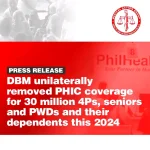
PRESS RELEASE

DBM unilaterally removed PHIC coverage for 30 million 4Ps, seniors and PWDs and their dependents this 2024

Medical Action Group co-chair and UHC advocate Dr. Juan A. Perez III denounced the action of DBM to reduce indirect contributors in PHIC this year to 10.626. During budget deliberations today PHIC’s request to fund the premiums of 25.2 million indirect contributors was reduced to 10.626 million by DBM during its technical budget hearings last year. This has resulted to 14 million NHTS, seniors, PWDs have lost their PHIC membership because government will no longer pay their premiums. In 2022 PHIC covered 39million indirect members and dependents.

“DBM has no power to reduce membership in PHIC. RA 10606 in Sec 29 authorized the payment of these premiums through the GAA. In 2022 alone 5.9 million claims were made by indirect members or 15% of 39 million indirect members and beneficiaries. That will leave 30 million Filipinos without health insurance,” Dr. Perez asserted.

“SEC. 29. Payment for Indigent Contributions. – Premium contributions for indigent members as identified by the DSWD through a means test or any other appropriate statistical method shall be fully subsidized by the national government. The amount necessary shall be included in the appropriations for the DOH under the annual General Appropriations Act.” (RA 10606, 2011)

“Public health statistics show that up to 20 percent of the population need health services in a year and five percent need hospitalization. This means that 6 million of the 30 million deprived of health coverage will have to turn to local health services and pay for the services out of pocket. Since LGUs only cover 10% of health care, that leaves the poor, elderly and PWDs with 90% out of pocket costs,” Dr. Perez continued.

RA 10606 requires premium payments to be updated before availing of benefits:

SEC. 12. Entitlement to Benefits. – A member whose premium contributions for at least three (3) months have been ρáíd within six (6) months prior to the first day of availment, including those of the dependents, shall be entitled to the benefits of the Program: Provided, That such member can show that contributions have been made with sufficient regularity: Provided, further, That the member is not currently subject to legal penalties as provided for in Section 44 of this Act.

This means that PHIC will be not able to pay the benefit claims of up to 30 million members and dependents this year, based on projected membership.

Medical Action Group and UHC advocates have called for a stop to anti-poor policies by Congress and the Executive that will undermine the full and strict implementation of the UHC law.#
1000459381.webp
 
nag create sila ng artificial deficit within the PhilHealth para makapag funnel ng extra money papuntang ayuda
As always basta government agencies. Bagal ng galaw pero mabilis sa nakaw.

FAKE NEWS ALERT

DBM PRESS STATEMENT
6 September 2024

On the malicious, misleading, and misguided information peddled by Medical Action Group on social media


The Department of Budget and Management (DBM) wishes to correct the false, misleading, and malicious statement issued by a certain Medical Action Group.

We strongly condemn the move of the said group to instill fear and cause unnecessary alarm to PhilHealth contributors by posting unverified information through its social media platform.

In light of this, allow us to clarify and answer its false claims point by point:

1. It is not true that the DBM "unilaterally removed" Philippine Health Insurance Corporation (PHIC) coverage for 30 million 4Ps members, seniors, and PWDs and their dependents this year.

The DBM can neither unilaterally remove PHIC coverage, nor reduce the number of its members, as it only follows what was provided in the approved FY 2024 General Appropriations Act (GAA).

It may be noted that in the FY 2024 National Expenditure Program (NEP), which the Executive (through the DBM) submitted to Congress, the PHIC has an allocation of P101.5 billion, of which P80.283 billion is for the National Health Insurance Program (NHIP), covering the annual premiums of 21,161,308 indirect contributors (exclusive of PAMANA beneficiaries).

We would like to emphasize that the DBM recommended the coverage of 21.1 million beneficiaries and it was Congress, in the exercise of its power of the purse, that deemed it necessary to reduce the recommended budget of PHIC in the FY 2024 GAA to P61.5 billion, of which P40.283 billion is for the NHIP.

Hence, the revised number of target beneficiaries of 10,626,874 (exclusive of PAMANA) came from the PHIC itself, not from DBM, given their reduced budget level in the FY 2024 GAA.

Therefore, the group’s claim that the DBM unilaterally reduced the number of PHIC beneficiaries is completely false, baseless and misleading. Such unfounded claims not only undermine the integrity of public discourse but also pose a significant threat to informed decision-making among citizens.

2. In the same post, the Medical Action Group inaccurately said, “DBM has no power to reduce membership in PHIC. RA 10606 in Sec 29 authorized the payment of these premiums through the GAA. In 2022 alone 5.9 million claims were made by indirect members or 15% of 39 million indirect members and beneficiaries. That will leave 30 million Filipinos without health insurance.”

This allegation is without merit since the Universal Health Care Act mandates the health insurance coverage of ALL FILIPINOS. Thus, the PhilHealth is likewise mandated to cover all Filipinos in its health insurance program, whether they are direct or indirect contributors.

The national government not only provides premium subsidy for indirect contributors but it also provides subsidy for those that are financially incapable to pay for health insurance premiums through the provision of subsidy for Point-of-Service patients.

To reiterate, the DBM is not reducing membership, it merely follows and executes the FY 2024 GAA. Further, Republic Act No. 10606 does not identify the specific number of beneficiaries which is subject to two conditions: 1) those identified by DSWD and 2) those included in the appropriations under the annual GAA.

To note further, the said statement is plainly illogical. If only 5.9 million claims were made from the 39 million indirect members, then it does not mean 30 million Filipinos will be left without health insurance.

3. “Public health statistics show that up to 20 percent of the population need health services in a year and five percent need hospitalization. This means that 6 million of the 30 million deprived of health coverage will have to turn to local health services and pay for the services out of pocket. Since LGUs only cover 10% of health care, that leaves the poor, elderly and PWDs with 90% out of pocket costs,” the group continued.

This is another INACCURATE claim. As the existing PHIC policy stands, Philhealth coverage does not mean 100% coverage of expenses and there are cases where there are out-of-pocket expenses. Even without a premium, indirect contributors may still be covered through the Point of Service allocation which is provided in the FY 2024 GAA.

4. "This means that PHIC will be not able to pay the benefit claims of up to 30 million members and dependents this year, based on projected membership," it added.

This has no basis in fact. The Philhealth can very well pay the benefit claims of its members as it is the corporation's obligation to do so as it has over P500 billion in investible funds that PHIC can utilize to support universal health care.

In fact, in its recent budget hearing held on 4 September 2024, PhilHealth President and CEO Emmanuel Ledesma committed to increase the benefits by up to 50% within the year. This just goes to show that PhilHealth can still very well afford to improve the benefits of its members.

Remember that what the government provides is the subsidy for the insurance premiums of indirect contributors and since they are already covered by this health insurance, it is now incumbent upon the Philhealth as the insurer to pay the valid claims of its members.

It must be emphasized that insurance premiums and benefit claims are two different things. One is a payment for the coverage of an event that is to happen in the future while the other is the payment for when the event occurs. Having said that, the national government's role is to provide the subsidy for the insurance premium, while the Philhealth's obligation is to pay the benefit claims of its members.

Please note that the DBM is now consulting with its legal team for possible filing of legal actions against this group for purveying malicious and misleading information to the public. This kind of dissemination of fake news exploits fears and anxieties, fostering mistrust between the government and the Filipino people.

We are also calling upon all individuals, including social media users to critically evaluate the sources of information they encounter and to reject irresponsible reporting that characterizes these false narratives.

Coming from USEC HOPE LIBIRAN...
But nalilito ako. So sino may kasalanan?PHIC?o Congress?
 
As always basta government agencies. Bagal ng galaw pero mabilis sa nakaw.

FAKE NEWS ALERT

DBM PRESS STATEMENT
6 September 2024

On the malicious, misleading, and misguided information peddled by Medical Action Group on social media


The Department of Budget and Management (DBM) wishes to correct the false, misleading, and malicious statement issued by a certain Medical Action Group.

We strongly condemn the move of the said group to instill fear and cause unnecessary alarm to PhilHealth contributors by posting unverified information through its social media platform.

In light of this, allow us to clarify and answer its false claims point by point:

1. It is not true that the DBM "unilaterally removed" Philippine Health Insurance Corporation (PHIC) coverage for 30 million 4Ps members, seniors, and PWDs and their dependents this year.

The DBM can neither unilaterally remove PHIC coverage, nor reduce the number of its members, as it only follows what was provided in the approved FY 2024 General Appropriations Act (GAA).

It may be noted that in the FY 2024 National Expenditure Program (NEP), which the Executive (through the DBM) submitted to Congress, the PHIC has an allocation of P101.5 billion, of which P80.283 billion is for the National Health Insurance Program (NHIP), covering the annual premiums of 21,161,308 indirect contributors (exclusive of PAMANA beneficiaries).

We would like to emphasize that the DBM recommended the coverage of 21.1 million beneficiaries and it was Congress, in the exercise of its power of the purse, that deemed it necessary to reduce the recommended budget of PHIC in the FY 2024 GAA to P61.5 billion, of which P40.283 billion is for the NHIP.

Hence, the revised number of target beneficiaries of 10,626,874 (exclusive of PAMANA) came from the PHIC itself, not from DBM, given their reduced budget level in the FY 2024 GAA.

Therefore, the group’s claim that the DBM unilaterally reduced the number of PHIC beneficiaries is completely false, baseless and misleading. Such unfounded claims not only undermine the integrity of public discourse but also pose a significant threat to informed decision-making among citizens.

2. In the same post, the Medical Action Group inaccurately said, “DBM has no power to reduce membership in PHIC. RA 10606 in Sec 29 authorized the payment of these premiums through the GAA. In 2022 alone 5.9 million claims were made by indirect members or 15% of 39 million indirect members and beneficiaries. That will leave 30 million Filipinos without health insurance.”

This allegation is without merit since the Universal Health Care Act mandates the health insurance coverage of ALL FILIPINOS. Thus, the PhilHealth is likewise mandated to cover all Filipinos in its health insurance program, whether they are direct or indirect contributors.

The national government not only provides ρrémíùm subsidy for indirect contributors but it also provides subsidy for those that are financially incapable to pay for health insurance premiums through the provision of subsidy for Point-of-Service patients.

To reiterate, the DBM is not reducing membership, it merely follows and executes the FY 2024 GAA. Further, Republic Act No. 10606 does not identify the specific number of beneficiaries which is subject to two conditions: 1) those identified by DSWD and 2) those included in the appropriations under the annual GAA.

To note further, the said statement is plainly illogical. If only 5.9 million claims were made from the 39 million indirect members, then it does not mean 30 million Filipinos will be left without health insurance.

3. “Public health statistics show that up to 20 percent of the population need health services in a year and five percent need hospitalization. This means that 6 million of the 30 million deprived of health coverage will have to turn to local health services and pay for the services out of pocket. Since LGUs only cover 10% of health care, that leaves the poor, elderly and PWDs with 90% out of pocket costs,” the group continued.

This is another INACCURATE claim. As the existing PHIC policy stands, Philhealth coverage does not mean 100% coverage of expenses and there are cases where there are out-of-pocket expenses. Even without a ρrémíùm, indirect contributors may still be covered through the Point of Service allocation which is provided in the FY 2024 GAA.

4. "This means that PHIC will be not able to pay the benefit claims of up to 30 million members and dependents this year, based on projected membership," it added.

This has no basis in fact. The Philhealth can very well pay the benefit claims of its members as it is the corporation's obligation to do so as it has over P500 billion in investible funds that PHIC can utilize to support universal health care.

In fact, in its recent budget hearing held on 4 September 2024, PhilHealth President and CEO Emmanuel Ledesma committed to increase the benefits by up to 50% within the year. This just goes to show that PhilHealth can still very well afford to improve the benefits of its members.

Remember that what the government provides is the subsidy for the insurance premiums of indirect contributors and since they are already covered by this health insurance, it is now incumbent upon the Philhealth as the insurer to pay the valid claims of its members.

It must be emphasized that insurance premiums and benefit claims are two different things. One is a payment for the coverage of an event that is to happen in the future while the other is the payment for when the event occurs. Having said that, the national government's role is to provide the subsidy for the insurance ρrémíùm, while the Philhealth's obligation is to pay the benefit claims of its members.

Please note that the DBM is now consulting with its legal team for possible filing of legal actions against this group for purveying malicious and misleading information to the public. This kind of dissemination of fake news exploits fears and anxieties, fostering mistrust between the government and the Filipino people.

We are also calling upon all individuals, including social media users to critically evaluate the sources of information they encounter and to reject irresponsible reporting that characterizes these false narratives.

Coming from USEC HOPE LIBIRAN...
But nalilito ako. So sino may kasalanan?PHIC?o Congress?
fake news daw boss? hehe
 

Similar threads

About this Thread

  • 5
    Replies
  • 749
    Views
  • 2
    Participants
Last reply from:
plhbg1

Online now

Members online
1,127
Guests online
2,659
Total visitors
3,786

Forum statistics

Threads
2,278,261
Posts
28,981,998
Members
1,228,291
Latest member
shadowofthebat
Back
Top