 PH
PH𝐓𝐇𝐄 𝐏𝐇𝐈𝐋𝐈𝐏𝐏𝐈𝐍𝐄 𝐂𝐎𝐍𝐔𝐍𝐃𝐑𝐔𝐌:
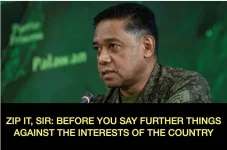
Philippine authorities are now at a lost on how to make sense of the recent confrontation between the Chinese coast guards and Philippine Navy. Is it an armed attack? Is it “piracy” as General Romeo Brawner Jr. said? Definitions matter. Your sentiments on social media aren’t good starting points. A deeper understanding of international law and practice in activating defense treaties are important.
Let’s start with the interesting angle of General Romeo Brawner Jr, characterising the incident as “piracy.” On its face, this is a smart political move. States have universally considered “pirates” as “hostis humanis generis” (enemy of mankind). As a political move, General Brawner’s characterisation of the incident as piracy has the intention of characterising the Chinese Coast Guards as pirates, he intends to portray them as enemies of mankind. Smart tactic, but it will not fly.
UNCLOS has an exact definition of piracy. Article 101(a) provides the essential condition when any violence or detention or acts of depredation are considered piracy:“committed for private ends by the crew or the passengers of a private ship or a private aircraft…” This means the actor must be a private one and the acts are for private ends. For General Brawner’s statement to fly, he needs to convince that the Chinese Coast Guards are acting in private capacity and that what they did are for private ends.
Furthermore, Article 101(a)(ii) is very detrimental to the Philippine position. Piracy must be directed “against a ship, aircraft, persons or property in a place outside the jurisdiction of any State.” By characterising the incident as “piracy” is General Brawner effectively saying that the place of the commission of the alleged piracy of the Chinese Coast Guard took place outside the jurisdiction of any state, which implies outside the jurisdiction of the Philippines?
General Brawner Jr should be careful as his statements have possible injurious effects on the position of the Philippines. If he wants to pursue his “piracy” angle, he needs to argue that the incident took place outside the jurisdiction of the Philippines, and in the high seas.
Now, onto the activating the Mutual Defense Treaty between the U.S. and the Philippines because of this incident. The gold standard on understanding when a defense treaty can be activated for collective defense is the 1949 North Atlantic Treaty. This is the treaty that established NATO.
Why is it the gold standard? It is because of the wording of how the treaty allies see an "armed attack" against any of them.
In the North Atlantic Treaty, this can be found in Article 5:
"The Parties agree that an armed attack against one or more of them in Europe or North America shall be considered an attack against them all and consequently they agree that, if such an armed attack occurs, each of them, in exercise of the right of individual or collective self-defence recognised by Article 51 of the Charter of the United Nations, will assist the Party or Parties so attacked by taking forthwith, individually and in concert with the other Parties, such action as it deems necessary, including the use of armed force, to restore and maintain the security of the North Atlantic area.”
In the 1951 Mutual Defense Treaty between the Philippines and the United States, this is stated in Article IV:
“Each Party recognizes that an armed attack in the Pacific Area on either of the Parties would be dangerous to its own peace and safety and declares that it would act to meet the common dangers in accordance with its constitutional processes.”
In NATO, the word has a semblance of “automaticity,” of being automatic. It is more imperative, as evidenced by the use of “shall” before the phrase “considered an attack against them all.”
The wording of the 1951 PH-US MDT is very weak: “recognizes…that an armed attack in the Pacific Area…would be dangerous to its own peace and safety…” The word “declares” to introduce the activation of any action. All these words do not bear the same mutual defense imperatives of NATO.
Anyone who has knowledge of statutory construction should know the difference between what is declaratory and obligatory.
Even though NATO is the gold standard of mutual defense treaties, Article V has only been invoked once: after September 11, 2001. And only after all the NATO members agreed any real actions could be taken.
The PH-US MDT has never been invoked.
Now comes the meat: What constitutes an “armed attack”?
The International Court of Justice (ICJ) decision on Nicaragua vs. United States of America (1986) is instructive.
The relevant paragraphs are: Paragraph 191 and 195.
In Paragraph 191 provides the boundary condition of an armed attack. Armed attacks are constituted by “the most grave forms of the use of force.” These are different from “other less grave forms.”
Paragraph 195 further provides illumination: “an armed attack must be understood as including not merely action by regular armed forces across an international border, but also ‘the sending by or on behalf of a State of armed bands, groups, irregulars or mercenaries, which carry out acts of armed force against another State of such gravity as to amount to’ (inter alia) an actual armed attack conducted by regular forces, ‘or its substantial involvement therein”.
Further, “…in customary law, the prohibition of armed attacks may apply to the sending by a State of armed bands to the territory of another State, if such an operation, because of its scale and effects, would have been classified as an armed attack rather than as a mere frontier incident had it been carried out by regular armed forces.”
From these, one can now have the following essential conditions for something to be considered an armed attack:
1. Place: Action by regular armed forces across an international border. The armed forces must be sent into the territory of another State.
2. Actors: Can be regular armed forces or non-state actors
3. Boundary condition of attacks: Must be the most grave use of force and not just mere frontier incident.
The Second Thomas Shoal (Ayungin Shoal) is not internationally recognised as part of the territory of the Philippines. As far as the international community is concerned, as well as the United States, that area is disputed between the Philippines, China (both Beijing and Taipei), and Viet Nam. Furthermore, the incident in Ayungin Shoal has not passed the threshold of “mere frontier incident” to be considered as an “armed attack.”
If you read carefully the statements of the “friends” of the Philippines, you should already know that it is very weak. It does not bear the most important term that the Philippines needs: “territorial integrity.” However, these so-called friends will not consider the incident as compromising the territorial integrity of the Philippines because Ayungin Shoal is not internationally recognised as part of the territory of the Philippines, and as far as the international community is concerned, it is DISPUTED among several claimants.
So where is the Philippines in all of this? It should come down to earth and have a more sophisticated understanding of what is going on. Otherwise, it will just keep on doing things detrimental to its interests and long-term survival as a nation.
𝑺𝒐𝒖𝒓𝒄𝒆𝒔:
1. UNCLOS definition of piracy
You do not have permission to view the full content of this post. Log in or register now.
2. NATO Treaty
You do not have permission to view the full content of this post. Log in or register now.
3. MDT between PH-US
You do not have permission to view the full content of this post. Log in or register now.
4. Nicaragua vs. United States (1986)
You do not have permission to view the full content of this post. Log in or register now.
Philippine authorities are now at a lost on how to make sense of the recent confrontation between the Chinese coast guards and Philippine Navy. Is it an armed attack? Is it “piracy” as General Romeo Brawner Jr. said? Definitions matter. Your sentiments on social media aren’t good starting points. A deeper understanding of international law and practice in activating defense treaties are important.
Let’s start with the interesting angle of General Romeo Brawner Jr, characterising the incident as “piracy.” On its face, this is a smart political move. States have universally considered “pirates” as “hostis humanis generis” (enemy of mankind). As a political move, General Brawner’s characterisation of the incident as piracy has the intention of characterising the Chinese Coast Guards as pirates, he intends to portray them as enemies of mankind. Smart tactic, but it will not fly.
UNCLOS has an exact definition of piracy. Article 101(a) provides the essential condition when any violence or detention or acts of depredation are considered piracy:“committed for private ends by the crew or the passengers of a private ship or a private aircraft…” This means the actor must be a private one and the acts are for private ends. For General Brawner’s statement to fly, he needs to convince that the Chinese Coast Guards are acting in private capacity and that what they did are for private ends.
Furthermore, Article 101(a)(ii) is very detrimental to the Philippine position. Piracy must be directed “against a ship, aircraft, persons or property in a place outside the jurisdiction of any State.” By characterising the incident as “piracy” is General Brawner effectively saying that the place of the commission of the alleged piracy of the Chinese Coast Guard took place outside the jurisdiction of any state, which implies outside the jurisdiction of the Philippines?
General Brawner Jr should be careful as his statements have possible injurious effects on the position of the Philippines. If he wants to pursue his “piracy” angle, he needs to argue that the incident took place outside the jurisdiction of the Philippines, and in the high seas.
Now, onto the activating the Mutual Defense Treaty between the U.S. and the Philippines because of this incident. The gold standard on understanding when a defense treaty can be activated for collective defense is the 1949 North Atlantic Treaty. This is the treaty that established NATO.
Why is it the gold standard? It is because of the wording of how the treaty allies see an "armed attack" against any of them.
In the North Atlantic Treaty, this can be found in Article 5:
"The Parties agree that an armed attack against one or more of them in Europe or North America shall be considered an attack against them all and consequently they agree that, if such an armed attack occurs, each of them, in exercise of the right of individual or collective self-defence recognised by Article 51 of the Charter of the United Nations, will assist the Party or Parties so attacked by taking forthwith, individually and in concert with the other Parties, such action as it deems necessary, including the use of armed force, to restore and maintain the security of the North Atlantic area.”
In the 1951 Mutual Defense Treaty between the Philippines and the United States, this is stated in Article IV:
“Each Party recognizes that an armed attack in the Pacific Area on either of the Parties would be dangerous to its own peace and safety and declares that it would act to meet the common dangers in accordance with its constitutional processes.”
In NATO, the word has a semblance of “automaticity,” of being automatic. It is more imperative, as evidenced by the use of “shall” before the phrase “considered an attack against them all.”
The wording of the 1951 PH-US MDT is very weak: “recognizes…that an armed attack in the Pacific Area…would be dangerous to its own peace and safety…” The word “declares” to introduce the activation of any action. All these words do not bear the same mutual defense imperatives of NATO.
Anyone who has knowledge of statutory construction should know the difference between what is declaratory and obligatory.
Even though NATO is the gold standard of mutual defense treaties, Article V has only been invoked once: after September 11, 2001. And only after all the NATO members agreed any real actions could be taken.
The PH-US MDT has never been invoked.
Now comes the meat: What constitutes an “armed attack”?
The International Court of Justice (ICJ) decision on Nicaragua vs. United States of America (1986) is instructive.
The relevant paragraphs are: Paragraph 191 and 195.
In Paragraph 191 provides the boundary condition of an armed attack. Armed attacks are constituted by “the most grave forms of the use of force.” These are different from “other less grave forms.”
Paragraph 195 further provides illumination: “an armed attack must be understood as including not merely action by regular armed forces across an international border, but also ‘the sending by or on behalf of a State of armed bands, groups, irregulars or mercenaries, which carry out acts of armed force against another State of such gravity as to amount to’ (inter alia) an actual armed attack conducted by regular forces, ‘or its substantial involvement therein”.
Further, “…in customary law, the prohibition of armed attacks may apply to the sending by a State of armed bands to the territory of another State, if such an operation, because of its scale and effects, would have been classified as an armed attack rather than as a mere frontier incident had it been carried out by regular armed forces.”
From these, one can now have the following essential conditions for something to be considered an armed attack:
1. Place: Action by regular armed forces across an international border. The armed forces must be sent into the territory of another State.
2. Actors: Can be regular armed forces or non-state actors
3. Boundary condition of attacks: Must be the most grave use of force and not just mere frontier incident.
The Second Thomas Shoal (Ayungin Shoal) is not internationally recognised as part of the territory of the Philippines. As far as the international community is concerned, as well as the United States, that area is disputed between the Philippines, China (both Beijing and Taipei), and Viet Nam. Furthermore, the incident in Ayungin Shoal has not passed the threshold of “mere frontier incident” to be considered as an “armed attack.”
If you read carefully the statements of the “friends” of the Philippines, you should already know that it is very weak. It does not bear the most important term that the Philippines needs: “territorial integrity.” However, these so-called friends will not consider the incident as compromising the territorial integrity of the Philippines because Ayungin Shoal is not internationally recognised as part of the territory of the Philippines, and as far as the international community is concerned, it is DISPUTED among several claimants.
So where is the Philippines in all of this? It should come down to earth and have a more sophisticated understanding of what is going on. Otherwise, it will just keep on doing things detrimental to its interests and long-term survival as a nation.
𝑺𝒐𝒖𝒓𝒄𝒆𝒔:
1. UNCLOS definition of piracy
You do not have permission to view the full content of this post. Log in or register now.
2. NATO Treaty
You do not have permission to view the full content of this post. Log in or register now.
3. MDT between PH-US
You do not have permission to view the full content of this post. Log in or register now.
4. Nicaragua vs. United States (1986)
You do not have permission to view the full content of this post. Log in or register now.