 PH
PHSeriously? Really? Are we even remotely aware of the political, economic, and security consequences of such a move, if at all?
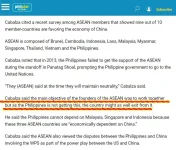
If the Philippines exits ASEAN, it will lose its platform for regional diplomacy and collective bargaining power on trade, security, and regional stability issues. In that case, PH will need to rely more on bilateral agreements, which is fine but could be less favorable than multilateral agreements secured through ASEAN. Likewise, PH may lose preferential access to the ASEAN Economic Community (AEC), which could negatively impact exports, trade, and economic growth.
If the Philippines exits ASEAN, it may no longer benefit from the ASEAN Free Trade Area (AFTA) and other trade agreements like RCEP, potentially increasing tariffs and trade barriers. Also, foreign investors may view the Philippines as less attractive foreign direct investment (FDI) destination due to reduced access to the ASEAN market. Worst, it may be excluded from regional supply chains, hurting PH industries dependent on ASEAN integration, such as electronics, automotive, and agriculture.
Regarding security concerns, if the Philippines exits ASEAN, it would no longer be part of ASEAN's collective security mechanisms, which could weaken its ability to respond to regional threats. Furthermore, PH might find itself more isolated in its territorial disputes with China in the SCS, losing ASEAN's diplomatic support.
On combatting non-traditional security threats such as terrorism, human trafficking, and natural disasters through regional cooperation at the ASEAN level, when it comes to people-to-people exchanges and regional mobility including but not limited to educational, cultural, and labor mobility, which are facilitated by ASEAN frameworks, PH might be isolated too
Concerning labor markets and employment opportunities, if the Philippines exits ASEAN, Filipino workers might face restrictions in accessing job markets in other ASEAN countries, which would impact employment rates and overseas remittances, which are the lifeblood of the Philippine economy.
Hence, in any case, leaving ASEAN definitely has adverse impacts on the Philippines. The long-term consequences for the Philippines could be detrimental, impacting its political clout, economic prospects, and security posture in the ASEAN region and beyond. In this regard, any decision by the current Marcos Jr. administration would need careful consideration of all these factors and strategic foresight to navigate the complex regional landscape
If the Philippines exits ASEAN, it will lose its platform for regional diplomacy and collective bargaining power on trade, security, and regional stability issues. In that case, PH will need to rely more on bilateral agreements, which is fine but could be less favorable than multilateral agreements secured through ASEAN. Likewise, PH may lose preferential access to the ASEAN Economic Community (AEC), which could negatively impact exports, trade, and economic growth.
If the Philippines exits ASEAN, it may no longer benefit from the ASEAN Free Trade Area (AFTA) and other trade agreements like RCEP, potentially increasing tariffs and trade barriers. Also, foreign investors may view the Philippines as less attractive foreign direct investment (FDI) destination due to reduced access to the ASEAN market. Worst, it may be excluded from regional supply chains, hurting PH industries dependent on ASEAN integration, such as electronics, automotive, and agriculture.
Regarding security concerns, if the Philippines exits ASEAN, it would no longer be part of ASEAN's collective security mechanisms, which could weaken its ability to respond to regional threats. Furthermore, PH might find itself more isolated in its territorial disputes with China in the SCS, losing ASEAN's diplomatic support.
On combatting non-traditional security threats such as terrorism, human trafficking, and natural disasters through regional cooperation at the ASEAN level, when it comes to people-to-people exchanges and regional mobility including but not limited to educational, cultural, and labor mobility, which are facilitated by ASEAN frameworks, PH might be isolated too
Concerning labor markets and employment opportunities, if the Philippines exits ASEAN, Filipino workers might face restrictions in accessing job markets in other ASEAN countries, which would impact employment rates and overseas remittances, which are the lifeblood of the Philippine economy.
Hence, in any case, leaving ASEAN definitely has adverse impacts on the Philippines. The long-term consequences for the Philippines could be detrimental, impacting its political clout, economic prospects, and security posture in the ASEAN region and beyond. In this regard, any decision by the current Marcos Jr. administration would need careful consideration of all these factors and strategic foresight to navigate the complex regional landscape